


| Collection: | Paul Smith Experimental Forest Historical Photo Archive |
| Keywords: | reproduction |
| Organisms: |
beech maple |
| Location: | Paul Smith Experimental Forest; Compartment 38 |
| Description: | Taken N22W from stake 35-43. Dense growth of beech and hard maple reproduction following heavy cutting about 1947. |
| Date: | 10/23/1956 |

| Collection: | Paul Smith Experimental Forest Historical Photo Archive |
| Keywords: |
reproduction hardwood personnel |
| Organisms: |
beech pine |
| Location: | Paul Smith Experimental Forest; Compartment 38 |
| Description: | Taken 9 years after cutting. Taken due E from point 0.72 chains S58W from stake 34-46. Reproduction here is almost entirely beech. A. Misura in photo. |
| Date: | 10/23/1956 |
| Collection: | Paul Smith Experimental Forest Historical Photo Archive |
| Keywords: |
gap personnel hardwood reproduction |
| Organisms: |
maple beech |
| Location: | Paul Smith Experimental Forest |
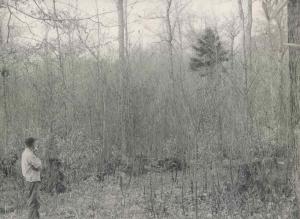
| Description: | Large openings encouraged hard maple and beech reproduction. The large trees did not meet current standards of merchantability and were not wanted by the cutters 6 years earlier. Improving markets may permit harvest of some trees in the furture, but others are cull. "Can and should anything be done to help the better saplings? Would there be long-range benefits to compensate for investments made to improve the stand?" |
| Date: | 1950 |

| Collection: | Paul Smith Experimental Forest Historical Photo Archive |
| Keywords: |
personnel stump post-harvest reproduction |
| Organisms: |
beech maple yellow birch |
| Location: | Paul Smith Experimental Forest |
| Description: | The same place after the first cut. Poor quality beech were poisoned 19 months earlier, and were debarked with frill and sodium arsenite for $4.13 per acre. It is anticipated that hard maple and yellow birch reproduction will have a better opportunity to become established without competition from the beech. |
| Date: | 1950 |
| Collection: | Paul Smith Experimental Forest Historical Photo Archive |
| Keywords: |
personnel reproduction |
| Organisms: |
beech maple |
| Location: | Paul Smith Experimental Forest |
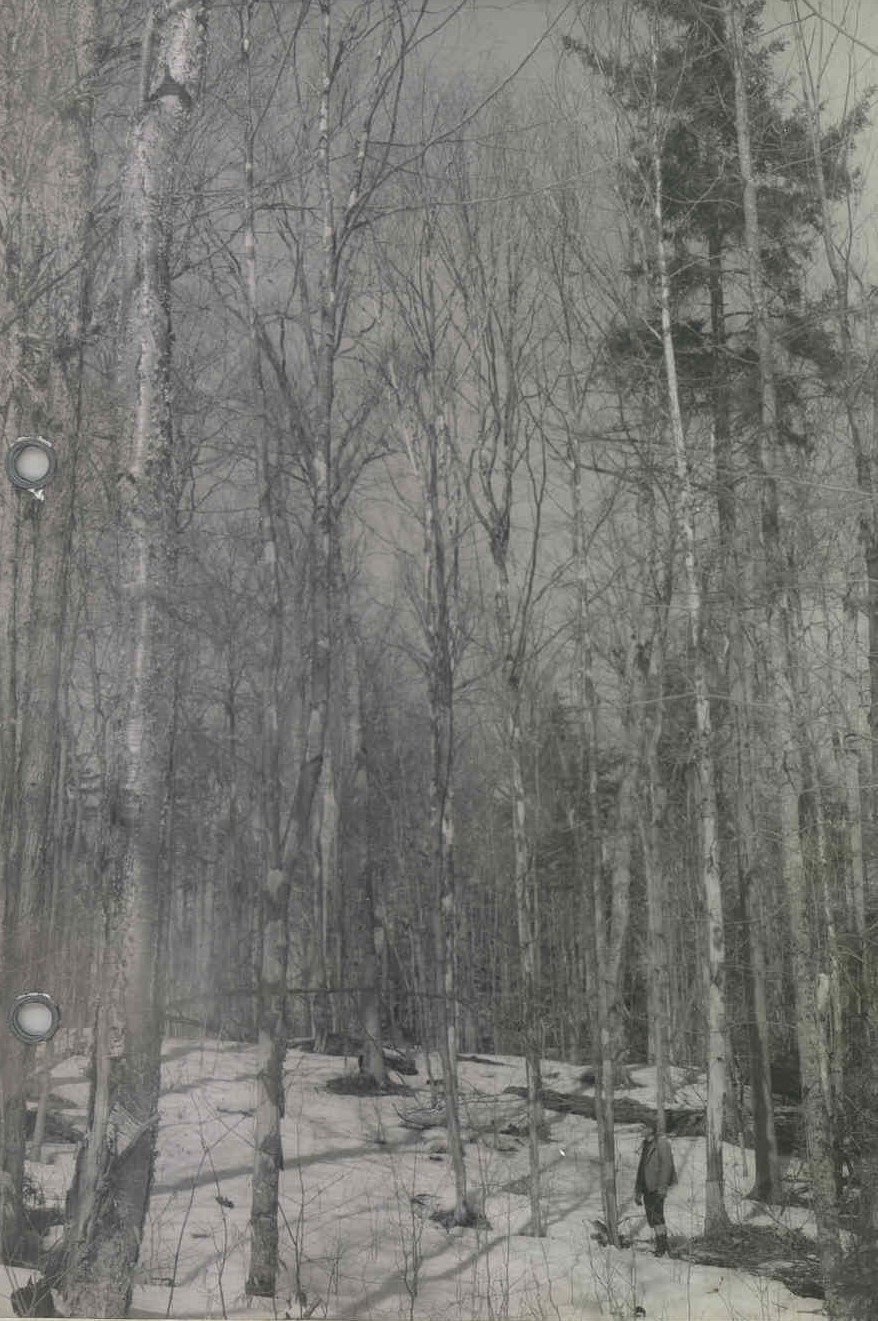
| Description: | "On some spots beech were nearly all poisoned. We can compare the results with other compartments where varying numbers of beech were left. Hard maple advance reproduction is abundant here. It is about 14 inches high and 7 years old. Most of those about 3 feet high are beech. What will happen to them?" |
| Date: | 1950 |