


| Collection: | Paul Smith Experimental Forest Historical Photo Archive |
| Keywords: |
pre-harvest personnel |
| Organisms: |
beech maple yellow birch spruce |
| Location: | Paul Smith Experimental Forest; Compartment 48 |
| Description: | Overstory of yellow birch, hard maple is being crowded out by beech in both overstory and ground cover. Note large dead birch directly beside me. Most of the few spruce are being suppressed by the beech. Initial stand photo taken facing N5E from a point 0.71 chains S36W of stake 88-22. Shafer in photo |
| Date: | 4/19/1957 |

| Collection: | Paul Smith Experimental Forest Historical Photo Archive |
| Keywords: |
reproduction hardwood personnel |
| Organisms: |
beech pine |
| Location: | Paul Smith Experimental Forest; Compartment 38 |
| Description: | Taken 9 years after cutting. Taken due E from point 0.72 chains S58W from stake 34-46. Reproduction here is almost entirely beech. A. Misura in photo. |
| Date: | 10/23/1956 |

| Collection: | Paul Smith Experimental Forest Historical Photo Archive |
| Keywords: |
personnel hardwood old growth |
| Organisms: |
yellow birch beech |
| Location: | Paul Smith Experimental Forest |
| Description: | The continuing decadence of yellow birch over 200 years old create openings favorable for beech and other tolerant hardwoods. |
| Date: | 1950 |

| Collection: | Paul Smith Experimental Forest Historical Photo Archive |
| Keywords: |
personnel hardwood |
| Organisms: |
beech yellow birch maple |
| Location: | Paul Smith Experimental Forest |
| Description: | A situation that is common in the Adirondacks: mature yellow birch and hard maple, with beech in a secondary position. In similar stands, cutting of the better hardwoods -- with only a limited market for beech -- has put beech in a dominant position. With the abundance of beech reproduction of all sizes, lack of hard maple of similar sizes, and the intolerance of the birch, it appears that beech can remain in possession of such sites for a long time. "Is this desirable or undesirable?" |
| Date: | 1950 |
| Collection: | Paul Smith Experimental Forest Historical Photo Archive |
| Keywords: |
gap personnel hardwood reproduction |
| Organisms: |
maple beech |
| Location: | Paul Smith Experimental Forest |
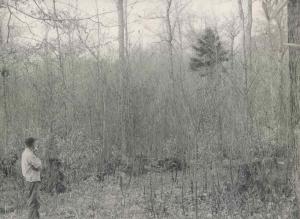
| Description: | Large openings encouraged hard maple and beech reproduction. The large trees did not meet current standards of merchantability and were not wanted by the cutters 6 years earlier. Improving markets may permit harvest of some trees in the furture, but others are cull. "Can and should anything be done to help the better saplings? Would there be long-range benefits to compensate for investments made to improve the stand?" |
| Date: | 1950 |

| Collection: | Paul Smith Experimental Forest Historical Photo Archive |
| Keywords: |
personnel stump post-harvest reproduction |
| Organisms: |
beech maple yellow birch |
| Location: | Paul Smith Experimental Forest |
| Description: | The same place after the first cut. Poor quality beech were poisoned 19 months earlier, and were debarked with frill and sodium arsenite for $4.13 per acre. It is anticipated that hard maple and yellow birch reproduction will have a better opportunity to become established without competition from the beech. |
| Date: | 1950 |
| Collection: | Paul Smith Experimental Forest Historical Photo Archive |
| Keywords: |
personnel reproduction |
| Organisms: |
beech maple |
| Location: | Paul Smith Experimental Forest |
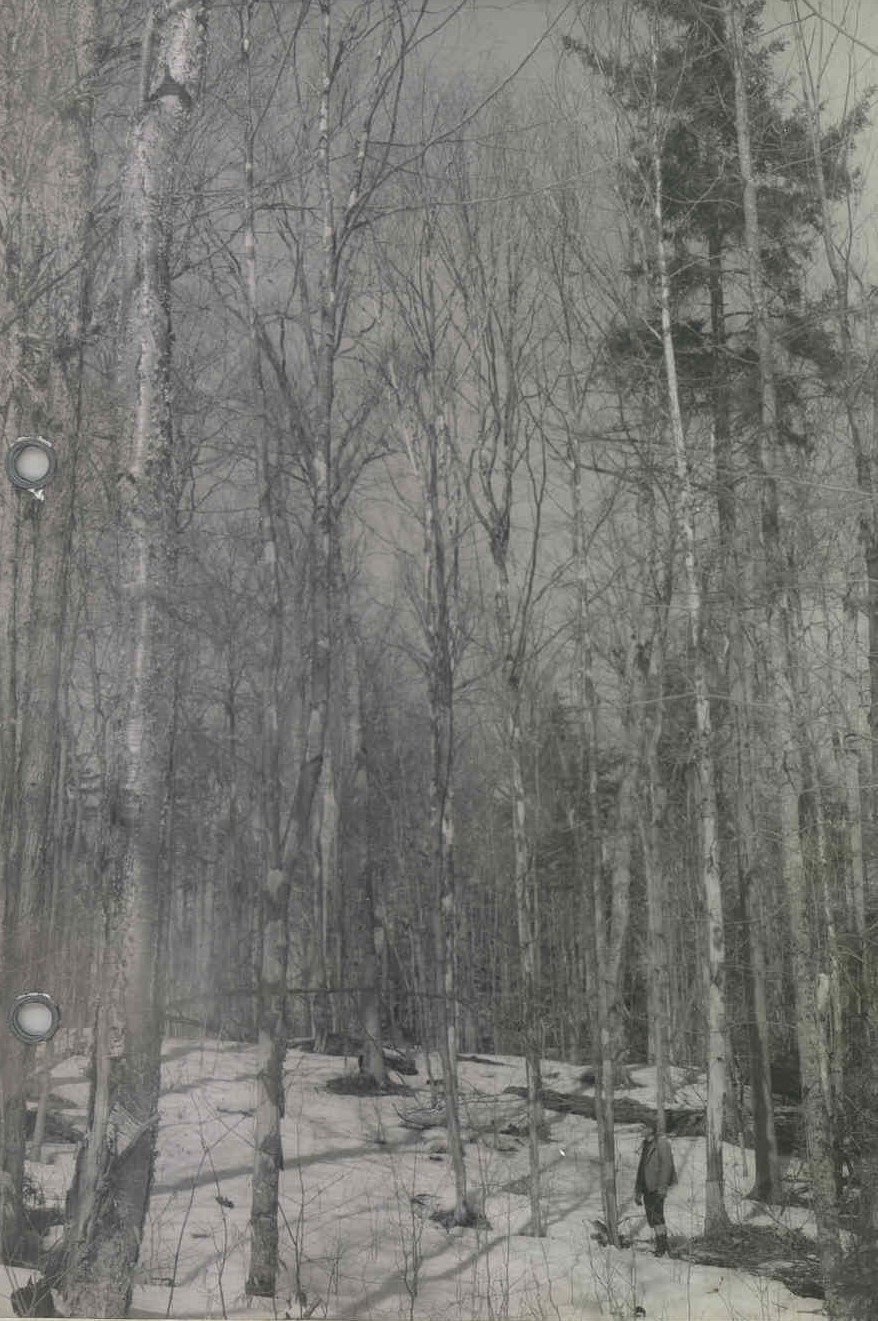
| Description: | "On some spots beech were nearly all poisoned. We can compare the results with other compartments where varying numbers of beech were left. Hard maple advance reproduction is abundant here. It is about 14 inches high and 7 years old. Most of those about 3 feet high are beech. What will happen to them?" |
| Date: | 1950 |
| Collection: | Paul Smith Experimental Forest Historical Photo Archive |
| Keywords: |
personnel hardwood |
| Organisms: |
beech yellow birch maple |
| Location: | Paul Smith Experimental Forest |
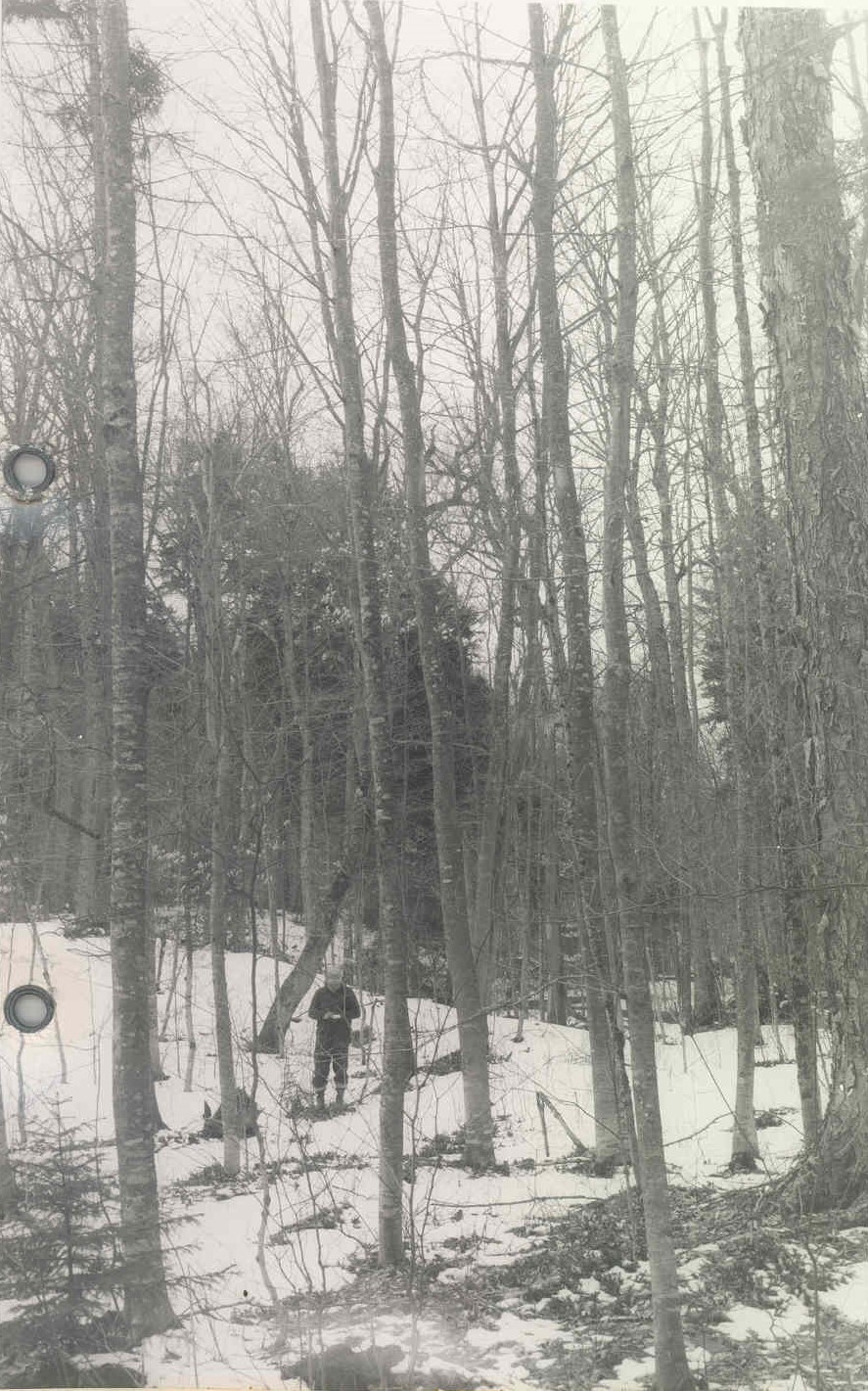
| Description: | The natural area also contains stands of northern hardwoods. Here, beech have developed beneath large yellow birch and hard maple. |
| Date: | 1950 |

| Collection: | Paul Smith Experimental Forest Historical Photo Archive |
| Keywords: |
personnel hardwood old growth |
| Organisms: |
beech maple yellow birch |
| Location: | Paul Smith Experimental Forest |
| Description: | Mature norther hardwoods containing many intermediate beech. In this stand ages of mature trees averaged; hard maple 235, yellow birch 218, and beech 230. |
| Date: | 1950 |

| Collection: | Paul Smith Experimental Forest Historical Photo Archive |
| Keywords: |
personnel shelterwood browse |
| Organisms: |
deer maple yellow birch white ash beech witch hobble |
| Location: | Paul Smith Experimental Forest |
| Description: | The shelterwood plot was left with about 50 sq. ft. of basal area among overstory trees 6"+ d.b.h. This opening produced an abundance of hard maple, yellow birch, and white ash seedlings. Deer promptly came to "picnic" and have permitted few of these to grow beyond 12" high (snow provides some protection). Six years later these better hardwoods were growing well only within the protection of the deer exclosure. Severe browsing outside of it was benefiting the less-palatable beech and witch hobble. |
| Date: | 1950 |

| Collection: | Paul Smith Experimental Forest Historical Photo Archive |
| Keywords: |
personnel selection post-harvest |
| Organisms: |
beech witch hobble |
| Location: | Paul Smith Experimental Forest |
| Description: | The light cutting favoried the tolerant beeech and witch hobble, but did not the better hardwood seedlings. |
| Date: | 1950 |

| Collection: | Paul Smith Experimental Forest Historical Photo Archive |
| Keywords: |
personnel clearcut browse |
| Organisms: |
deer yellow birch white ash maple beech red spruce |
| Location: | Paul Smith Experimental Forest |
| Description: | Clearcut 18 years earlier, deer browsing has eliminated most yellow birch, white ash, and hard maple seedling. Less-palatable beech and red spruce continued to grow. |
| Date: | 1950 |

| Collection: | Paul Smith Experimental Forest Historical Photo Archive |
| Keywords: |
pre-harvest personnel |
| Organisms: |
spruce yellow birch beech |
| Location: | Paul Smith Experimental Forest; Compartment 45 |
| Description: | Image taken at coordinates 90-21; direction S80; distance 39 feet; with a bearing of N2W. Beech sapling and spruce reproduction in the understory. |
| Date: | 1950 |

| Collection: | Paul Smith Experimental Forest Historical Photo Archive |
| Keywords: |
pre-harvest personnel |
| Organisms: |
spruce yellow birch beech |
| Location: | Paul Smith Experimental Forest; Compartment 55 |
| Description: | Image taken at coordinates 71-22, direction S10W, distance 59 chains, with a bearing of S13W. Understory is pole size yellow birch and beech. |
| Date: | 1950 |

| Collection: | Paul Smith Experimental Forest Historical Photo Archive |
| Keywords: |
pre-harvest Hardwood personnel |
| Organisms: |
maple yellow birch beech spruce |
| Location: | Paul Smith Experimental Forest; Compartment 55 |
| Description: | Image taken at coordinates 70-22, direction N55W, distance 30 chains, with a bearing of S53E. Mature hard maple and yellow birch with sapling hard maple and beech understory. Suppressed spruce saplings. |
| Date: | 1950 |

| Collection: | Paul Smith Experimental Forest Historical Photo Archive |
| Keywords: |
pre-harvest hardwood personnel |
| Organisms: |
maple beech spruce |
| Location: | Paul Smith Experimental Forest; Compartment 55 |
| Description: | Image taken at coordinates 72-21, direction N52E, distance 40 links; with a bearing of S60E. Beech and hard maple saplings in half of photos. Overstory is hard maple and beech. Spruce is also scattered throughout this area as seen in the background. |
| Date: | 1950 |

| Collection: | Paul Smith Experimental Forest Historical Photo Archive |
| Keywords: |
pre-harvest hardwood personnel cruise |
| Organisms: |
maple yellow birch beech |
| Location: | Paul Smith Experimental Forest; Compartment 55 |
| Description: | Image taken at coordinates 73-21; direction S85E; distance 145ft; with a bearing of S48E. Hard maple and yellow birch with beech understory - many of the hardwoods that are to be cut as a result of treatment application, will be excellent growing stock quality. String in picture was used for 100% cruise. |
| Date: | 1950 |

| Collection: | Paul Smith Experimental Forest Historical Photo Archive |
| Keywords: |
pre-harvest personnel |
| Organisms: |
spruce yellow birch beech |
| Location: | Paul Smith Experimental Forest; Compartment 55 |
| Description: | Image take at coordinates 73-21, direction S44E, distance 65 feet; with a bearing of N83E. Many of the spruce are of excellent quality and good growing stock but will be cut as a result of treatment reqirements. Mainly beech in the understory. |
| Date: | 1950 |