
Accessibility Guidebook for Outdoor Recreation and Trails
Applying the Forest Service Outdoor Recreation Accessibility Guidelines (Continued)
Getting from Here to There—Outdoor Recreation Access Routes
Section 2.0 of the FSORAG defines an outdoor recreation access route (ORAR) as a continuous, unobstructed path intended for pedestrian use that connects constructed features within a picnic area, camp living area, trailhead, or other recreation site where modifications are provided for visitor convenience and comfort. Figure 27 shows an ORAR connecting a parking lot and scenic overlook. ORARs must meet the required provisions for accessibility.
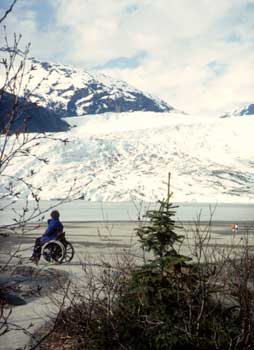
Figure 27—There would be no point in providing a
viewing area for the gorgeous Mendenhall Glacier
in Alaska if people couldn't get there from the
parking area. ORARs are all about getting around.
Forest Service recreation sites are described using a six-level development scale ranging from 0—No site Modification to 5—Extensive Site Modification. Site modifications are provided for visitor convenience and comfort in recreation sites with development levels 3, 4, and 5. Rustic or rudimentary site modifications may be provided for resource protection at level 2 or less. Definitions of each level of the Forest Service's recreation site development scale are available at http://www.fs.fed.us/r3/measures/Cost/Infra_Files/APPENDIX%20H_Levels%20of%20Site%20Modification.doc.
General forest areas (GFAs) are nonwilderness National Forest System lands that are available for recreation use, where structures are built only when they are required for resource protection. These minimal developments, which may include picnic tables, fire rings, or toilet structures, are level 2 or less on the Forest Service recreation site development scale. ORARs are not required in GFAs.
In recreation sites, ORARs ensure that visitors can move independently from their camping or picnic spot to the other constructed features provided at the site or from the parking area to any constructed features. ORARs must meet requirements for running and cross slopes, resting intervals, surface, clear tread width, passing spaces, tread obstacles, protruding obstacles, openings, edge protection, and stairs.
Slopes and Resting Intervals for ORARs
ORARs are to be designed with a running slope ratio of 1:20 (5 percent) or less (figure 28). Steeper terrain may make this difficult to achieve. Visitors can negotiate steeper slopes for short distances, so running slopes up to 1:12 (8.33 percent) are permitted for up to 50 feet (15 meters), and running slopes of up to 1:10 (10 percent) are permitted for up to 30 feet (9 meters). To ensure that the ORAR isn't designed as a series of steep segments, no more than 15 percent of the total length of the ORAR may exceed a slope of 1:12 (8.33 percent). Running slope is the lengthwise slope of an ORAR, parallel to the direction of travel.
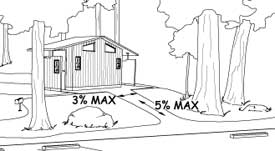
Figure 28—Determining the slope ratio.
Cross slopes—the side-to-side slope of an ORAR—can't exceed 1:33 (3 percent, see figure 28), although an exception permits a cross slope of up to 1:20 (5 percent) if necessary for proper drainage.

Figure 29—The basic slope requirements
for ORARs and beach access routes.
Resting intervals are relatively level areas that provide an opportunity for people to catch their breath before continuing along the ORAR. These intervals are required any time the running slope exceeds 1:20 (5 percent). A resting interval must be at least 60 inches (1,525 millimeters) long and at least as wide as the ORAR leading into it.
The slopes of a resting interval can't exceed 1:33 (3 percent) in any direction (figure 30).

Figure 30—The basic resting interval requirements for ORARs.
Where running slopes are between 1:20 (5 percent) and 1:12 (8.33 percent), resting intervals must be provided at least every 50 feet (15 meters). For slopes from 1:12 (8.33 percent) to 1:10 (10 percent), resting intervals must be provided at least every 30 feet (9 meters). Depending on the design and location, the intersection of two ORARs may act as a resting interval.
Meeting the slope requirements for an ORAR may be more difficult when altering an existing site than it would be in new construction. Accessibility was seldom considered when older recreation sites were designed. Many campgrounds and picnic areas were located in spectacularly scenic settings, but on steep terrain. Complying with the slope provision in these areas may be difficult without a fundamental change to the recreation environment, so exceptions are provided for alteration projects where a condition for departure exists. This is one of only two instances where the FSORAG makes a distinction between new construction and alterations. The second exception is campground alterations, discussed later in this chapter.
In alterations only and where a condition for departure exists, exceptions are provided that permit running slopes up to 1:12 (8.33 percent) for 100 feet (30 meters), and up to 1:10 (10 percent) for 50 feet (15 meters). When these slopes are used, resting intervals are required every 100 feet (30 meters) and 50 feet (15 meters), respectively. Even with those exceptions, it may still not be possible to comply with the slope provision without drastically affecting the site. In these cases, a general exception to the entire slope provision is included if a condition for departure exists.
Where this occurs, the ORAR doesn't have to meet any of the slope requirements. However, designers should attempt to comply with the general slope requirement first, then each exception in order, to assure that the final design meets the highest possible technical provisions.
This exception does not apply to new construction. When planning for a new facility, the natural terrain and the general accessibility of the area itself should be part of the site selection criteria because compliance with ORAR provisions is required for new construction.
Surfaces for ORARs
The surface of an ORAR and the surface surrounding constructed features must be firm and stable. No exceptions are allowed. Slip resistance is not required because leaves and needles, dirt, ice, snow, and other surface debris and weather conditions are components of the natural environment that would be difficult, if not impossible, to avoid.
The FSORAG defines a firm surface as a surface that is not noticeably distorted or compressed by the passage of a device that simulates a person using a wheelchair. A stable surface is defined as a surface that is not permanently affected by normally occurring weather conditions and can sustain wear and tear during normal use between planned maintenance cycles. During the planning process, the compaction qualities of natural soils should be evaluated under weather conditions that occur normally when the surface will be used.
If the natural soils won't provide a firm and stable surface, soil stabilizer or artificial surfacing will be needed. The Forest Service Technology and Development report, Soil Stabilizers on Universally Accessible Trails, contains information about the effectiveness of soil stabilizers. It is available at http://www.fs.fed.us/eng/php/library_card.php?p_num=0023 1202 or http://www.fhwa.dot.gov/environment/fspubs/00231202/.
Firm and stable surfaces prevent assistive devices from sinking into the surface, which would make movement difficult for a person using crutches, a cane, a wheelchair, or other assistive device. In the accessibility guidelines, the standard assistive device is the wheelchair because its dimensions, multiple moving surface contact points, and four wheels often are difficult to accommodate. If a person using a wheelchair can use an area, most other people also can use that area.
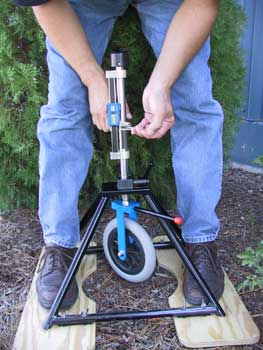
Figure 31—Using the rotational penetrometer to
determine whether a surface is firm and stable.
 E-mail: