

|
|
FEIS Home Page |
 |
|
|
Jim Cox, Tall Timbers Research Station |
AUTHORSHIP AND CITATION:
Meyer, Rachelle. 2006. Peucaea aestivalis.
In: Fire Effects Information System, [Online].
U.S. Department of Agriculture, Forest Service,
Rocky Mountain Research Station, Fire Sciences Laboratory (Producer).
Available: www.fs.usda.gov/database/feis/animals/bird/peae/all.html [
].
Revisions:
On 20 November 2018, the scientific name of this species was changed in FEIS
from: Aimophila aestivalis
to: Peucaea aestivalis.
FEIS ABBREVIATION:
PEAE
SYNONYMS:
Aimophila aestivalis (Lichtenstein)
COMMON NAMES:
Bachman's sparrow
pine woods sparrow
TAXONOMY:
Peucaea aestivalis (Lichtenstein) is the scientific name of the Bachman's sparrow, a member
of the Emberizidae family[3].
Three subspecies are recognized by the American Ornithologists'
Union [2]:
Peucaea aestivalis aestivalis (Lichtenstein)
Peucaea aestivalis bachmani (Audubon)
Peucaea aestivalis illinoensis (Ridgeway)
ORDER:
Passeriformes
CLASS:
Bird
FEDERAL LEGAL STATUS:
No special status
OTHER STATUS:
Information on state-level protected status of animals in the United States is available at
NatureServe, although recent changes in
status may not be included.
SPECIES: Peucaea aestivalis
Reviews also describe the range of the 3 subspecies of Bachman's sparrow. Peucaea aestivalis aestivalis breeds furthest east, from southeast South Carolina to peninsular Florida. Peucaea a. bachmanii occurs west of P. a. aestivalis to Mississippi and north to Kentucky. Peucaea a. illinoensis occurs in the westernmost region of the species' range [19,47,62]. Since subspecies are typically not distinguished in the literature, they will not be discussed further in this review.
The following lists are speculative and are based on the habitat characteristics
and species composition of communities Bachman's sparrows are known to occupy.
There is not conclusive evidence that Bachman's sparrows occur in all the
habitat types listed, and some community types, especially those used rarely,
may have been omitted.
ECOSYSTEMS [27]:
FRES12 Longleaf-slash pine
FRES13 Loblolly-shortleaf pine
FRES14 Oak-pine
FRES39 Prairie
STATES/PROVINCES:
(key to state/province abbreviations)
UNITED STATES
| AL | AR | FL | GA | KY | LA | MD | MS |
| MO | NC | OK | SC | TN | TX | VA | WV |
SPECIES: Peucaea aestivalis
 |
|
|
Jim Cox, Tall Timbers Research Station |
Breeding: Bachman's sparrows' breeding season typically begins in April and continues through August. According to a literature review the earliest date for Bachman's sparrow eggs in Florida is 14 April and the latest date is 4 August [62]. The earliest Bachman's sparrow nest found during a study in longleaf pine habitat of South Carolina was 10 April, while the latest nest found was early in the incubation stage on 5 August [63]. In a study of Bachman's sparrow reproduction in shortleaf and loblolly pine plantations of Arkansas, egg laying started as early as 17 April and continued until 26 August. However, 85% of clutches were started in May, June, or July [30]. A review summarizes the timing of Bachman's sparrow nest construction and egg-laying, including records from more northern areas in the Bachman's sparrow's historic range [19].
Bachman's sparrows typically raise 2 broods per breeding season and will renest after failed attempts [30]. In shortleaf and loblolly pine plantations of Arkansas, the average time between fledging of the 1st brood and starting the 2nd brood was 12.3 days. This was not significantly (p=0.39) different than the 9.7-day average period between a failed nest and a subsequent nest attempt. On average, females attempted 3.1 nests per season. The maximum number of attempts per season was 5 [30]. The maximum number of nests attempted in longleaf pine habitat of South Carolina was also 5. After 2 successful nests, a female attempted 3 times to raise a 3rd brood [63]. Limited evidence, summarized in reviews, suggests that 3 broods per season may occur occasionally [19,62]. Dates of possible 2nd broods are included in one of these reviews [19].
Bachman's sparrow nests are constructed on the ground by females and are primarily comprised of grasses. All nests (n=71) found in a study in shortleaf and loblolly pine plantations of Arkansas were built on the ground. Most nests (70%) were built at the base of bluestem clumps, although nests were found at the base of small trees, forbs, and other grass species [30]. On the same study site, only 7% of nests were not either partially or completely domed. Most nest entrances were oriented to the north [31]. Several reviews summarize information on nest construction [19,45,62]
According to reviews, clutch size varies from 3 to 5 [45,62]. Average clutch size on a site in Arkansas was 3.9 [30], while in a longleaf pine community in South Carolina mean clutch size was 3.6 [63]. Both of these studies found significant (p≤0.02) decreases in clutch size as the breeding season progressed [30,63]. On a dry prairie site in Florida (n=9) average clutch size was 3.44 and on another (n=5) it was 3.6 [50]. In shortleaf and loblolly pine plantations of Arkansas, females laid an average of 11.6 eggs (n=20) over the course of the breeding season [30].
In shortleaf and loblolly pine plantations in Arkansas, females incubated eggs for 13 to 14 days. The average nestling period was 9 days, and the average period between fledging and independence was 25 days. Both parents care for the young during these periods [30]. Although there is a lack of data, a review suggests that Bachman's sparrows probably breed the year after hatching [19].
Bachman's sparrows exhibit some fidelity to breeding sites. Over a 2 year period in shortleaf and loblolly pine plantations of central Arkansas, 6 of 34 adults returned to areas where they had a territory in a previous year. This varied across years, with a 29% return rate of adult birds banded in 1983 and none of the adults banded in 1984 returning to the site in 1985. No juveniles (n=60) returned to the site [30].
Nesting Success: Values of nest success reported for Bachman's sparrows vary. Daily nest survival rate of Bachman's sparrow ranged from 0.89 to 0.96 across sites and years in the dry prairie of central Florida. On average 3.13 birds were fledged per successful Bachman's sparrow nest. Estimates of productivity ranged from 1.21 to 4.16 offspring per pair per year across sites and years [50]. In a South Carolina longleaf pine community, daily survival rate of Bachman's sparrow nests in 1995 was 0.952, which was significantly (p=0.04) higher than the 1996 daily nest survival rate of 0.889. Earlier nesting attempts (before June 15th, n=15) had significantly (p=0.05) higher survival rates than those started later in the year (n=11). Daily nest survival rate was 0.922 during incubation and 0.973 during the nestling stage [63]. In central Arkansas, daily success rate during the incubation period was 0.965, while in the nestling period it was 0.919 [30]. In the glades of south-central Missouri, 8 female Bachman's sparrows fledged an average of 1.5 young per season over 2 years [10]. Predation accounted for 80% of egg loss on study sites in Arkansas [30] and 94% of nest failures on sites in central Florida [50]. Information on Bachman sparrow nest predators can be found in the Predators section of this summary. Cowbirds [30] and nest abandonment [50] were the other known causes of nest failure.
Survival:
Survival of Bachman's sparrows during the breeding season has been investigated
in a South Carolina study area dominated by longleaf pine [37,58,63]. Recapture
of banded birds resulted in a monthly survival rate during the breeding season
of 0.94 [37]. Using radio telemetry, average survival of Bachman's sparrows from
20 April to 26 July was 80.0% [58]. In another radio telemetry study, 4 mortalities
out of 38 Bachman's sparrows were documented over 2 years. The overall breeding season
survival rate was estimated as 0.893 [63]. According to a literature review,
Bachman's sparrows have been captured that were at least 3 years old [19].
PREFERRED HABITAT:
Bachman's sparrows inhabit areas with a dense layer of ground vegetation and
open mid-stories with scattered shrubs and saplings, including young clearcuts
and open pine (Pinus spp.) forests [10,18,32,52,66].
Habitat characteristics: Bachman's sparrows' need of a dense layer of herbaceous vegetation is widely documented. Vegetation density was greater below 3 feet (0.9 m) than above 3 feet (0.9 m) and percent ground cover and percent grass cover were consistently higher (>58%) on sites occupied by Bachman's sparrow than unoccupied sites in Arkansas, Alabama, Florida, South Carolina and North Carolina [33]. In 17- to 28-year- old slash pine plantations of northwestern Florida that had been burned within 4 years, Bachman's sparrow abundance was significantly (p=0.043) correlated (r=0.46) with relative volume of grass [66]. In longleaf and loblolly pine stands of varying ages and under different management in South Carolina, areas occupied by Bachman's sparrows consistently had high vegetation volumes ≤3 feet (1 m) above ground [18]. Sites occupied by Bachman's sparrows in longleaf pine woodlands of Florida managed for the red-cockaded woodpecker (Picoides borealis) had significantly (p=0.007) higher vegetation densities ≤ 2 feet (0.5 m) than unoccupied sites in the study area. Grass density, primarily bluestems (Andropogon spp. and Schizachyrium spp.) ≤ 2 feet (0.5 m) above ground, was also significantly (p=0.004) greater on occupied compared to unoccupied sites [52]. Bachman's sparrows were significantly (p≤0.01) more abundant in mixed pine-grassland restoration stands in Mississippi, which had greater understory, grass, and forb cover, than traditionally managed stands [73]. In 1- to 6-year-old loblolly pine stands of eastern Texas, herbaceous ground cover (p=0.003) was greater in study areas occupied by Bachman's sparrows [70]. In south-central Missouri, glades occupied by Bachman's sparrows had significantly more grass (p=0.03) and forb cover (p=0.0005) than unoccupied glades [10]. However, vegetation densities below 3 feet (0.9 m) and percent ground and grass cover in areas occupied by Bachman's sparrow did not differ significantly (p>0.05) from unoccupied areas of loblolly and shortleaf pine plantations in Arkansas [32].
Factors such as the patchiness of vegetation and species composition of the ground layer may affect habitat suitability by influencing foraging success and the availability of food and nesting material. In Georgia, Bachman's sparrows did not occur in open areas with uniformly dense herbaceous vegetation, despite these sites having a similar volume of vegetation ≤3 feet (1 m) above ground as recently-burned pineland sites that were occupied by Bachman's sparrow [28]. Although measurements were not taken, observations of Bachman's sparrow in clearcuts in eastern Texas suggest they may favor tall grass in clumpy rather that uniform distribution [70]. In loblolly and shortleaf pine plantations of Arkansas, explanations suggested for a lack of evidence of ground layer features influencing selection of breeding territories included importance of habitat characteristics that were not measured, such as patchiness of the herbaceous layer and species composition [32]. In a predominantly longleaf pine forest in Georgia, Bachman's sparrows were significantly (p=0.04) more abundant in areas where ground cover was primarily Beyrich threeawn (Aristida beyrichiana), compared to relatively disturbed communities comprised of bluestems (Andropogon spp.) and silkgrass (Pityopsis spp.) [55].
Amount of litter and debris on a site may influence Bachman's sparrow habitat selection. Percent litter cover was consistently high (>58%) on sites occupied by Bachman's sparrow in Arkansas, Alabama, Florida, South Carolina and North Carolina [33]. Although statistical significance was not tested due to small sample size, Bachman's sparrows occurred at higher densities in control plots (1.5 territories/40 ha) than plots that had downed coarse woody debris >4 inches (10 cm) in diameter removed (0.4 territories/40 ha) in a loblolly pine forest of South Carolina. Haggerty [33] suggests that litter may provide habitat for Bachman's sparrow prey, but that too much litter could interfere with foraging. In loblolly and shortleaf pine plantations of Arkansas, litter cover (78%) and depth (0.5 inches (1.2 cm) on sites occupied by Bachman's sparrows were significantly (p≤0.01) lower than litter cover (88.9%) and depth (1.6 inches (4.2 cm)) on unoccupied sites [32].
Bachman's sparrow inhabits areas with open overstories. In sites in eastern Texas of varying age since clearcutting, study areas occupied by Bachman's sparrows had significantly (p<0.01) fewer short (≤ 10 feet (3m)) and tall (>10 feet (3m)) trees than unoccupied study areas [5]. In longleaf and loblolly pine stands of varying ages and under different management in South Carolina, plots occupied by Bachman's sparrows consistently had low volumes of vegetation from 7 to 13 feet (2-4 m) above ground compared to unoccupied sites [18]. In middle-aged and mature forests of Georgia comprised primarily of loblolly pine, Bachman sparrow densities were negatively associated with tree/shrub volume and vegetation volume from 7 to <16 feet (3 to <5 m) [28]. In loblolly and shortleaf pine plantations of Arkansas, Bachman's sparrow breeding areas had significantly lower percent canopy cover (p<0.001), shorter woody vegetation (p≤0.01) and fewer trees (p<0.001) and shrubs (p≤0.05) than unoccupied sites [32]. In south-central Missouri, Bachman's sparrows occurred in glades with less than 30% woody cover, and occupied glades had significantly (p≤0.05) lower percentages of deciduous and coniferous saplings, deciduous and coniferous trees, and total woody vegetation [10]. Mid-story density was marginally (p=0.055) greater on unoccupied sites, and Bachman's sparrow abundance was significantly (p=0.043) negatively correlated (r= -0.446) with mid-story density in longleaf pine woodlands of northwestern Florida. However, relative abundance of Bachman's sparrows was not significantly (p=0.107) associated with canopy cover and there were no significant (p=0.133) differences in canopy cover between occupied and unoccupied sites [52].
There is evidence that Bachman sparrow may prefer sites with some tall vegetation. In north-central Florida, densities of Bachman's sparrows in young (2-4 years) slash pine plantations with artificial snags added (n=3) was 31.4 pairs/km², while in similar vegetation without snags (n=3) Bachman's sparrow density was 22.3 pairs/km² [8]. In an area in South Carolina comprised of longleaf and loblolly pine, Bachman's sparrow occurred at significantly (p=0.002) higher density in clearcuts than middle-aged (22-50 years) stands, while in another area clearcuts had relatively low densities of Bachman's sparrows. Vegetation differences between the 2 sites are likely to explain the difference. The site with relatively low densities of Bachman's sparrows had been drumchopped, which resulted in a lower volume of vegetation from 3 to 7 feet (1-2 m) above ground. The authors suggest that the lack of vegetation in this height range may have limited perches, resulting in fewer birds on the site [18]. An investigation of Bachman's sparrow habitat characteristics in 1- to 6-year-old loblolly pine stands of eastern Texas led to recommendations that 2 to 5 tall (>39 feet (12 m)) trees/100 ha remain on a clearcut for Bachman sparrow singing perches [70]. In Georgia, the lack of vegetation from 10 to <16 feet (3 to <5 m) was suggested as a possible reason for the absence of Bachman's sparrows from open field vegetation [28]. However, across the southeast, vegetation density from 3 to 6 feet (0.91-1.8 m) above ground varies widely on sites occupied by Bachman's sparrows, suggesting their requirements for the density of this vegetation layer are comparatively flexible [33].
In the dry prairie of central Florida, Bachman's sparrows used clumps of saw-palmetto that had "natural" burrows significantly (p<0.001) more than would be expected based on availability. The authors suggest that Bachman's sparrows in prairie habitat use burrows as areas of refuge from predators [14].
Landscape Level Effects: Several studies have investigated the importance of landscape attributes on Bachman's sparrows. For a discussion of the possible importance of patchiness of vegetation within a site see the habitat characteristics section.
The ability of the Bachman's sparrow to detect and colonize areas before they are no longer suitable may depend on the size and isolation of the habitat. In south-central Missouri, only glades ≥ 29 acres (11.7 ha) were occupied by Bachman's sparrows [10]. The probability of Bachman's sparrow occupying pine-grassland restoration stands in Mississippi increased as size of areas with long burning rotations, short-harvest rotations, and no removal of hardwoods decreased (p=0.05) and as the perimeter to area ratio of these areas increased (p=0.02) [73]. In South Carolina, distance from source populations significantly (p≤ 0.05) influenced the ability of Bachman's sparrows to colonize recent clearcuts in both years on one study area and in 1 of 2 years in another study area. The authors suggest that the presence of corridors in the latter study area may have resulted in distance being less influential [16].
Bachman's sparrows' association with edge habitat is uncertain. In eastern Texas clearcuts with relatively abundant loblolly pine, sites with Bachman's sparrow territories were significantly (p<0.01) closer to the edge of the study area and the number of Bachman's sparrows was significantly (p<0.05) correlated (r=-0.22) with distance to edge [5]. However, in dry prairie of central Florida the difference in Bachman's sparrow densities in edge and core habitat was not significant (p≥0.36), and both edge and core habitat were considered population sinks [50].
For a review of studies that use spatial modeling to investigate Bachman's sparrow populations see [17].
Territory/density: Territory size of Bachman's sparrows varies. In Missouri glades, reports of average Bachman's sparrow breeding territory range from 1.5 acres (0.62 ha, n=13) [34] to 7 acres (2.9 ha, n=7) [10]. In loblolly and shortleaf pine plantations of central Arkansas, mean home range size (n=25) during the breeding season was 6 acres (2.5 ha) [32]. In on a south-central Florida site with saw palmetto and scrub palmetto (Sabal etonia) interspersed amongst threeawn (Aristida spp.), Bachman's sparrow territories (n=6) averaged 12.5 acres (5.1 ha) [44]. In winter (November-January), the average home range size of 8 Bachman's sparrows was 1.6 acres (0.65 ha) in the dry prairie of central Florida [14].
Bachman's sparrow density during in the breeding season has been estimated in
several habitats. On clearcuts of various ages with relatively abundant loblolly
pine in eastern Texas, maximum Bachman sparrow density was 1.9/10 ha [5]. In South
Carolina, Bachman's sparrow densities ranged from 0 to 0.48/ha across sites of different
ages and management regimes [18]. In Georgia, Bachman sparrow densities ranged from
0 to 0.92 birds/ha on sites ranging from an open field to middle-aged and mature forests
comprised primarily of loblolly pine [28]. In a south-central Florida community comprised
of saw palmetto, scrub palmetto, and threeawn, Bachman's sparrow density averaged 1 male/33
ha [44]. In dry prairie of central Florida, Bachman's sparrow densities varied from 0.92
to 3.24 territories/10 ha across sites and years [50]. Bachman's sparrow densities
calculated from breeding bird censuses in longleaf pine forests was >15 territories/40 ha,
while densities from winter bird population studies were from 6 to 10 individuals/40 ha [21].
FOOD HABITS:
Bachman's sparrows forage on the ground for plant seeds and arthropods. In a
predominately loblolly and shortleaf pine habitat of eastern Texas, all
Bachman's sparrow foraging observations were on the ground [1] and a literature
review states that Bachman's sparrows rarely forage in shrubs [19].
Reviews [19,43,62] and an investigation of the Bachman sparrow's diet in
eastern Texas [1] summarize the species that comprise the Bachman's sparrow's diet.
A variety of grass seeds such as panicgrasses, bristlegrasses (Setaria sp.),
crowngrasses (Paspalum spp.), and threeawns are eaten by Bachman's sparrows
as well as seeds of several other taxa, including blueberries (Vaccinium
spp), pines, and sedges (Carex spp). Arthropods in the Bachman's sparrow's diet
include grasshoppers and crickets (Orthoptera spp.), spiders (Araneae), beetles
(Coleoptera spp.), caterpillars (Lepidoptera spp.), wasps (Hymenoptera), and leafhoppers
(Cicadellidae) [1,19,43,62]. According to reviews, insects comprise more of the Bachman's
sparrow diet in spring and fall than in winter [19,43,62]. Stomach contents of Bachman's
sparrow collected in eastern Texas in summer (n=5) and fall (n=11) had a greater
abundance of insects than those collected in winter (n=4) [1].
PREDATORS:
Data demonstrating which species prey on Bachman's sparrow are lacking. However short-tailed hawks
(Buteo brachyurus) [48] and possibly American kestrels (Falco sparverius) [14] prey
on adult Bachman's sparrows. Species responsible for nest predation are not generally known [30,50].
Evidence in 2 studies suggest mammalian predators [30,63] and snakes eat Bachman's sparrow nestlings
[30].
Bachman's sparrow nests are occasionally parasitized by brown-headed cowbirds (Molothrus ater)
[26,30]. In shortleaf and loblolly pine plantations of central Arkansas, 5% of 38 nest failures were
due to brown-headed cowbird parasitism [30].
MANAGEMENT CONSIDERATIONS:
Status:
Dunning [19] provides a review of Bachman's sparrow range expansion and contraction. The majority
of the most recent decline occurred from the 1930s to the 1960s and is likely due to a decline in
early successional habitat [18,19,65]. Data from the breeding bird survey suggest that Bachman's
sparrow populations were declining in more areas of the southeast from 1966 to 1979 than from 1980
to 1996. From 1966 to 1996 significant declines were observed in coastal flatwoods (p=0.01), with an
average annual decline of 3.7%, and in the upper coastal plain (p=0.05), with an average annual decline
of 2.8% [56].
Timber Management: Management activities can have a large impact on Bachman sparrow populations. Less destructive site preparation techniques may allow for earlier colonization of clearcuts by Bachman's sparrow [18]. Due to the occurrence of Bachman's sparrows in mature pinelands and the ability of these areas to provide suitable habitat for the long term, Bachman's sparrows may benefit from long (≥ 70 years) harvest rotations [18,32,73]. Middle-aged pine stands can provide suitable habitat, if management promotes habitat characteristics required by Bachman's sparrows [18,28,35,66]. Planning the arrangement of management areas on the landscape level may allow for easier dispersal of Bachman's sparrows into newly-created habitat [16].
Bachman's sparrows have been observed in greater abundance in areas where the mid-story and/or canopy have been thinned compared to sites with dense mid-stories and/or canopies [7,12,72,73]. However, areas that are thinned do not necessarily provide good Bachman's sparrow habitat [52,53]. The Habitat characteristics section provides a summary of habitat features important to the Bachman's sparrow. For information regarding the use of fire in maintaining or creating Bachman's sparrow habitat see the Fire Effects and Use section.
SPECIES: Peucaea aestivalis
 |
|
|
Jim Cox, Tall Timbers Research Station |
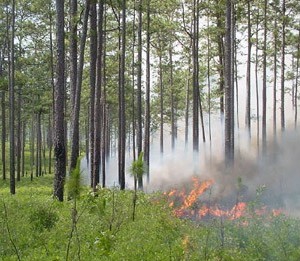
It is likely that eggs and young birds are much more vulnerable to fire.
Although there were no data directly investigating Bachman's sparrow nest
mortality due to fire as of 2006, literature reviews have used life history
characteristics to speculate on possible effects of fire on nesting success and
bird populations [15,42,54]. Since Bachman's sparrows nest on the ground, even
low-severity surface fires during the breeding season could result in considerable
nest mortality. However, the degree to which a population would be affected by
fire would depend on several factors including occurrence of renesting, season of
burn, fire interval, fire uniformity, and fire severity [15,42,54]. Since Bachman's
sparrows renest and typically raise 2 broods per season (See the Breeding
section), this may mitigate at least some of the impact a breeding-season fire
would have on Bachman's sparrow productivity [42,54]. However, Bachman's sparrows
appear to disperse from burned sites at least temporarily [13,57] and the effects
of this on Bachman's sparrow reproduction have not been investigated. A review
states that prescribed fires early in the breeding season may allow for later
nesting attempts [9].
HABITAT-RELATED FIRE EFFECTS:
Much of the information regarding fire's effects on Bachman's sparrows and their
habitat focuses on the influence of fire interval. There is less information
regarding the impact of timing of fire and very little information regarding
the effects of fire severity or site characteristics. As of 2006, very few
studies compared Bachman's sparrow demographics on burned and unburned
sites.
Frequent fire is important in maintaining Bachman's sparrow habitat. Reviews note the importance of fire in maintaining the ground cover required by Bachman's sparrow [19,21,52]. In glades of south-central Missouri, sites burned every 5 to 10 years had significantly more forb cover (p=0.0001) and less coniferous shrub, sapling and tree cover (p≤0.0003), as well as marginally less deciduous sapling cover (p=0.502) compared to unburned and less frequently burned sites [10]. In southern Florida, shrub cover was not significantly (p>0.05) different on burned sites and control sites a year after burning, suggesting that infrequent fires had short-term effects on vegetation [25]. Results of different methods of longleaf pine sandhill restoration in northern Florida led investigators to conclude that mechanical removal and herbicides without frequent (1-5 yr) burning would be unlikely to maintain Bachman sparrow habitat [53].
Site conditions can influence the effect frequent fires have on habitat. For instance no significant (p>0.05) differences in vegetation characteristics were observed between recently (1-3 yrs) and not recently (4-5 yr) burned sites in mid-aged (24-40 years) loblolly pine stands in Georgia. However, in mature stands (40-100 years) many vegetation characteristics of recently burned sites, such as volume of vegetation at varying layers above ground and forb, grass, and tree/shrub volumes, differed significantly (p≤0.02) from sites that had not been recently burned [28]. The return of Bachman sparrows to an old-growth longleaf pine site in Georgia after a prescribed burn during the growing season was attributed in part to the quick recovery (4-6 weeks) of the fire-adapted vegetation, such as threeawn, present on the site [13]. A review also notes the influence the quick recovery of threeawn could have on Bachman's sparrow reproduction [9].
Bachman's sparrows have repeatedly been shown to occur in greater abundance in areas that are frequently burned. In 17- to 28-year-old slash pine plantations in northwest Florida, sites burned 1-2 times in the previous 4 years had significantly (p=0.006) higher relative abundance of Bachman's sparrows than similar sites that had not been burned [66]. In mature pine sites in Georgia, Bachman's sparrow relative abundance on burned sites (0.88 detections/count/site) was significantly (p<0.05) greater than on unburned sites (0.04 detections/count/site) [71]. In the glades of south-central Missouri, Bachman's sparrow abundance was significantly (p=0.0404) greater on sites burned every 5 to 10 years than sites that were not burned or that were burned less frequently [10]. In mature (40-100 years) loblolly pine stands of central Georgia, mean Bachman's sparrow densities were significantly (p=0.044) higher in recently (1-3 years) burned stands than in stands that had not been burned for 4-5 years [28]. In longleaf pine forest in Alabama and Florida, Bachman sparrow density was significantly (p=0.033) greater on sites burned ≤3 years ago than sites burned ≥4 years ago [67].
Bachman's sparrow numbers typically begin to decline 3 to 5 years after fire. Despite being present in the 2 years following fire, Bachman's sparrow was absent on a site 3 years after the initiation of fire exclusion in an old-field pineland in Florida [22]. In pole stage (11-15 years) slash pine stands of southeastern Georgia, Bachman's sparrows were common on sites that had been burned 1 to 2 years previously, but were rare or absent in areas that had been burned ≥3 years previously [35]. On a study site in South Carolina, it was estimated that the understory was not suitable for Bachman's sparrows by 4 to 5 years after burning [18]. In areas managed for the red-cockaded woodpecker of northwestern Florida, comparisons of habitat characteristics in sites occupied and unoccupied by Bachman's sparrows led to a recommendation of burning every 3 to 5 years to enhance the quality of the habitat for Bachman's sparrows [52]. In dry prairie sites of central Florida burned 6 months, 1.5 years, and 2.5 years previously, density of Bachman's sparrows (p=0.561) and a categorical measure (territory, paring, young) of breeding success did not differ significantly (p=0.421) [60].
Although more research is need, initial investigations suggest that fires during the growing season do not have substantial negative impacts on Bachman's sparrows. In longleaf or longleaf-loblolly pine stands in South Carolina, survival of Bachman's sparrows from 20 April to 26 July was not significantly (p=0.58) different between unburned sites and sites that were burned in early May or mid- to late June [57]. In a study limited by the small number of Bachman's sparrows detected, abundance on plots burned in the growing season was not significantly (p=0.16) different than on plots burned in the dormant season [36]. Bachman's sparrow density was not significantly affected by season of last burn in longleaf pine forests in Alabama and Florida in either 1999 (p=0.762) or 2000 (p=0.683). However, most stands had burn histories that included both summer and winter fires [67]. Bachman's sparrow abundance and frequency of occurrence were lower on former dry prairie sites in Florida that were burned in summer than sites burned in winter, but were higher than on unburned sites [25]. No significant (p=0.74) differences in Bachman's sparrow abundance between plots burned in the dormant season and those burned in the growing-season were detected in a longleaf pine-threeawn community of north-central Florida. The following table shows the average number of Bachman's sparrows on 4, 30-acre (12 ha) plots burned in the dormant season and 4, 30-acre (12 ha) plots burned in the growing season [20].
| Dormant season plots | Growing season plots | ||||||
| 1.25 | 3.25 | 2.0 | 3.5 | 3.5 | 3.0 | 2.25 | 2.75 |
Available information suggests that Bachman's sparrows disperse from sites burned in the growing season. Seven of ten radio-marked Bachman's sparrows dispersed within 3 days of growing season burns in longleaf or longleaf-loblolly pine stands in South Carolina. In one stand most birds relocated to an adjacent unburned stand, while Bachman's sparrows in the other stand moved much further. No Bachman's sparrows were present in burned areas from 3 days after the fire, which was significantly (p<0.05) lower than Bachman's sparrow densities on the sites before burning. Initial recolonization of burned areas began from 50 to 100 days following fire [57]. Bachman's sparrows dispersed from an old-growth longleaf pine site in Georgia soon after a prescribed fire in late May. They began to recolonize the area within 6 weeks of the fire, when vegetation was 2 to 3 feet (0.6-0.9 m) tall. After recovery of the vegetation, territory size of males in the burned area was similar to those outside the burned area, but renesting was not observed in the burned area. However, Bachman's sparrows with fledged young in adjacent habitat used the burned area and young Bachman's sparrows used the burned area extensively, suggesting the site provided good postbreeding habitat [13].
Timing of burning within the breeding cycle is likely to influence the impact a growing season fire will have on Bachman's sparrow. A review suggests that burning earlier in the breeding cycle provides more time for vegetation to recover, which may allow for Bachman's sparrows to renest on the site [9]. Tucker and others [67] suggest that fires in late April and early May could result in large negative impacts on Bachman's sparrow reproductive output due to the destruction of nests during the late nestling to early fledging stages of the 1st nest cycle.
The context of a burn on the landscape scale is likely to impact Bachman's sparrows' response to a fire. The different responses of Bachman's sparrows on 2 stands in South Carolina suggest that the presence of Bachman's sparrow habitat adjacent to a burn could result in lower dispersal-related mortality and a smaller overall impact on reproductive output. The researchers suggest planning burns spatially to minimize dispersal distances and/or provide corridors between suitable habitat patches [57]. Lyon and others[41] provide a review of landscape factors in regards to fire's effects on wildlife.
Many Bachman's sparrow food sources appear to increase after fire. In a longleaf pine-threeawn-western bracken fern (Pteridium aquilinum) forest of Georgia, sites that were annually burned (>3 years) had higher total seed production than sites that were burned 2 or 3 years previously [6]. In addition, reviews note increases in seed production after fire in southern forests [15,40]. Fire's effects on arthropods have also been summarized in reviews [40,54,64].
Fire ecology: Reviews of fire ecology in southeastern pine savannas are provided by [23,51], while Van Lear and others [68] review fire ecology and restoration requirements of the longleaf pine-grassland ecosystem.
Fire regimes: The following table provides fire return intervals for plant communities and ecosystems where Bachman's sparrow may occur. Find fire regime information for the plant communities in which this species may occur by entering the species name in the FEIS home page under "Find Fire Regimes".
| Community or ecosystem | Dominant species | Fire return interval range (years) |
| cedar glades | Juniperus virginiana | 3-22 [29,49] |
| slash pine | Pinus elliottii | 3-8 |
| sand pine | Pinus elliottii var. elliottii | 25-45 [69] |
| South Florida slash pine | Pinus elliottii var. densa | 1-15 [46,61,69] |
| longleaf-slash pine | Pinus palustris-P. elliottii | 1-4 [46,69] |
| longleaf pine-scrub oak | Pinus palustris-Quercus spp. | 6-10 |
| pocosin | Pinus serotina | 3-8 |
| loblolly pine | Pinus taeda | 3-8 |
| loblolly-shortleaf pine | Pinus taeda-P. echinata | 10 to <35 |
| Virginia pine | Pinus virginiana | 10 to <35 |
| southeastern oak-pine | Quercus-Pinus spp. | <10 [69] |
| cabbage palmetto-slash pine | Sabal palmetto-Pinus elliottii | <10 [46,69] |
FIRE USE:
Frequent fires are an integral component of Bachman's sparrow habitat
management. A fire interval of approximately ≤5 years is required for the
maintenance of Bachman's sparrow habitat [18,22,52,67]. Site conditions, such as
overstory cover and species composition, are likely to influence the length of
the fire interval necessary to maintain Bachman's sparrow habitat. In areas
where mid-story establishment occurs quickly, a shorter fire interval will likely
be more effective than a longer interval in providing the habitat characteristics
required by Bachman's sparrows [28]. In areas with small amounts of fuel in the
understory or large hardwoods, mid-story removal will likely be necessary before
burning will be an effective tool for creating Bachman's sparrow habitat [52].
More research on season of burning in Bachman's sparrow habitat is necessary. Plentovich and others [52] summarize information demonstrating that growing-season burns are better than dormant-season burns at producing habitat characteristics important to Bachman's sparrows. Current evidence suggests that Bachman's sparrows are not substantially negatively impacted by growing-season burns [20,57]. In addition, there is limited evidence that growing-season burns provide good postbreeding habitat [13]. However, there is a lack of information addressing the impact of repeated growing-season fires on Bachman's sparrow demographics and the influence of time of burn within the Bachman's sparrow's breeding cycle [67]. King and others [36] suggest using both dormant- and growing-season burns to provide a mosaic of habitats for avian communities of west-central Georgia.
Given the likely importance of landscape factors on Bachman's sparrows (see Landscape Level Effects), planning burns spatially to minimize dispersal distances or provide dispersal corridors is likely to minimize the impacts of burning on Bachman's sparrow [57]
Fire's effect on food sources (Food Habits) [6,15,40] and nest parasites (Predators) [10] should also be considered when considering the impact of fire in potential or occupied Bachman's sparrow habitat.
1. Allaire, Pierre N.; Fisher, Charles D. 1975. Feeding ecology of three resident sympatric sparrows in eastern Texas. The Auk. 92(2): 260-269. [61644]
2. American Ornithologists' Union. 1957. Checklist of North American birds. 5th ed. Baltimore, MD: The Lord Baltimore Press, Inc. 691 p. [21235]
3. American Ornithologists' Union. 2018. The A.O.U. check-list of North American birds, 7th ed., [Online]. American Ornithologists' Union (Producer). Available: http://checklist.aou.org/. [50863]
4. Bernard, Stephen R.; Brown, Kenneth F. 1977. Distribution of mammals, reptiles, and amphibians by BLM physiographic regions and A.W. Kuchler's associations for the eleven western states. Tech. Note 301. Denver, CO: U.S. Department of the Interior, Bureau of Land Management. 169 p. [434]
5. Brooks, Robert Alexander. 1987. Avifaunal populations of regenerating clearcut areas in eastern Texas, with emphasis on the Bachman's Sparrow and Prairie Warbler. Nacogdoches, TX: Stephen F. Austin State University. 57 p. Thesis. [61632]
6. Buckner, James L.; Landers, J. Larry. 1979. Fire and disking effects on herbaceous food plants and seed supplies. Journal of Wildlife Management. 43(3): 807-811. [11966]
7. Burger, Loren W., Jr.; Hardy, Carol; Bein, Jeff. 1998. Effects of prescribed fire and midstory removal on breeding bird communities in mixed pine-hardwood ecosystems. In: Pruden, Teresa L.; Brennan, Leonard A., eds. Fire in ecosystem management: shifting the paradigm from suppression to prescription: Proceedings, Tall Timbers fire ecology conference; 1996 May 7-10; Boise, ID. No. 20. Tallahassee, FL: Tall Timbers Research Station: 107-113. [35612]
8. Caine, Linda A., Marion, Wayne R. 1991. Artificial addition of snags and nest boxes to slash pine plantations. Journal of Field Ornithology. 62(1): 97-106. [61176]
9. Carlile, Lawrence D. 1997. Fire effects on threatened and endangered species and habitats of Fort Stewart Military Reservation, Georgia. In: Greenlee, Jason M., ed. Proceedings: 1st congress on fire effects on rare and endangered species and habitats; 1995 November 13-16; Coeur d'Alene, ID. Fairfield, WA: International Association of Wildland Fire: 227-231. [52064]
10. Chambers, Rachel J. 1994. Habitat relations of Bachman's sparrows and other birds on Missouri glades. Columbia, MO: University of Missouri-Columbia. 60 p. Thesis. [61621]
11. Chandler, Craig; Cheney, Phillip; Thomas, Philip; Trabaud, Louis; Williams, Dave. 1983. Fire in forestry: Vol. I. Forest fire behavior and effects. New York: John Wiley & Sons. 450 p. [12241]
12. Conner, Richard N.; Shackelford, Clifford E.; Schaefer, Richard R.; Saenz, Daniel; Rudolph, D. Craig. 2002. Avian community response to southern pine ecosystem restoration for red-cockaded woodpeckers. The Wilson Bulletin. 114(3): 324-332. [44671]
13. Cox, Jim. 2006. Bachman's sparrow research, [Online]. Tallahassee, FL: Tall Timbers Research Station (Producer). Available: http://www.talltimbers.org/research/vecobsp.htm [2006, May 31]. [62234]
14. Dean, Tylan F.; Vickery, Peter D. 2003. Bachman's Sparrows use burrows and palmetto clumps as escape refugia from predators. Journal of Field Ornithology. 74(1): 26-30. [61593]
15. Dickson, James G. 2002. Fire and bird communities in the South. In: Ford, W. Mark; Russell, Kevin R.; Moorman, Christopher E., eds. The role of fire in nongame wildlife management and community restoration: traditional uses and new directions: Proceedings of a special workshop; 2000 December 15; Nashville, TN. Gen. Tech. Rep. NE-288. Newtown Square, PA: U.S. Department of Agriculture, Forest Service, Northeastern Research Station: 52-57. [41557]
16. Dunning, John B., Jr.; Borgella, Rene, Jr.; Clements, Krista; Meffe, Gary K. 1995. Patch isolation, corridor effects, and colonization by a resident sparrow in a managed pine woodland. Conservation Biology. 9(3): 542-550. [61586]
17. Dunning, John B., Jr.; Danielson, Brent J.; Watts, Bryan D.; Liu, Jiango; Krementz, David G. 2000. Studying wildlife at local and lanscape scales: Bachman's Sparrows at the Savannah River Site. In: Dunning, John B, Jr.; Kilgo, John C., eds. Avian research at the Savannah River Site: a model for integrating basic research and long-term management. Studies in Avian Biology No. 21. [Place of publication unknown]: Cooper Ornithological Society: 75-80. [62437]
18. Dunning, John B., Jr.; Watts, Bryan D. 1990. Regional differences in habitat occupancy by Bachman's Sparrow. The Auk. 107(3): 463-472. [61625]
19. Dunning, John B. 1993. Bachman's Sparrow. In: Poole, A.; Stettenheim, P.; Gill, F., eds. The Birds of North America. No. 38. Philadelphia, PA: The Academy of Natural Sciences; Washington, DC: The American Ornithologists' Union: 1-16. [62436]
20. Engstrom, R. T.; McNair, D. B.; Brennan, L. A.; Hardy, C. L.; Burger, L. W. 1996. Influence on birds of dormant versus lightning-season prescribed fire in longleaf pine forests: experimental design and preliminary results. In: Wadsworth, Kelly G.; McCabe, Richard E., eds. Facing realities in resource management: Transactions of the 61st North American wildlife and natural resource conference; 1996 March 22-27; Tulsa, OK. 61. [Publisher name unknown] 200-207. [62434]
21. Engstrom, R. Todd. 1993. Characteristic mammals and birds of longleaf pine forests. In: Hermann, Sharon M., ed. The longleaf pine ecosystem: ecology, restoration and management: Proceedings, 18th Tall Timbers fire ecology conference; 1991 May 30 - June 2; Tallahassee, FL. Tallahassee, FL: Tall Timbers Research, Inc: 127-138. [28329]
22. Engstrom, R. Todd; Crawford, Robert L.; Baker, W. Wilson. 1984. Breeding bird populations in relation to changing forest structure following fire exclusion: a 15-year study. The Wilson Bulletin. 96(3): 437-450. [60735]
23. Engstrom, R. Todd; Vickery, Peter D.; Perkins, Dustin W.; Shriver, W. Gregory. 2005. Effects of fire regime on birds in southeastern pine savannas and native prairies. In: Saab, Victoria A.; Powell, Hugh D. W., eds. Fire and avian ecology in North America. Studies in Avian Biology No. 30. Ephrata, PA: Cooper Ornithological Society: 147-160. [62500]
24. Eyre, F. H., ed. 1980. Forest cover types of the United States and Canada. Washington, DC: Society of American Foresters. 148 p. [905]
25. Fitzgerald, Susan M.; Tanner, George W. 1992. Avian community response to fire and mechanical shrub control in south Florida. Journal of Range Management. 45(4): 396-400. [18808]
26. Friedmann, Herbert. 1963. Hosts of the brown-headed cowbird. In: Host relations of the parasitic cowbirds. United States National Museum Bulletin No. 233. Washington, DC: United States National Museum: 41-172. [61104]
27. Garrison, George A.; Bjugstad, Ardell J.; Duncan, Don A.; Lewis, Mont E.; Smith, Dixie R. 1977. Vegetation and environmental features of forest and range ecosystems. Agric. Handb. 475. Washington, DC: U.S. Department of Agriculture, Forest Service. 68 p. [998]
28. Gobris, Nancy M. 1992. Habitat occupancy during the breeding season by Bachman's Sparrow at Piedmont National Wildlife Refuge in central Georgia. Athens, GA: University of Georgia. 45 p. Thesis. [62097]
29. Guyette, Richard; McGinnes, E. A., Jr. 1982. Fire history of an Ozark glade in Missouri. Transactions, Missouri Academy of Science. 16: 85-93. [5170]
30. Haggerty, Thomas M. 1988. Aspects of the breeding biology and productivity of Bachman's Sparrow in central Arkansas. The Wilson Bulletin. 100(2): 247-255. [61631]
31. Haggerty, Thomas M. 1995. Nest-site selection, nest design, and nest-entrance orientation in Bachman's Sparrow. The Southwestern Naturalist. 40(1): 62-67. [61619]
32. Haggerty, Thomas M. 1998. Vegetation structure of Bachman's Sparrow breeding habitat and its relationship to home range. Journal of Field Ornithology. 69(1): 45-50. [61617]
33. Haggerty, Thomas M. 2000. A geographic study of the vegetation structure of Bachman's Sparrow (Aimophila aestivalis) breeding habitat. Journal of the Alabama Academy of Science. 71(3): 120-129. [61606]
34. Hardin, Kimberly I.; Baskett, Thomas S.; Evans, Keith E. 1982. Habitat of Bachman's Sparrows breeding on Missouri glades. The Wilson Bulletin. 94(2): 208-212. [61637]
35. Johnson, A. Sydney; Landers, J. Larry. 1982. Habitat relationships of summer resident birds in slash pine flatwoods. Journal of Wildlife Management. 46(2): 416-428. [62098]
36. King, T. Gregory; Howell, Mark A.; Chapman, Brian R.; Miller, Karl V.; Schorr, Robert A. 1998. Comparisons of wintering bird communities in mature pine stands managed by prescribed burning. The Wilson Bulletin. 110(4): 570-574. [36037]
37. Krementz, David G.; Christie, Jeffrey S. 1999. Scrub-successional bird community dynamics in young and mature longleaf pine--wiregrass savannahs. Journal of Wildlife Management. 63(3): 803-814. [30361]
38. Kuchler, A. W. 1964. United States [Potential natural vegetation of the conterminous United States]. Special Publication No. 36. New York: American Geographical Society. 1:3,168,000; colored. [3455]
39. Lohr, Steven M.; Gauthreaux, Sidney A.; Kilgo, John C. 2002. Importance of coarse woody debris to avian communities in loblolly pine forests. Conservation Biology. 16(3): 767-777. [60758]
40. Lyon, L. Jack; Hooper, Robert G.; Telfer, Edmund S.; Schreiner, David Scott. 2000. Fire effects on wildlife foods. In: Smith, Jane Kapler, ed. Wildland fire in ecosystems: Effects of fire on fauna. Gen. Tech. Rep. RMRS-GTR-42-vol. 1. Ogden, UT: U.S. Department of Agriculture, Forest Service, Rocky Mountain Research Station: 51-58. [44448]
41. Lyon, L. Jack; Huff, Mark H.; Smith, Jane Kapler. 2000. Fire effects on fauna at landscape scales. In: Smith, Jane Kapler, ed. Wildland fire in ecosystems: Effects of fire on fauna. Gen. Tech. Rep. RMRS-GTR-42-vol. 1. Ogden, UT: U.S. Department of Agriculture, Forest Service, Rocky Mountain Research Station: 43-49. [40507]
42. Lyon, L. Jack; Telfer, Edmund S.; Schreiner, David Scott. 2000. Direct effects of fire and animal responses. In: Smith, Jane Kapler, ed. Wildland fire in ecosystems: Effects of fire on fauna. Gen. Tech. Rep. RMRS-GTR-42-vol. 1. Ogden, UT: U.S. Department of Agriculture, Forest Service, Rocky Mountain Research Station: 17-23. [44435]
43. Martin, Alexander C.; Zim, Herbert S.; Nelson, Arnold L. 1951. American wildlife and plants. New York: McGraw-Hill Book Company, Inc. 500 p. [4021]
44. McKitrick, Mary C. 1979. Territory size and density of Bachman's Sparrow in south central Florida. Florida Field Naturalist. 7(2): 33-34. [61643]
45. Mumford, Russell E.; Keller, Charles E. 1984. The birds of Indiana. Bloomington, IN: Indiana University Press. 376 p. [60761]
46. Myers, Ronald L. 2000. Fire in tropical and subtropical ecosystems. In: Brown, James K.; Smith, Jane Kapler, eds. Wildland fire in ecosystems: Effects of fire on flora. Gen. Tech. Rep. RMRS-GTR-42-vol. 2. Ogden, UT: U.S. Department of Agriculture, Forest Service, Rocky Mountain Research Station: 161-173. [36985]
47. National Geographic Society. 1999. Field guide to the birds of North America. 3d ed. Washington, DC: The National Geographic Society. 480 p. [60563]
48. Ogden, John C. 1974. The short-tailed hawk in Florida. I. Migration, habitat, hunting techniques, and food habits. The Auk. 91: 95-110. [60762]
49. Paysen, Timothy E.; Ansley, R. James; Brown, James K.; Gottfried, Gerald J.; Haase, Sally M.; Harrington, Michael G.; Narog, Marcia G.; Sackett, Stephen S.; Wilson, Ruth C. 2000. Fire in western shrubland, woodland, and grassland ecosystems. In: Brown, James K.; Smith, Jane Kapler, eds. Wildland fire in ecosystems: Effects of fire on flora. Gen. Tech. Rep. RMRS-GTR-42-volume 2. Ogden, UT: U.S. Department of Agriculture, Forest Service, Rocky Mountain Research Station: 121-159. [36978]
50. Perkins, Dustin W.; Vickery, Peter D.; Shriver, W. Gregory. 2003. Spatial dynamics of source-sink habitats: effects on rare grassland birds. Journal of Wildlife Management. 67(3): 588-599. [61600]
51. Platt, William J. 1999. Southeastern pine savannas. In: Anderson, Roger C.; Fralish, James S.; Baskin, Jerry M., eds. Savannas, barrens, and rock outcrop plant communities of North America. New York: Cambridge University Press: 23-51. [52459]
52. Plentovich, Sheldon; Tucker, James W., Jr.; Holler, Nicholas R.; Hill, Geoffrey E. 1998. Enhancing Bachman's sparrow habitat via management of red-cockaded woodpeckers. Journal of Wildlife Management. 62(1): 347-354. [61602]
53. Provencher, Louis; Gobris, Nancy M.; Brennan, Leonard A.; Gordon, Doria R.; Hardesty, Jeffrey L. 2002. Breeding bird response to midstory hardwood reduction in Florida sandhill longleaf pine forests. Journal of Wildlife Management. 66(3): 641-661. [42243]
54. Robbins, Louise E.; Myers, Ronald L. 1992. Seasonal effects of prescribed burning in Florida: a review. Misc. Publ. No. 8. Tallahassee, FL: Tall Timbers Research, Inc. 96 p. [21094]
55. Rutledge, Brandon T.; Conner, L. Mike. 2002. Potential effects of groundcover restoration on breeding bird communities in longleaf pine stands. Wildlife Society Bulletin. 30(2): 354-360. [61604]
56. Sauer, J. R.; Hines, J. E.; Gough, G.; Thomas, I.; Peterjohn, B. G. 1997. Basic information: trend estimates: Bachman's sparrow. In: The North American breeding bird survey results and analysis: 1966 - 1996. Version 96.4, [Online]. In: U.S. Geological Survey, Patuxent Wildlife Research Center, Migratory Bird Research. Laurel, MD: Patuxent Wildlife Research Center (Producer). Available: http://www.mbr-pwrc.usgs.gov/bbs/htm96/trenlist.html [2006, June 6]. [62155]
57. Seaman, B.D.; Krementz, D. G. 2000. Movements and survival of Bachman's sparrows in response to prescribed summer burns in South Carolina. In: Eversole, Arnold G., ed. Proceedings of the annual conference of the Southeastern Association of Fish and Wildlife Agencies; 2000 October 28-November 1; Baton Rouge, LA. 54. Tallahassee, FL: Southeastern Association of Fish and Wildlife Agencies: 227-240. [61609]
58. Seaman, Bradford D.; Krementz, David G. 2000. Movements and survival of Bachman's sparrow in response to growing-season prescribed burns in South Carolina. In: Moser, W. Keith; Moser, Cynthia F., eds. Fire and forest ecology: innovative silviculture and vegetation management: Proceedings of the 21st Tall Timbers fire ecology conference: an international symposium; 1998 April 14-16; Tallahassee, FL. No. 21. Tallahassee, FL: Tall Timbers Research, Inc: 169. Abstract. [37661]
59. Shiflet, Thomas N., ed. 1994. Rangeland cover types of the United States. Denver, CO: Society for Range Management. 152 p. [23362]
60. Shriver, W. Gregory; Vickery, Peter D. 2001. Response of breeding Florida grasshopper and Bachman's sparrows to winter prescribed burning. Journal of Wildlife Management. 65(3): 470-475. [40226]
61. Snyder, James R.; Herndon, Alan; Robertson, William B., Jr. 1990. South Florida rockland. In: Myers, Ronald L.; Ewel, John J., eds. Ecosystems of Florida. Orlando, FL: University of Central Florida Press: 230-274. [17391]
62. Stevenson, Henry M.; Anderson, Bruce H. 1994. The birdlife of Florida. Gainesville, FL: University of Florida Press. 892 p. [60776]
63. Stober, Jonathan M.; Krementz, David G. 2000. Survival and reproductive biology of the Bachman's Sparrow. In: Proceedings of the annual conference of the Southeastern Association of Fish and Wildlife Agencies; 2000 October 28-November 1; Baton Rouge, LA. 54. Tallahassee, FL: Southeastern Association of Fish and Wildlife Agencies: 383-390. [61613]
64. Swengel, Ann B. 2001. A literature review of insect responses to fire, compared to other conservation managements of open habitat. Biodiversity and Conservation. 10: 1141-1169. [43751]
65. Trani, Margaret K.; Brooks, Robert T.; Schmidt, Thomas L.; Rudis, Victor A.; Gabbard, Christine M. 2001. Patterns and trends of early successional forests in the eastern United States. Wildlife Society Bulletin. 29(2): 413-424. [40774]
66. Tucker, James W., Jr.; Hill, Geoffrey E.; Holler, Nicholas R. 1998. Managing mid-rotation pine plantations to enhance Bachman's sparrow habitat. Wildlife Society Bulletin. 26(2): 342-348. [31145]
67. Tucker, James W., Jr.; Robinson, W. Douglas; Grand, James B. 2004. Influence of fire on Bachman's sparrow, an endemic North American songbird. Journal of Wildlife Management. 68(4): 1114-1123. [51769]
68. Van Lear, David H.; Carroll, W. D.; Kapeluck, P. R.; Johnson, Rhett. 2005. History and restoration of the longleaf pine-grassland ecosystem: implications for species at risk. Forest Ecology and Management. 211(1-2): 150-165. [54058]
69. Wade, Dale D.; Brock, Brent L.; Brose, Patrick H.; Grace, James B.; Hoch, Greg A.; Patterson, William A., III. 2000. Fire in eastern ecosystems. In: Brown, James K.; Smith, Jane Kapler, eds. Wildland fire in ecosystems: Effects of fire on flora. Gen. Tech. Rep. RMRS-GTR-42-vol. 2. Ogden, UT: U.S. Department of Agriculture, Forest Service, Rocky Mountain Research Station: 53-96. [36983]
70. Wan Ramle, Wan A. Kadir. 1987. Vegetational characteristics of early successional sites utilized for breeding by the Bachman's Sparrow (Aimophila aestivalis) in eastern Texas. Nacogdoches, TX: Stephen F. Austin State University. 46 p. Thesis. [61633]
71. White, Donald H.; Chapman, Brian R.; Brunjes, John H., IV; Raftovich, Robert V., Jr.; Seginak, John T. 1999. Abundance and reproduction of songbirds in burned and unburned pine forests of the Georgia Piedmont. Journal of Field Ornithology. 70(3): 414-424. [60826]
72. Wilson, Christoper W.; Masters, Ronald E.; Bukenhofer, George A. 1995. Breeding bird response to pine-grassland community restoration for red-cockaded woodpeckers. Journal of Wildlife Management. 59(1): 56-67. [29218]
73. Wood, Douglas R.; Burger, L. Wes, Jr.; Bowman, Jacob L., Hardy, Carol L. 2004. Avian community response to pine-grassland restoration. Wildlife Society Bulletin. 32(3): 819-829. [61603]