

|
|
FEIS Home Page |
|
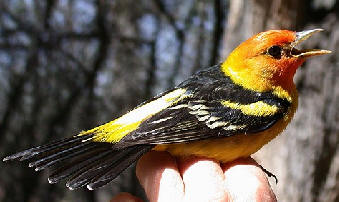 |
|
Bill Schmoker http://www.schmoker.org/BirdPics/ |
The following lists are speculative and are based on western tanager distribution information and the habitat characteristics and species composition of communities western tanagers are known to occupy during migration and breeding. There is not conclusive evidence that western tanagers occur in all the habitat types listed and some community types, especially nonconiferous habitats, may have been omitted. Abundance of western tanagers in the community types listed is variable. Western tanagers are rarely observed in some of the following communities and are quite common in others. See Preferred Habitat for more detail.
ECOSYSTEMS [39]:| AK | AZ | CA | CO | ID | MT | NE | NV | NM | OR |
| SD | TX | UT | WA | WY |
| AB | BC | NT | SK | YK |
| Ags. | B.C.S. | Chis. | Chih. | Col. | Dgo. | Gto. | Gro. | Hgo. | Jal. |
| Mex. | Mich. | Mor. | Nay. | Oax. | Pue. | Qro. | S.L.P. | Sin. | Son. |
| Tab. | Tamps. | Tlax. | Ver. | Zac. | D.F. |
SPECIES: Piranga ludoviciana
|
 |
 |
|
Dennis Paulson |
Henry Detwiler, Southwest Birders |
According to reviews, cup nests are built by the female, take about 4 or more days to construct, and are made from twigs, rootlets, grasses, and pine needles [54,58]. There is no evidence for 2nd broods in western tanagers [36,54]. However, a literature review notes a nesting attempt after a failed nest in west-central Idaho and suggests that renesting is a substantial source of late nesting attempts [54]. In addition, renesting was suggested as the explanation for a few late nests observed in Boulder County, Colorado [36].
Clutch size is typically 3 to 5 eggs [36,54,58]. Average clutch size in 10 nonparasitized nests in Boulder County was 3.8 eggs [36]. A literature review suggests that average clutch in the Southwest may be smaller than that of western tanagers nesting in the North [54]. According to a personal communication cited in a literature review, egg laying generally takes about 1 day per egg [54]. The female incubates the eggs for approximately 13 days, although shorter incubation periods have been reported. The young are fed by both parents and typically fledge 11 to 15 days after hatching [36,54,58]. According to a literature review, immature western tanagers have been observed with the parents at least 2 weeks after fledging [54].
A literature review notes that immature western tanagers initiate migration later than adult birds. Generally western tanagers leave more northerly locations in late summer or early fall while those in more southerly areas may stay as late as early November [54].
Reproductive success of western tanagers varies widely between studies and across years. A summary of nest success in a literature review included an average annual nest success probability estimate of 0.186 over 3 years, with a low of 0.035 and a high of 0.349 [54]. In a northern Arizona study area, an average of 43% (n=7) of nests succeeded to the nestling stage [16]. In Boulder County, nesting success varied from 11.3% to 75.3%, with an average of 51.8% over a 3-year period [36]. Daily nest survival rate on ungrazed sites in northeastern New Mexico was 0.955, which was not significantly (p<0.05) different from the 0.973 daily nest survival rate found on grazed sites [40]. According to a review, nest predation is the leading cause of nest failure. Predation rates ranged from 30% (n=48) in a study in New Mexico pinyon-juniper woodland to 86% (n=14) in a mixed-conifer forest in Idaho [54].
Western tanagers can live several years. A literature review includes an estimate of annual average survival rate of 0.753 and a return rate of 30.1% for western tanagers in west-central Idaho [54]. A wild western tanager 7 years and 11 months old has been documented from banding data [61].
PREFERRED HABITAT:According to literature reviews and field guides, western tanagers breed at a wide range of elevations from about 330 feet (100 m) in the Northwest up to 10,000 feet (3,050 m) [28,54,67]. In the northern portion of their breeding range western tanagers have been observed on sites over 8,300 feet (2,530 m) in Oregon [69] down to sites as low as 490 feet (150 m) in northwestern Washington [118]. In the southern portion of their breeding range, western tanagers are more typical on high-elevation sites [58]. Western tanagers were observed on an Arizona site 8,270 feet (2,520 m) in elevation [65] and on a site at 9,500 feet (2,900 m) in Nevada [82].
Nesting habitat: Western tanager nest in 2nd-growth and mature conifer and mixed forests. According to a literature review, western tanagers only breed in stands of pole- to large- sized trees and stands of pole- to medium-sized trees with >70% canopy cover [66]. Another review reported western tanager nesting confined to older 2nd-growth (>40 years) and mature (120+ years) Douglas-fir (Pseudotsuga menziesii) communities in the western Cascade Range in Oregon [84].
Western tanager nests are typically found in coniferous trees toward the end of horizontal branches and at heights greater than 10 feet (3 m). According to personal communications reported in a literature review [54], 79% of 43 western tanager nests in British Columbia were found in conifers, primarily Douglas-fir. The deciduous trees most often used were quaking aspen (Populus tremuloides) and willows (Salix spp.). The position of western tanager nests along the branches of deciduous trees was more variable than in conifers. On this site, 56% of western tanager nests were at heights from 21 to 36 feet (6.4-11 m). Of 9 western tanager nests in an Alberta study site, 8 occurred in white spruce (Picea glauca) and 1 was found in quaking aspen. Nest height ranged from 20 to 42 feet (6.3-12.8 m), with a mean of about 30 feet (9.3 m). On average, nests were located 80% of the distance from the trunk to the tip of the branch. Of 49 western tanager nests found in a pinyon-juniper (Pinus-Juniperus spp.) woodland in northeastern New Mexico, 98% were in Colorado pinyon (P. edulis) and the remainder occurred in Douglas-fir. On this site, nest trees averaged 24 feet (7.4 m) in height and over 8 inches (21.9 cm) in dbh. The average height of nests was 18 feet (5.4 m). In a nearby mixed-conifer forest, nests were found in Douglas-fir and ponderosa pine (P. ponderosa). Nest trees on this site averaged nearly 50 feet (15.1 m) in height and 13 inches (32.7 cm) in dbh. The average nest height was 16 feet (4.93 m) and on average nests were located about 5 feet (1.49 m) from the tree stem and 3 feet (0.97 m) from the edge of the tree's foliage [54]. Western tanager nests on a north-central New Mexico site occurred at heights from 8 to 15 feet (2-5 m), typically in white fir (Abies concolor) located in open areas [124]. In Idaho, western tanager nests were found in conifers at an average height of 40 feet (12.3 m) and ranged from 8 to 55 feet (2.4-16.8 m) [81]. Of 58 nests at a Colorado study site, 54 occurred in ponderosa pine and 4 were found in Douglas-fir [36]. Nest height was significantly (p<0.001) associated with tree height, with the mean nest height at approximately 54% of tree height. On average western tanager nests were located 63% of the distance between the trunk and the branch tip. This is closer to the bole than found in most studies and the authors suggest that the conical shape of the ponderosa pine requires nests be placed closer in toward the trunk in order to provide cover. Canopy cover at nest sites averaged 71%, with a minimum of 31% cover [36].
Foraging habitat: Western tanagers forage in many habitats. A literature review states that western tanager forages in all successional stages from grass-forb communities to stands of large trees with greater than 70% cover [66]. In western Oregon, western tanagers were not observed using the grass and forb successional stages, but were observed foraging in areas not used for nesting, such as shrub/sapling and young 2nd growth (16-40 years old) stands typically comprised of Douglas-fir [84].
Although western tanagers forage in many habitats, they are typically observed foraging in forest canopies. For instance, in an area of California primarily dominated by giant sequoia (Sequoiadendron giganteum), western tanagers spent 60% to 75% of their foraging time above 35 feet (10 m) and less than 2% of foraging time below 12 feet (4 m) [60]. In coniferous forests of western Montana, western tanagers were typically observed foraging in canopy foliage above 26 feet (8 m) [97]. In mixed conifer-oak forests in California, western tanager foraged from 16 to 92 feet (5-28 m) [2]. The following table shows the percentage of western tanager foraging movements that occurred in various height categories in primarily Douglas-fir dominated communities of interior British Columbia [88].
| 0.0-1.3 m | >1.3-5.0 m | >5.0-10.0 m | >10.0-20.0 m | >20.0-30.0 m | >30.0 m |
| 1.9% | 32.1% | 29.6% | 25.3% | 10.5% | 0.6% |
In primarily Douglas-fir dominated vegetation in British Columbia, the occurrence of western tanager foraging in various portions of trees and the size of those trees were investigated [88]. Western tanager perched on stems less than 1 inch (<2.5 cm) in diameter in 96.9% of observations. Nearly 85% of observations were either near the branch tip or in the middle of the branch. Western tanagers foraged on larger trees, with nearly 80% of observations on trees with a trunk diameter of more than about 8 inches (20.0 cm) and over 80% of observations occurring on trees 33 feet (10 m) or taller. Western tanager used taller trees (p<0.01) and trees with larger diameters significantly (p<0.001) more than their availability in all silvicultural treatments analyzed [88].
Western tanager may preferentially forage on certain species. In a California study of foraging and habitat relationships of insect-gleaning birds in mixed conifer-oak forest, western tanager used white fir more and incense-cedar (Calocedrus decurrens) less than would be expected from their availability. Sugar pine (Pinus lambertiana), Douglas-fir, and California black oak (Quercus kelloggii) were used slightly more than their availability, but this was not considered significant, since 95% confidence intervals overlapped with use in accordance with availability. Ponderosa pine was used in proportion to its availability [2]. In mostly Douglas-fir dominated communities in British Columbia, western tanager was observed foraging in Douglas-fir in 88.9% of observations, ponderosa pine in 7.4% of observations, and in living trees of other species in 3.7% of observations. Over all sites the preference for Douglas-fir was significantly (p<0.001) greater than availability. When sites were separated by the various silvicultural treatments, only the 3-year-old light cut (Douglas-fir and ponderosa pine larger than 14 inches (35 cm) in dbh and other species larger than 6 inches (15 cm) dbh were harvested) and the selectively logged (20% of 6 to 8 inch-dbh (15.2-20.3 cm) trees, 25% of 8 to 12 inch-dbh (20.3-30.5 cm) trees, 45% of 12 to 24 inch-dbh (30.5-61.0 cm) trees, and 75% of >24 inch-dbh (>61.0 cm) trees were removed) sites showed significantly (p<0.01) greater use of Douglas-fir by western tanager than would be expected from availability. Although western tanager was never observed foraging in quaking aspens in this study [88], in a literature review western tanager was reported foraging on quaking aspen, as well as balsam poplar (P. balsamifera ssp. balsamifera), speckled alder (Alnus rugosa), and white spruce in central Alberta [54].
Stand age: Although western tanagers occur in stands of varying ages and have been observed in higher densities on young sites [45], they are typically detected more often in relatively mature stands. For example, western tanagers appear to occur more often in mature (50-60 years old) and old-growth (100+ years) quaking aspen than young (<23 years old) trembling aspen stands in the Prince Rupert Forest Region of British Columbia [96]. In Alberta, western tanager was detected significantly (p<0.001) more often in old (120+ years old) quaking aspen mixed-wood stands than in mature (50-65 years old) or young (20-30 years old) mixed-wood stands [109]. The same trend has been found in other communities. In Washington, western tanager was observed on sites dominated by older (35-year- and 60-year-old) red alder (A. rubra), but not on sites comprised of young (4-year- and 10-year-old sites) red alder [118]. Although western tanagers were fairly common on recently harvested sites, western tanagers were detected at the most points in "mature" and "old-growth" ponderosa pine in northern Idaho and western Montana [57]. Western tanagers had higher densities in mature (33 feet, >10 m tall) conifer plots and young conifer/mature conifer transition plots than in young (3-33 feet, 1-10 m tall) conifer plots in British Columbia [111]. Western tanagers occurred at an average density of 53.2 birds/100 ha in sawtimber Douglas-fir stands (>80-150 years old), 37.0/100 ha in mature Douglas-fir stands (>100 years old), and 3.1/100 ha in sapling Douglas-fir stands (<20 years old) in northern California [99]. Although western tanagers occurred at higher densities in young Douglas-fir forest in Oregon, the stands were 40 to 72 years old. Mature forest was from 80 to 120 years old, and old-growth forest was 200 to 525 years old. The table below shows the average number of western tanagers/40 hectares in these 3 forest types during 1985 and 1986 [24].
| Young | Mature | Old growth | |
| 1985 | 6.50 | 1.92 | 1.89 |
| 1986 | 3.74 | 0.76 | 1.02 |
Stand structure/composition: Western tanagers appear to prefer large trees. In a report based on literature review and expert opinion, large trees are considered an important component of stands for western tanager [138]. In addition, western tanager was significantly (p<0.05) positively associated with large saw timber (>20% cover, >21 inch (>53.2 cm) mean dbh) and significantly (p<0.05) negatively associated with pole timber (>20% cover; conifers >10 feet (>3 m) tall and 4-12 inch (10.2- 30.4 cm) mean dbh; hardwoods 10-50 feet (3-15 m) tall and 4-12 inch (10.2-30.4 cm) mean dbh) stands dominated by Douglas-fir, western hemlock (Tsuga heterophylla), and red alder in the central Oregon Coast Ranges [78]. In primarily Douglas-fir-dominated communities in British Columbia, western tanagers foraged in trees >33 feet (>10 m) tall in more than 80% of observations, and nearly 80% of western tanager foraging observations were in trees with trunk diameters greater than 8 inches (>20.0 cm). In addition, western tanagers foraged in trees smaller than 33 feet (10 m) tall less than their availability [88].
Most evidence suggests that western tanagers prefer areas with moderate canopy cover. A literature review asserts that western tanagers avoid continuous canopy [66]. Another literature review classifies stands with large trees and 40 to 69% canopy cover as optimal western tanager habitat. Large trees and canopy cover of ≥70% is considered suitable habitat, while areas with large trees and <40% cover is categorized as marginal habitat [130]. In sapling/pole and mature ponderosa pine habitats of the Black Hills in South Dakota, western tanager occurred at the highest densities in stands with intermediate (40%-70%) canopy cover [86]. In 35- to 45-year-old Douglas-fir and red alder-dominated stands, an average of 322% more western tanagers were detected on sites logged to a density of 240 to 320 trees/ha, and an average of 363% more western tanagers were detected on sites logged to a density of 180 to 220 trees/ha, compared to controls with 410 to 710 trees/ha. The difference in western tanager detections between the logging treatments and the control grew larger over time [51]. In Arizona, western tanager occurred at significantly (p<0.05) higher densities (15.8/40 ha) in forest dominated by Douglas-fir and ponderosa pine the year after logging to an average of 167.7 trees/ha compared to control stands (7.7/40 ha) with average tree density of 626.2 trees/ha. Western tanager densities on the treatment and control sites were more similar the following year [38]. In British Columbia, western tanagers occurred at significantly (p=0.027) higher densities after "light" logging on a site containing Douglas-fir and ponderosa pine [89]. Western tanager was apparently positively influenced by thinning a ponderosa pine stand by 20% in Arizona [122]. In the Sierra Nevada of California, western tanager occurred at a higher density in a open-canopied (602 trees >10 cm dbh/ha) mixed-conifer stand consisting of Jeffrey pine (Pinus jeffreyi), lodgepole pine (P. contorta), white fir, and incense-cedar compared to a closed-canopied (994 trees >10 cm dbh/ha) mixed conifer stand comprised of incense-cedar and white fir. This same pattern was found in open- (420 trees > 10 cm dbh/ha) and closed-canopied (658 trees > 10 cm dbh) California red fir (Abies magnifica var. magnifica) stands. The following table shows the number of western tanagers/40 hectares on these sites [12].
| Open-canopied forest | Closed-canopy forest | |
| Mixed-conifer | 13 | 7 |
| Red fir | 22 | 10 |
Western tanager response to very open habitats is less certain. Several studies have observed higher western tanager abundance in very open stands. In the Oregon Cascade Range, western tanager occurred at its highest abundance in retention stands planted with Douglas-fir, in which approximately 12, 12-inch (>30 cm) dbh trees/ha and 7.5 large (12-inch (30-cm) dbh and 5 feet (≥1.5-m) tall) snags/ha were retained, compared to clearcuts planted with Douglas-fir or mature forest stands [128]. In western Montana, western tanager density was 10.5 pairs/40 ha in 1967 and 11.5 pairs/40 ha in 1968 in an open (21.2 stems/ha) Douglas-fir stand and only 4.0 pairs/ha in both 1967 and 1968 in a comparatively dense (91.5 stems/ha) lodgepole pine stand [74]. In an area of the Oregon Cascade Range dominated by western hemlock, Douglas-fir, and western redcedar (Thuja plicata), western tanager had significantly (p=0.01) higher relative abundance in retention stands with 2 to 14 trees/ha than in clearcuts, closed-canopy plantation, mature, or old-growth stands [49]. However, no significant relationship (p>0.1) between western tanager abundance and the basal area of residual trees in a quaking aspen-dominated mixed-woods was found in Alberta the year after and 3 years after logging. In addition, western tanager was significantly (p≤0.1) more abundant in cut-blocks the year before logging than the year after. However, there were no significant (p>0.1) differences in western tanager abundance on the logged areas between the year before logging and the 3rd year after logging or between logged sites and controls [126]. Western tanagers in Arizona occurred infrequently and at low densities from about 4 to 6 years after harvest on a ponderosa pine forest thinned to 69 trees/ha [122]. Western tanagers in Douglas-fir dominated sites of the Oregon Coast Ranges declined in very open stands. Western tanager was significantly (p=0.0005) less abundant in clearcuts and 2-story harvests, with 20-30 trees/ha, than in small (0.5-acre, 0.2-ha) patch harvests and control stands. The following table show the mean abundance (# observations/5 ha) of western tanagers on the different treatments over 3 years [25].
| Control | Small-patch | 2-Story | Clearcut | |
| Year 1 (before treatment) | 3.0 | 9.6 | 10.2 | 10.7 |
| Year 2 (after treatment) | 7.0 | 10.4 | 5.2 | 1.8 |
| Year 3 | 10.3 | 9.9 | 5.5 | 1.3 |
Western tanager has been reported to prefer areas with a diverse forest structure, but importance of lower forest layers is unclear. In the Black Hills of South Dakota, western tanager was significantly (p≤0.1) more abundant in multistoried habitats with bur oak (Q. macrocarpa) and quaking aspen/paper birch (Betula papyrifera) under a ponderosa pine canopy than in sapling/pole or mature ponderosa pine stands with varying canopy cover [86]. Reviews assert the importance of a diverse forest structure [138] and a dense deciduous understory [66] for western tanagers. However, in some areas the influence of lower forest layers may be relatively insignificant. For example, removal of incense-cedar and white fir from 1 to 10 feet (0.3-3 m) tall in giant sequoia forests had little impact on western tanager density [60].
Large downed woody material may be important for western tanagers. Western tanager abundance was significantly (p<0.04) positively associated with downed woody material volume >8 inches (>20 cm) in quaking aspen mixed-wood forests in Alberta [109]. In addition, a literature review suggests leaving slash to promote western tanager occurrence on a site [66]. Smaller woody material may not be as beneficial. Western tanagers were detected an average of 2.75 times on sites with standing dead and downed wood <6 inches (<15 cm) in diameter removed from old-growth grand fir stands in Oregon, which was similar to the average of 2.0 western tanager detections on controls [22].
Western tanager may associate with or avoid some plant species. For example, in mixed-wood forests in Alberta western tanager was significantly (p=0.1) positively associated with conifer density (number/ha) [109]. Western tanager was also considered a conifer-associated species in quaking aspen-dominated and mixed quaking aspen-conifer communities in British Columbia [96]. It is suggested that western tanager's preference for multi-stored habitats in the Black Hills may be related to the bur oak and quaking aspen/paper birch mid-story [86]. Western tanager was not significantly (p=0.184) related with abundance of pineland dwarf mistletoe (Arceuthobium vaginatum ssp. cryptopodum) in ponderosa pine stands in central Colorado [14]. Western tanager was negatively associated with subalpine fir (A. lasiocarpa) cover in northern Rocky Mountain conifer forests [56].
Despite the above associations, western tanagers appear rather general in their habitat requirements across their breeding range. Several studies have found no significant relationship between western tanagers and many habitat characteristics. In Douglas-fir stands in British Columbia, western tanager was not associated with any of 16 habitat characteristics investigated, such as foliage height diversity, tree cover, canopy volume, number of stems of varying sizes and total stems of certain species [89]. In Douglas-fir dominated sites in the central Oregon Cascade Range, western tanagers were not associated with any of the investigated site or habitat variables, such as slope or the cover of vegetation at varying heights [128]. In riparian habitats of California, western tanager was not significantly associated with any of 17 habitat structure or urbanization variables measured, although this may be due at least in part to small sample size [106]. Although western tanager was a commonly observed species, no associations between western tanager and habitat characteristics were reported in a study of avian habitat relationships in ponderosa pine and ponderosa pine/Gambel oak (Q. gambelii) communities of Arizona [105]. Due to the lack of correlation between western tanagers and habitat variables and principal components in quaking aspen forest of Alberta, the authors imply that the ability of western tanager to use young stands for foraging (see Foraging habitat) along with their need for older forests for nesting (see Nesting habitat) may result in the spatial arrangement of these habitats being more influential than many within-stand habitat characteristics [133].
Effects of spatial arrangement/area: The response of western tanager to spatial arrangement of habitats is uncertain and is likely influenced by many factors, including the habitats involved, the scale of investigation, and the habitat variables measured. Western tanager breeding was significantly negatively correlated with level of fragmentation (p=0.0003) and the length of edge (p=0.02) in a nationwide study [103]. At the 2,500 acre (1,000 ha) scale, western tanagers were significantly negatively correlated with percent clearcut (p<0.01) and the total amount of edge (p<0.05) in Douglas-fir dominated forests of northwestern California. At the plot scale western tanager relative abundance was significantly negatively associated with length of edge (p<0.1) and positively associated with distance to clearcut (p<0.05). Only significance level and direction of correlations were reported in this study [104]. However, western tanagers seemed unaffected by harvesting of 13, 0.5-acre (0.2-ha) patches in an 8-acre (3-ha) Douglas-fir dominated stand on the Oregon Coast Ranges [25]. In northern Idaho, western tanagers were detected more often in fragmented old growth that had 1- to 8-year-old or 10- to 26-year-old embedded clearcuts than in continuous old-growth forests comprised mainly of western hemlock and western redcedar [53]. Western tanagers were also associated with more fragmented habitat configurations in western Oregon landscapes from 620 to 750 acres (250-300 ha) in area and comprised predominantly of Douglas-fir, western hemlock, and red alder. Western tanagers were significantly positively related with density of edge weighted by structural and floristic contrast between adjacent patches (p=0.015) and the degree of variability in patch size (p=0.049). Field data suggest that western tanagers were associated with high-contrast edges involving hardwoods in mixed or hardwood dominated stands [78]. In northwestern California, western tanagers were significantly (p<0.05) positively associated with adjacent hardwood stands [104].
Western tanagers may occur less often or at lower densities in small habitat patches. For instance, there was no evidence of western tanagers breeding in riparian buffer strips less than 670 feet (<200-m) wide in logged areas of Alberta dominated by quaking aspen [48]. In the Black Hills of South Dakota, western tanagers were not observed in stands less than 25 acres (10 ha) [107]. In Douglas-fir, western hemlock, and western redcedar dominated forests in southwestern Washington, western tanager was more abundant on 100-foot (31 m) buffer treatments than on 50-foot (14 m) riparian buffer strips [94]. However, western tanager relative abundance was not significantly correlated with stand area in Douglas-fir forests of northwestern California [104].
The effect of patch isolation is uncertain. Western tanager relative abundance was not significantly (p>0.1) associated with an isolation index at the stand scale in Douglas-fir forests of western California [104]. However, in north-central Alberta in mixed-woods comprised of quaking aspen, balsam poplar, and white spruce, western tanager showed a significant (p=0.008) positive response to creation of isolated habitat patches (bordered by a 670-foot (200-m) clearcut on all sides) the 1st year after treatment. No significant change (p>0.1) was observed on connected fragments [110].
FOOD HABITS:Western tanagers primarily glean from foliage. In the mixed conifer-oak woodland of California, 45% of western tanager foraging observations were foliage gleaning. Western tanagers gleaned from twigs in 10% of observations and from branches in 5% of observations. Hawking comprised the remainder of western tanager foraging observations [2]. In British Columbia, 88.3% of gleaning observations occurred on foliage, 10.5% on branches and twigs, and 1.2% on trunks [88].
Western tanagers eat fruits and a wide range of insects. A field guide states that western tanager's diet is about 18% plant matter and 82% insects [28]. According to a literature review, fruits eaten by western tanagers include hawthorn apples (Crataegus spp.), raspberries (Rubus spp.), mulberries (Morus spp.), elderberries (Sambucus spp.), serviceberries (Amelanchier spp.), and wild and cultivated cherries (Prunus spp.) [54,58,75]. Western tanagers have been observed foraging on Perry's agave (Agave parryi) nectar [65]. Reports of western tanager eating Eucalyptus (Eucalyptus spp.) nectar, Russian-olive fruits, and human-provided food, including bird seed and dried fruit, were summarized in a review [54]. A literature review asserts that western tanagers are major consumers of western spruce budworms (Choristoneura occidentalis) [66], and they have been observed eating Douglas-fir tussock moth larvae (Orgyia pseudotsugata) [127]. A study summarized in literature reviews [54,58] found 75% of insects in western tanager stomachs in August were Hymenopterans, mostly wasps and ants. The other insects observed were beetles (Coleoptera,12%), mainly click beetles (Elateridae) and woodborers (Bupestridae), true bugs (Hemipterans, 8%), grasshoppers (Orthoptera, 4%) and caterpillars (Lepidoptera, 2%).
PREDATORS:According to literature reviews, Clark's nutcrackers (Nucifraga columbiana), northern pygmy-owls (Glaucidium gnoma), great horned owls (Bubo virginianus), and jays such as scrub jays (Aphelocoma spp.), pinyon jays (Gymnorhinus cyanocephalus) and Steller's jays (Cyanocitta stelleri) are typical avian predators of western tanager nests. Other reported nest predators include black bears (Ursus americanus), prairie rattlesnakes (Crotalus viridis), and bullsnakes (Pituophis catenifer) [54]
Western tanager nests are parasitized by brown-headed cowbirds (Molothrus aster) [36,40]. Parasitism rates can be high [40], and parasitism has been shown to dramatically reduce the number of western tanagers fledged per nest [36]. A literature review summarizes information related to western tanager nest parasitism [54].
BEHAVIOR:A literature review provides a detailed summary of migration and other behaviors such as vocalizations, territoriality, and self-maintenance [54].
MANAGEMENT CONSIDERATIONS:SPECIES: Piranga ludoviciana
 |
|
| Wind Cave National Park. Vegetation in background was burned in the Highland Creek Wildfire of 2000. |
It is likely that nests are more vulnerable to fire [30,92]. Although there were no data directly investigating western tanager nest mortality due to fire as of 2006, literature reviews have used fire characteristics and life history of species to speculate on possible effects of fire on nesting success and bird populations [73,102]. Due to the height of most western tanager nests (see Nesting habitat), only relatively severe fires would directly impact their young. Since conditions necessary for fire severe enough to affect nests higher in the canopy typically occur after nesting season [73], it is likely that direct effects of growing-season fire on western tanager nests would be uncommon compared to species nesting lower to the ground. In addition, the possibility of western tanager renesting may reduce the direct effects of a fire on western tanager recruitment [73,102]. Nests impacted early enough in the breeding season could be compensated for by later nesting attempts. However, since western tanagers only rear 1 brood per season (see Timing of Major Life History Events) fires of enough severity in the mid- to late-breeding season are likely to have a larger effect on western tanagers than fires before or after the breeding season [72] and may have substantial impacts on the survival of western tanager nestlings and fledglings. In addition to fire severity and timing, other fire characteristics such as the uniformity of the burn and fire frequency are likely to influence the degree to which fire directly impacts western tanager reproduction [52,73].
HABITAT-RELATED FIRE EFFECTS:Reviews that address the effect of fire on western tanager demonstrate that several different responses have been observed [47,63,108]. However, it is possible that fire severity explains a considerable portion of the observed variation. It appears that western tanagers generally respond positively to low-severity fire and negatively to high- severity fire.
Western tanager abundance has been observed to increase after low- to moderate-severity fire [19,21,116]. Western tanager was significantly (p<0.05) more abundant in the year after prescribed underburns in a ponderosa pine forest and pine-grassland ecotone of Wind Cave National Park, South Dakota compared to unburned sites [21]. Abundance of western tanager was much greater (103 detections) on a site moderately affected by wildfire in ponderosa pine forests in Arizona than on an unburned site (20 detections) [19]. In low- to mid-elevation conifer communities of western Montana, western tanagers were significantly (p=0.005) more abundant after wildfire resulted in <20% tree mortality than before the wildfire occurred. Western tanager abundance did not increase significantly (p>0.05) on sites subject to moderate (20%-80% tree mortality) wildfire. The differences ((after fire mean minus before fire mean) x 100) in western tanagers detected before and after fire at unburned points and points that burned at low (<20% tree mortality), moderate (20%-80% tree mortality) or high severity (>80% tree mortality) are shown in the table below (sx is in parentheses) [116].
| Unburned (n=120) | Low (n=52) | Moderate (n=32) | Severe (n=38) | |
| after fire mean - before fire mean | 2.4 (5.2) | 23.9 (7.3) | 12.1 (8.9) | -15.4 (8.6) |
Much of the evidence for decreases in western tanager abundance comes from investigations of high- severity fires. In coniferous forests of Yellowstone and Grand Teton National Parks, western tanagers occurred at higher densities on unburned sites (up to 15 western tanagers/100 acres) and moderately burned sites ≤3 years old (up to 10 western tanagers/100 acres) than in areas that had burned in severe fires 2 and 3 years previously, where western tanagers were only observed outside of transects [125]. In the Sierra Nevada of California, western tanager occurred at higher densities in unburned (0.75-1.5 pairs/plot) mixed-coniferous vegetation dominated by Jeffrey pine and white fir than on sites that burned in the stand-replacing Donner Ridge Fire 6 to 8 years earlier (0-0.25 pair/plot). The burned sites were comprised of small pockets of Jeffrey pine and white fir along with post-fire vegetation such as woolly mule-ears (Wyethia >mollis), golden current (Ribes aureum), and greenleaf manzanita (Arctostaphylos patula) [20]. The trend on this site continued through 1985, with western tanager occurring at a density of 0.2 territory/plot in the burned area 15 years after the fire and 1.7 territories/plot in unburned vegetation dominated by Jeffrey pine, ponderosa pine, Washoe pine (P. washoensis), their intermediates, and white fir [98]. Although the response was not significant (p>0.05), western tanager abundance declined after severe (>80% tree mortality) wildfire in coniferous forests on low- to mid-elevation sites in western Montana [116]. A literature review that summarized the findings of 11 published and unpublished studies reported that western tanagers were more abundant on unburned sites than on 23 severely-burned conifer forest sites [63].
Studies incorporating a range of fire severities have found fire resulted in no change in western tanager abundance. For instance, in ponderosa pine-dominated forests in northern Arizona and New Mexico, western tanager did not respond to low to moderate severity prescribed burns and wildfire. The average western tanager detections over the 4 years before a prescribed burn (2.75) in Arizona were similar to the year after the fire (3.00). Average western tanager detections before a wildfire (16) on a New Mexico site were not substantially different from detections in the 2 years after the burn (13.5) [16]. Western tanagers response to high-severity surface fires in white fir and red fir communities of Yosemite National Park were inconclusive [42]. In ponderosa pine forests in Arizona, 24 western tanagers were detected on sites 3 years after they were severely burned, while 20 were detected on an adjacent unburned site [19].
Habitat type is likely to influence western tanager's response to fire. Since western tanagers appear to occur at relatively low abundance in dense forests [12,38,51] and are generally rare on very open sites such as clearcuts [25,49,128], sagebrush communities, and grasslands [57], fires that reduce tree density without dropping below some threshold may favor western tanagers. In pinyon-juniper communities of east-central Nevada, western tanagers were more abundant on a prescribed burn site than an unburned site before the burn, but were absent on the prescribed burn site after burning. In this habitat, burned areas were mainly low and herbaceous, while unburned areas were multi-layered and woody [76,77]. In addition, different western tanager responses to wildfire in different communities were reported in Grand Teton National Park. Western tanager was more abundant during the breeding season on a riparian-coniferous forest ecotone where the forest had burned in a wildfire 2 years previously than on a similar ecotone site that had not burned. However, in a sagebrush-coniferous forest ecotone western tanager breeding season abundance was greater on the unburned site than the site where the forest had burned 2 years previously [115]. According to a literature review, western tanagers occur more often in unburned than severely burned ponderosa pine forest, but are more common after stand-replacing fires in lodgepole pine communities than dense lodgepole pine forest [63].
Several factors including time since burn, occurrence of salvage logging, and fire characteristics such as size, frequency, uniformity, and season of burn are likely to influence western tanager response. However, little data are available on these factors and the type, size, and duration of their impacts on western tanager are largely unknown.
The effect of time since burn is uncertain. Nesting requirements (see Nesting habitat) suggest that extensive severe fire could result in long-term declines in western tanagers, due to the time required for large trees to regenerate on a site. However, a literature review found a higher percentage of studies reporting western tanager in early-successional burned forest (83%) than in mid-successional burned forest (20%) [56].
Salvage logging may also affect western tanagers response. In western Montana coniferous forests, western tanager density was the same in a burned forest salvaged logged to a density of 855 trees/ha, as in the unlogged burned forest with a tree density of 970/ha. However, western tanager did not occur on a salvage-logged site where a 70-ha clearcut and a 70-ha thinning to 125 trees/ha were performed after fire, while an average of 4.0 western tanagers/40 ha were observed on the burn site that was not logged (1,043 trees/ha) [50].
Given the possible importance of spatial arrangement of habitat (see Effects of spatial arrangement/area), the size and patchiness of a burn may also influence western tanager's response to fire. A literature review notes that many species that had mixed responses to fire, which included western tanager, occurred at their highest abundances within 165 feet (50 m) of the edge of burns [63]. In western Montana and northern Wyoming western tanager was negatively associated with size of stand-replacing fire, although the relationship was not significant (p>0.05) [56]. The relationship of fire to several aspects of habitat configuration is discussed in a review of the effects of fire at landscape scales [71].
Season of the burn may also affect western tanager's response. Although western tanager abundance was uniformly low in a mountain big sagebrush ecosystem (Artemisia tridentata var. vaseyana) of Wyoming, the greatest number of detections occurred in the second year following a spring prescribed burn, compared to fall prescribed burn and unburned sites [79]. Since western tanagers appear to prefer moderate to open forest stands (see Stand structure/composition), the fire frequency may affect western tanagers by influencing fire severity and forest structure [55] .
Very little information is available on the effect fire has on western tanager food resources. Although food available from gleaning foliage is likely to decline due to fire, it has been suggested that western tanager may be able to mitigate at least some of this loss by hawking aerial insects. However, little is known of these insects' response to fire [42]. General information on plant food response to fire can be found in [13,70]
Fire ecology: Western tanagers occur in a variety of habitats with a wide range of fire regimes. Breeding is most common in coniferous forests, which have fire regimes that range from frequent low-severity surface fires [18] to infrequent stand-replacement fires. A literature review provides a general overview of fire regimes in western coniferous forests [63].
Fire regimes: The following table provides fire return intervals for plant communities and ecosystems where western tanager is important. Find fire regime information for the plant communities in which this species may occur by entering the species name in the FEIS home page under "Find Fire Regimes".
| Community or ecosystem | Dominant species | Fire return interval range (years) |
| silver fir-Douglas-fir | Abies amabilis-Pseudotsuga menziesii var. menziesii | >200 |
| grand fir | Abies grandis | 35-200 [6] |
| sagebrush steppe | Artemisia tridentata/Pseudoroegneria spicata | 20-70 [93] |
| mountain big sagebrush | Artemisia tridentata var. vaseyana | 15-40 [7,23,85] |
| coastal sagebrush | Artemisia californica | <35 to <100 [93] |
| saltbush-greasewood | Atriplex confertifolia-Sarcobatus vermiculatus | <35 to >100 [93,137] |
| California montane chaparral | Ceanothus and/or Arctostaphylos spp. | 50-100 [93] |
| mountain-mahogany-Gambel oak scrub | Cercocarpus ledifolius-Quercus gambelii | <35 to <100 |
| blackbrush | Coleogyne ramosissima | <35 to <100 |
| western juniper | Juniperus occidentalis | 20-70 |
| Rocky Mountain juniper | Juniperus scopulorum | <35 |
| creosotebush | Larrea tridentata | <35 to <100 [93] |
| Engelmann spruce-subalpine fir | Picea engelmannii-Abies lasiocarpa | 35 to >200 [6] |
| black spruce | Picea mariana | 35-200 [31] |
| blue spruce* | Picea pungens | 35-200 [6] |
| pinyon-juniper | Pinus-Juniperus spp. | <35 [93] |
| whitebark pine* | Pinus albicaulis | 50-200 [1,4] |
| Mexican pinyon | Pinus cembroides | 20-70 [87,121] |
| Rocky Mountain lodgepole pine* | Pinus contorta var. latifolia | 25-340 [10,11,123] |
| Sierra lodgepole pine* | Pinus contorta var. murrayana | 35-200 [6] |
| Colorado pinyon | Pinus edulis | 10-400+ [37,41,59,93] |
| Jeffrey pine | Pinus jeffreyi | 5-30 [6] |
| western white pine* | Pinus monticola | 50-200 [6] |
| Pacific ponderosa pine* | Pinus ponderosa var. ponderosa | 1-47 [6] |
| interior ponderosa pine* | Pinus ponderosa var. scopulorum | 2-30 [6,9,68] |
| Arizona pine | Pinus ponderosa var. arizonica | 2-15 [9,27,113] |
| galleta-threeawn shrubsteppe | Pleuraphis jamesii-Aristida purpurea | <35 to <100 [93] |
| quaking aspen-paper birch | Populus tremuloides-Betula papyrifera | 35-200 [31,131] |
| quaking aspen (west of the Great Plains) | Populus tremuloides | 7-120 [6,44,83] |
| mesquite | Prosopis glandulosa | <35 to <100 [80,93] |
| mountain grasslands | Pseudoroegneria spicata | 3-40 ( x=10) [5,6] |
| Rocky Mountain Douglas-fir* | Pseudotsuga menziesii var. glauca | 25-100 [6,7,8] |
| coastal Douglas-fir* | Pseudotsuga menziesii var. menziesii | 40-240 [6,90,101] |
| California mixed evergreen | Pseudotsuga menziesii var. menziesii-Lithocarpus densiflorus-Arbutus menziesii | <35 [6] |
| California oakwoods | Quercus spp. | <35 [6] |
| oak-juniper woodland (Southwest) | Quercus-Juniperus spp. | <35 to <200 [93] |
| coast live oak | Quercus agrifolia | 2-75 [43] |
| canyon live oak | Quercus chrysolepis | <35 to 200 [6] |
| blue oak-foothills pine | Quercus douglasii-P. sabiniana | <35 [6] |
| Oregon white oak | Quercus garryana | <35 [6] |
| California black oak | Quercus kelloggii | 5-30 [93] |
| interior live oak | Quercus wislizenii | <35 [6] |
| redwood | Sequoia sempervirens | 5-200 [6,35,120] |
| western redcedar-western hemlock | Thuja plicata-Tsuga heterophylla | >200 [6] |
| western hemlock-Sitka spruce | Tsuga heterophylla-Picea sitchensis | >200 [6] |
| mountain hemlock* | Tsuga mertensiana | 35 to >200 [6] |
Fire's effect on abundance of predators and parasites [13] should also be considered when considering the impact of fire in potential or occupied western tanager habitat.
1. Agee, James K. 1994. Fire and weather disturbances in terrestrial ecosystems of the eastern Cascades. Gen. Tech. Rep. PNW-GTR-320. Portland, OR: U.S. Department of Agriculture, Forest Service, Pacific Northwest Research Station. 52 p. (Everett, Richard L., assessment team leader; Eastside forest ecosystem health assessment; Hessburg, Paul F., science team leader and tech. ed., Volume III: assessment). [23656]
2. Airola, Daniel A.; Barrett, Reginald H. 1985. Foraging and habitat relationships of insect-gleaning birds in a Sierra Nevada mixed-conifer forest. The Condor. 87(2): 205-216. [60886]
3. American Ornithologists' Union. 2005. The A.O.U. check-list of North American birds, 7th edition, [Online]. American Ornithologists' Union (Producer). Available: http://www.aou.org/checklist/index.php3. [50863]
4. Arno, Stephen F. 1976. The historical role of fire on the Bitterroot National Forest. Res. Pap. INT-187. Ogden, UT: U.S. Department of Agriculture, Forest Service, Intermountain Forest and Range Experiment Station. 29 p. [15225]
5. Arno, Stephen F. 1980. Forest fire history in the Northern Rockies. Journal of Forestry. 78(8): 460-465. [11990]
6. Arno, Stephen F. 2000. Fire in western forest ecosystems. In: Brown, James K.; Smith, Jane Kapler, eds. Wildland fire in ecosystems: Effects of fire on flora. Gen. Tech. Rep. RMRS-GTR-42-vol. 2. Ogden, UT: U.S. Department of Agriculture, Forest Service, Rocky Mountain Research Station: 97-120. [36984]
7. Arno, Stephen F.; Gruell, George E. 1983. Fire history at the forest-grassland ecotone in southwestern Montana. Journal of Range Management. 36(3): 332-336. [342]
8. Arno, Stephen F.; Scott, Joe H.; Hartwell, Michael G. 1995. Age-class structure of old growth ponderosa pine/Douglas-fir stands and its relationship to fire history. Res. Pap. INT-RP-481. Ogden, UT: U.S. Department of Agriculture, Forest Service, Intermountain Research Station. 25 p. [25928]
9. Baisan, Christopher H.; Swetnam, Thomas W. 1990. Fire history on a desert mountain range: Rincon Mountain Wilderness, Arizona, U.S.A. Canadian Journal of Forest Research. 20: 1559-1569. [14986]
10. Barrett, Stephen W. 1993. Fire regimes on the Clearwater and Nez Perce National Forests north-central Idaho. Final Report: Order No. 43-0276-3-0112. Ogden, UT: U.S. Department of Agriculture, Forest Service, Intermountain Research Station, Fire Sciences Laboratory. 21 p. Unpublished report on file with: U.S. Department of Agriculture, Forest Service, Rocky Mountain Research Station, Fire Sciences Laboratory, Missoula, MT. [41883]
11. Barrett, Stephen W.; Arno, Stephen F.; Key, Carl H. 1991. Fire regimes of western larch - lodgepole pine forests in Glacier National Park, Montana. Canadian Journal of Forest Research. 21: 1711-1720. [17290]
12. Beedy, Edward C. 1981. Bird communities and forest structure in the Sierra Nevada of California. The Condor. 83(2): 97-105. [61077]
13. Bendell, J. F. 1974. Effects of fire on birds and mammals. In: Kozlowski, T. T.; Ahlgren, C. E., eds. Fire and ecosystems. New York: Academic Press: 73-138. [16447]
14. Bennetts, Robert E.; White, Gary C.; Hawksworth, Frank G.; Severs, Scott E. 1996. The influence of dwarf mistletoe on bird communities in Colorado ponderosa pine forests. Ecological Monographs. 6(3): 899-909. [26509]
15. Bernard, Stephen R.; Brown, Kenneth F. 1977. Distribution of mammals, reptiles, and amphibians by BLM physiographic regions and A.W. Kuchler's associations for the eleven western states. Tech. Note 301. Denver, CO: U.S. Department of the Interior, Bureau of Land Management. 169 p. [434]
16. Block, William M.; Sisk, Thomas D.; Covert-Bratland, Kristin; Dickson, Brett; Dickson, Lara. [2005]. Effects of fire and fire surrogates on wildlife populations and habitats. Final report for agreement 00-JV-11221607-174. Unpublished paper on file at: U.S. Department of Agriculture, Forest Service, Rocky Mountain Research Station, Fire Sciences Laboratory, Missoula, MT. 59 p. [54821]
17. Blumstein, Daniel T. 1989. Food habits of red-tailed hawks in Boulder County, Colorado. Journal of Raptor Research. 23(2): 53-55. [22691]
18. Bock, Carl E.; Block, William M. 2005. Fire and birds in the southwestern United States. In: Saab, Victoria A.; Powell, Hugh D. W., eds. Fire and avian ecology in North America. Studies in Avian Biology No. 30. Ephrata, PA: Cooper Ornithological Society: 14-32. [61608]
19. Bock, Carl E.; Block, William M. 2005. Response of birds to fire in the American Southwest. In: Ralph, C. John; Rich, Terrell D., eds. Bird conservation implementation and integration in the Americas: Proceedings of the 3rd international Partners in Flight conference: Volume 2; 2002 March 20-24: Asilomar, CA. Gen. Tech. Rep. PSW-GTR-191. Albany, CA: U.S. Department of Agriculture, Forest Service, Pacific Southwest Research Station: 1093-1099. [61162]
20. Bock, Carl E.; Lynch, James F. 1970. Breeding bird populations of burned and unburned conifer forest in the Sierra Nevada. The Condor. 72: 182-189. [5113]
21. Bock, Jane H.; Bock, Carl E. 1981. Some effects of fire on vegetation and wildlife in ponderosa pine forests of the southern Black Hills. Final Report: Contracts CX-1200-9-B034, CX-1200-0-B018, CX-1200-1-B022. Grant No. RM-80-105 GR. Unpublished report on file with: U.S. Department of Agriculture, Forest Service, Rocky Mountain Research Station, Fire Sciences Laboratory, Missoula, MT. 58 p. [479]
22. Bull, Evelyn L.; Torgersen, Torolf R.; Blumton, Arlene K.; [and others]. 1995. Treatment of an old-growth stand and its effects on birds, ants, and large woody debris: a case study. Gen. Tech. Rep. PNW-GTR-353. Portland, OR: U.S. Department of Agriculture, Forest Service, Pacific Northwest Research Station. 12 p. [27086]
23. Burkhardt, Wayne J.; Tisdale, E. W. 1976. Causes of juniper invasion in southwestern Idaho. Ecology. 57: 472-484. [565]
24. Carey, Andrew B.; Hardt, Mary Mae; Horton, Scott P.; Biswell, Brian L. 1991. Spring bird communities in the Oregon Coast Range. In: Ruggiero, Leonard F.; Aubry, Keith B.; Carey, Andrew B.; Huff, Mark H., technical coordinators. Wildlife and vegetation of unmanaged Douglas-fir forests. Gen. Tech. Rep. PNW-GTR-285. Portland, OR: U.S. Department of Agriculture, Forest Service, Pacific Northwest Research Station: 123-142. [17310]
25. Chambers, Carol L., McComb, William C.; Tappeiner, John C., II. 1999. Breeding bird responses to three silvicultural treatments in the Oregon Coast Range. Ecological Applications. 9(1): 171-185. [61083]
26. Chandler, Craig; Cheney, Phillip; Thomas, Philip; [and others]. 1983. Fire in forestry: Vol. I. Forest fire behavior and effects. New York: John Wiley & Sons. 450 p. [12241]
27. Cooper, Charles F. 1961. Pattern in ponderosa pine forests. Ecology. 42(3): 493-499. [5780]
28. DeGraaf, Richard M.; Scott, Virgil E.; Hamre, R. H.; [and others]. 1991. Forest and rangeland birds of the United States: Natural history and habitat use. Agric. Handb. 688. Washington, DC: U.S. Department of Agriculture, Forest Service. 625 p. [15856]
29. DeSante, David F., Burton, Kenneth M.; O'Grady, Danielle R. 1996. The Monitoring Avian Productivity and Survivorship (MAPS) Program fourth and fifth annual report (1993 and 1994). Bird Populations. 3: 67-120. [61091]
30. Dickson, James G. 2002. Fire and bird communities in the South. In: Ford, W. Mark; Russell, Kevin R.; Moorman, Christopher E., eds. The role of fire in nongame wildlife management and community restoration: traditional uses and new directions: Proceedings of a special workshop; 2000 December 15; Nashville, TN. Gen. Tech. Rep. NE-288. Newtown Square, PA: U.S. Department of Agriculture, Forest Service, Northeastern Research Station: 52-57. [41557]
31. Duchesne, Luc C.; Hawkes, Brad C. 2000. Fire in northern ecosystems. In: Brown, James K.; Smith, Jane Kapler, eds. Wildland fire in ecosystems: Effects of fire on flora. Gen. Tech. Rep. RMRS-GTR-42-vol. 2. Ogden, UT: U.S. Department of Agriculture, Forest Service, Rocky Mountain Research Station: 35-51. [36982]
32. Ellis, Lisa M. 1995. Bird use of saltcedar and cottonwood vegetation in the middle Rio Grande Valley of New Mexico, U.S.A. Journal of Arid Environments. 30(3): 339-349. [29819]
33. Eyre, F. H., ed. 1980. Forest cover types of the United States and Canada. Washington, DC: Society of American Foresters. 148 p. [905]
34. Finch, Deborah M.; Ganey, Joseph L.; Yong, Wang; [and others]. 1997. Effects and interactions of fire, logging, and grazing. In: Block, William M.; Finch, Deborah M., tech. eds. Songbird ecology in southwestern ponderosa pine forests: a literature review. Gen. Tech. Rep. RM-GTR-292. Fort Collins, CO: U.S. Department of Agriculture, Forest Service, Rocky Mountain Forest and Range Experiment Station: 103-136. [27990]
35. Finney, Mark A.; Martin, Robert E. 1989. Fire history in a Sequoia sempervirens forest at Salt Point State Park, California. Canadian Journal of Forest Research. 19: 1451-1457. [9845]
36. Fischer, Karen N.; Prather, John W.; Cruz, Alexander. 2002. Nest site characteristics and reproductive success of the western tanager (Piranga ludoviciana) on the Colorado Front Range. Western North American Naturalist. 62(4): 479-483. [61095]
37. Floyd, M. Lisa; Romme, William H.; Hanna, David D. 2000. Fire history and vegetation pattern in Mesa Verde National Park, Colorado, USA. Ecological Applications. 10(6): 1666-1680. [37590]
38. Franzreb, Kathleen E.; Ohmart, Robert D. 1978. The effects of timber harvesting on breeding birds in a mixed-coniferous forest. The Condor. 80(4): 431-441. [61097]
39. Garrison, George A.; Bjugstad, Ardell J.; Duncan, Don A.; Lewis, Mont E.; Smith, Dixie R. 1977. Vegetation and environmental features of forest and range ecosystems. Agric. Handb. 475. Washington, DC: U.S. Department of Agriculture, Forest Service. 68 p. [998]
40. Goguen, Christopher B.; Mathews, Nancy E. 1998. Songbird community composition and nesting success in grazed and ungrazed pinyon-juniper woodlands. Journal of Wildlife Management. 62(2): 474-484. [61112]
41. Gottfried, Gerald J.; Swetnam, Thomas W.; Allen, Craig D.; Betancourt, Julio L.; Chung-MacCoubrey, Alice L. 1995. Pinyon-juniper woodlands. In: Finch, Deborah M.; Tainter, Joseph A., eds. Ecology, diversity, and sustainability of the Middle Rio Grande Basin. Gen. Tech. Rep. RM-GTR-268. Fort Collins, CO: U.S. Department of Agriculture, Forest Service, Rocky Mountain Forest and Range Experiment Station: 95-132. [26188]
42. Granholm, Stephen Lee. 1982. Effects of surface fires on birds and their habitat associations in coniferous forests of the Sierra Nevada, California. Davis, CA: University of California. 130 p. Dissertation. [56095]
43. Greenlee, Jason M.; Langenheim, Jean H. 1990. Historic fire regimes and their relation to vegetation patterns in the Monterey Bay area of California. The American Midland Naturalist. 124(2): 239-253. [15144]
44. Gruell, G. E.; Loope, L. L. 1974. Relationships among aspen, fire, and ungulate browsing in Jackson Hole, Wyoming. Fort Collins, CO: U.S. Department of Agriculture, Forest Service, Rocky Mountain Forest and Range Experiment Station. 33 p. In cooperation with: U.S. Department of the Interior, National Park Service, Rocky Mountain Region. [3862]
45. Hagar, Donald C. 1960. The interrelationships of logging, birds, and timber regeneration in the Douglas-fir region of northwestern California. Ecology. 41(1): 116-125. [34500]
46. Hall, Linnea S.; Morrison, Michael L.; Block, William M. 1997. Songbird status and roles. In: Block, William M.; Finch, Deborah M., tech. eds. Songbird ecology in southwestern ponderosa pine forests: a literature review. Gen. Tech. Rep. RM-GTR-292. Fort Collins, CO: U.S. Department of Agriculture, Forest Service, Rocky Mountain Forest and Range Experiment Station: 69-88. [27989]
47. Hannon, Susan J.; Drapeau, Pierre. 2005. Bird responses to burning and logging in the boreal forest of Canada. In: Saab, Victoria A.; Powell, Hugh D. W., eds. Fire and avian ecology in North America. Studies in Avian Biology No. 30. Ephrata, PA: Cooper Ornithological Society: 97-115. [61620]
48. Hannon, Susan J.; Paszkowski, Cynthia A.; Boutin, Stan; DeGroot, Jordan; Macdonald, S. Ellen; Wheatley, Matt; Eaton, Brian R. 2002. Abundance and species composition of amphibians, small mammals, and songbirds in riparian forest buffer strips of varying widths in the boreal mixedwood of Alberta. Canadian Journal of Forest Research. 32: 1784-1800. [43184]
49. Hansen, Andrew J.; McComb, William C.; Vega, Robyn; Raphael, Martin, G.; Hunter, Matthew. 1995. Bird habitat relationships in natural and managed forests in the West Cascades of Oregon. Ecological Applications. 5(3): 555-569. [61126]
50. Harris, Mary A. 1982. Habitat use among woodpeckers in forest burns. Missoula, MT: University of Montana. 63 p. Thesis. [23400]
51. Hayes, John P.; Weikel, Jennifer M.; Huso, Manuela M. P. 2003. Response of birds to thinning young Douglas-fir forests. Ecological Applications. 13(5): 1222-1232. [61129]
52. Hejl, Sallie J.; Hutto, Richard L.; Preston, Charles R.; Finch, Deborah M. 1995. Effects of silvicultural treatments in the Rocky Mountains. In: Martin, Thomas E.; Finch, Deborah M., eds. Ecology and management of neotropical migratory birds: A synthesis and review of critical issues. New York: Oxford University Press: 220-244. [26444]
53. Hejl, Sallie J.; Paige, Christine. 1994. A preliminary assessment of birds in continuous and fragmented forests of western redcedar/western hemlock in northern Idaho. In: Baumgartner, David M.; Lotan, James E.; Tonn, Jonalea R., compilers. Interior cedar-hemlock-white pine forests: ecology and management: Symposium proceedings; 1993 March 2-4; Spokane, WA. Pullman, WA: Washington State University, Department of Natural Resources: 189-197. [25802]
54. Hudon, Jocelyn. 1999. Western tanager--Piranga ludoviciana. In: Poole, A.; Gill, F., eds. The birds of North America. No. 432. Ithaca, NY: Cornell Laboratory of Ornithology; Philadelphia, PA: The Academy of Natural Sciences: 28 p. [61427]
55. Huff, Mark H.; Smith, Jane Kapler. 2000. Fire effects on animal communities. In: Smith, Jane Kapler, ed. Wildland fire in ecosystems: Effects of fire on fauna. Gen. Tech. Rep. RMRS-GTR-42-vol. 1. Ogden, UT: U.S. Department of Agriculture, Forest Service, Rocky Mountain Research Station: 35-42. [44446]
56. Hutto, Richard L. 1995. Composition of bird communities following stand-replacement fires in northern Rocky Mountain (U.S.A.) conifer forests. Conservation Biology. 9(5): 1041-1058. [26003]
57. Hutto, Richard L.; Young, Jack S. 1999. Habitat relationships of landbirds in the Northern Region, USDA Forest Service. Gen. Tech. Rep. RMRS-GTR-32. Ogden, UT: U.S. Department of Agriculture, Forest Service, Rocky Mountain Research Station. 72 p. [60643]
58. Isler, Morton L.; Isler, Phyllis R. 1987. The tanagers: Natural history, distribution, and identification. Washington, DC: Smithsonian Institution Press. 404 p. [61429]
59. Keeley, Jon E. 1981. Reproductive cycles and fire regimes. In: Mooney, H. A.; Bonnicksen, T. M.; Christensen, N. L.; Lotan, J. E.; Reiners, W. A., tech. coords. Fire regimes and ecosystem properties: Proceedings of the conference; 1978 December 11-15; Honolulu, HI. Gen. Tech. Rep. WO-26. Washington, DC: U.S. Department of Agriculture, Forest Service: 231-277. [4395]
60. Kilgore, Bruce M. 1971. Response of breeding bird populations to habitat changes in a giant sequoia forest. The American Midland Naturalist. 85(1): 135-152. [7281]
61. Klimkiewicz, M. Kathleen; Futcher, Anthony G. 1987. Longevity records of North American birds: Coerebinae through Estrildidae. Journal of Field Ornithology. 58(3): 318-333. [60752]
62. Knopf, F. L.; Olson, T. E. 1984. Naturalization of Russian olive: implications to Rocky Mountain wildlife. Wildlife Society Bulletin. 12: 289-298. [18279]
63. Kotliar, Natasha B.; Hejl, Sallie J.; Hutto, Richard L.; Saab, Victoria A.; Melcher, P.; McFadzen, Mary E. 2002. Effects of fire and post-fire salvage logging on avian communities in conifer-dominated forests of the western United States. In: George, T. Luke; Dobkin, David S., eds. Effects of habitat fragmentation on birds in western landscapes: contrasts with paradigms from the eastern United States. Studies in Avian Biology No. 25. Camarillo, CA: Cooper Ornithological Society: 49-64. [50440]
64. Kuchler, A. W. 1964. United States [Potential natural vegetation of the conterminous United States]. Special Publication No. 36. New York: American Geographical Society. 1:3,168,000; colored. [3455]
65. Lange, Ronald S.; Scott, Peter E. 2001. Passerine and hummingbird visitation to two southwestern agaves. Journal of the Arizona-Nevada Academy of Science. 33(2): 93-97. [45129]
66. Langelier, Lisa A.; Garton, Edward O. 1986. Spruce budworms handbook: Management guidelines for increasing populations of birds that feed on western spruce budworm. Agriculture Handbook No. 653. Washington, DC: U.S. Department of Agriculture, Forest Service, Cooperative State Research Service. 19 p. [19327]
67. Larrison, Earl J. 1981. Birds of the Pacific Northwest: Washington, Oregon, Idaho, and British Columbia. A Northwest Naturalist Book. Moscow, ID: University Press of Idaho. 337 p. [61134]
68. Laven, R. D.; Omi, P. N.; Wyant, J. G.; Pinkerton, A. S. 1980. Interpretation of fire scar data from a ponderosa pine ecosystem in the central Rocky Mountains, Colorado. In: Stokes, Marvin A.; Dieterich, John H., tech. coords. Proceedings of the fire history workshop; 1980 October 20-24; Tucson, AZ. Gen. Tech. Rep. RM-81. Fort Collins, CO: U.S. Department of Agriculture, Forest Service, Rocky Mountain Forest and Range Experiment Station: 46-49. [7183]
69. Lueck, Dennis. 1980. Ecology of Pinus albicaulis on Bachelor Butte, Oregon. Corvallis, OR: Oregon State University. 90 p. Thesis. [28477]
70. Lyon, L. Jack; Hooper, Robert G.; Telfer, Edmund S.; Schreiner, David Scott. 2000. Fire effects on wildlife foods. In: Smith, Jane Kapler, ed. Wildland fire in ecosystems: Effects of fire on fauna. Gen. Tech. Rep. RMRS-GTR-42-vol. 1. Ogden, UT: U.S. Department of Agriculture, Forest Service, Rocky Mountain Research Station: 51-58. [44448]
71. Lyon, L. Jack; Huff, Mark H.; Smith, Jane Kapler. 2000. Fire effects on fauna at landscape scales. In: Smith, Jane Kapler, ed. Wildland fire in ecosystems: Effects of fire on fauna. Gen. Tech. Rep. RMRS-GTR-42-vol. 1. Ogden, UT: U.S. Department of Agriculture, Forest Service, Rocky Mountain Research Station: 43-49. [40507]
72. Lyon, L. Jack; Huff, Mark H.; Telfer, Edmund S.; Schreiner, David Scott; Smith, Jane Kapler. 2000. Fire effects on animal populations. In: Smith, Jane Kapler, ed. Wildland fire in ecosystems: Effects of fire on fauna. Gen. Tech. Rep. RMRS-GTR-42-vol. 1. Ogden, UT: U.S. Department of Agriculture, Forest Service, Rocky Mountain Research Station: 25-34. [44436]
73. Lyon, L. Jack; Telfer, Edmund S.; Schreiner, David Scott. 2000. Direct effects of fire and animal responses. In: Smith, Jane Kapler, ed. Wildland fire in ecosystems: Effects of fire on fauna. Gen. Tech. Rep. RMRS-GTR-42-vol. 1. Ogden, UT: U.S. Department of Agriculture, Forest Service, Rocky Mountain Research Station: 17-23. [44435]
74. Manuwal, David A. 1983. Avian abundance and guild structure in two Montana coniferous forests. Murrelet. 64(1): 1-11. [15161]
75. Martin, Alexander C.; Zim, Herbert S.; Nelson, Arnold L. 1951. American wildlife and plants. New York: McGraw-Hill Book Company, Inc. 500 p. [4021]
76. Mason, R. 1977. Response of wildlife populations to prescribed burning in pinyon-juniper woodlands. In: Klebenow, D.; Beall; [and others]. Controlled fire as a management tool in the pinyon juniper woodland. Summary Progress Report FY 1977. Reno, NV: University of Nevada, Nevada Agricultural Experiment Station: 22-39. [25710]
77. Mason, Robert B. 1981. Response of birds and rodents to controlled burning in pinyon-juniper woodlands. Reno, NV: University of Nevada. 55 p. Thesis. [1545]
78. McGarigal, Kevin; McComb, William C. 1995. Relationships between landscape structure and breeding birds in the Oregon Coast Range. Ecological Monographs. 65(3): 235-260. [61142]
79. McGee, John M. 1977. Effects of prescribed burning on a sagebrush ecosystem in northwestern Wyoming. Final report: Cooperative Agreement No. 16-675-CA. Laramie, WY: University of Wyoming. 134 p. [49191]
80. McPherson, Guy R. 1995. The role of fire in the desert grasslands. In: McClaran, Mitchel P.; Van Devender, Thomas R., eds. The desert grassland. Tucson, AZ: The University of Arizona Press: 130-151. [26576]
81. Medin, Dean E. 1985. Densities and nesting heights of breeding birds in an Idaho Douglas-fir forest. Northwest Science. 59(1): 45-52. [10893]
82. Medin, Dean E.; Welch, Bruce L.; Clary, Warren P. 2000. Bird habitat relationships along a Great Basin elevational gradient. Res. Pap. RMRS-RP-23. Fort Collins, CO: U.S. Department of Agriculture, Forest Service, Rocky Mountain Research Station. 22 p. [38470]
83. Meinecke, E. P. 1929. Quaking aspen: A study in applied forest pathology. Tech. Bull. No. 155. Washington, DC: U.S. Department of Agriculture. 34 p. [26669]
84. Meslow, E. Charles; Wight, Howard M. 1975. Avifauna and succession in Douglas-fir forests of the Pacific Northwest. In: Smith, Dixie R, technical coordinator. Proceedings of the symposium on management of forest and range habitats for nongame birds; 1975 May 6-9; Tucson, AZ. Gen. Tech. Rep. WO-1. Washington, DC: U.S. Department of Agriculture, Forest Service: 266-271. [17774]
85. Miller, Richard F.; Rose, Jeffery A. 1995. Historic expansion of Juniperus occidentalis (western juniper) in southeastern Oregon. The Great Basin Naturalist. 55(1): 37-45. [25666]
86. Mills, Todd R.; Rumble, Mark A.; Flake, Lester D. 2000. Habitat of birds in ponderosa pine and aspen/birch forest in the Black Hills, South Dakota. Journal of Field Ornithology. 71(2): 187-206. [61151]
87. Moir, William H. 1982. A fire history of the High Chisos, Big Bend National Park, Texas. The Southwestern Naturalist. 27(1): 87-98. [5916]
88. Morgan, K. H.; Savard, J-P. L.; Wetmore, S. P. 1991. Foraging behaviour of forest birds of the dry interior Douglas-fir, ponderosa pine forests of British Columbia. Technical Report Series No. 149. Delta, BC: Canadian Wildlife Service, Pacific and Yukon Region. 40 p. [61154]
89. Morgan, K. H.; Wetmore, S. P.; Smith, G. E. J.; Keller, R. A. 1989. Relationships between logging methods, habitat structure, and bird communities of the dry interior Douglas-fir, ponderosa pine forests of British Columbia. Technical Report Series No. 71. Delta, BC: Canadian Wildlife Service, Pacific and Yukon Region. 48 p. [61155]
90. Morrison, Peter H.; Swanson, Frederick J. 1990. Fire history and pattern in a Cascade Range landscape. Gen. Tech. Rep. PNW-GTR-254. Portland, OR: U.S. Department of Agriculture, Forest Service, Pacific Northwest Research Station. 77 p. [13074]
91. Ogden, Verland T.; Hornocker, Maurice G. 1977. Nesting density and success of prairie falcons in southwestern Idaho. Journal of Wildlife Management. 41(1): 1-11. [22976]
92. Patton, David R.; Gordon, Janet. 1995. Fire, habitats, and wildlife. Final report. Flagstaff, AZ: U.S. Department of Agriculture, Forest Service, Coconino National Forest. 85 p. Unpublished report on file with: U.S. Department of Agriculture, Forest Service, Rocky Mountain Research Station, Fire Sciences Laboratory, Missoula, MT; RWU 4403 files. [61019]
93. Paysen, Timothy E.; Ansley, R. James; Brown, James K.; Gottfried, Gerald J.; Haase, Sally M.; Harrington, Michael G.; Narog, Marcia G.; Sackett, Stephen S.; Wilson, Ruth C. 2000. Fire in western shrubland, woodland, and grassland ecosystems. In: Brown, James K.; Smith, Jane Kapler, eds. Wildland fire in ecosystems: Effects of fire on flora. Gen. Tech. Rep. RMRS-GTR-42-volume 2. Ogden, UT: U.S. Department of Agriculture, Forest Service, Rocky Mountain Research Station: 121-159. [36978]
94. Pearson, Scott F.; Manuwal, David A. 2001. Breeding bird response to riparian buffer width in managed Pacific Northwest Douglas-fir forests. Ecological Applications. 11(3): 840-853. [61156]
95. Peterjohn, Bruce G.; Sauer, John R. 1994. Population trends of woodland birds from the North American breeding bird survey. Wildlife Society Bulletin. 22(2): 155-164. [26655]
96. Pojar, Rosamund A. 1995. Breeding bird communities in aspen forests of the sub-boreal spruce (dk subzone) in the Prince Rupert Forest Region. Land Management Handbook No. 33. Victoria, BC: Province of British Columbia, Ministry of Forests Research Program. 59 p. [61159]
97. Ramsden, David J.; Lyon, L. Jack; Halvorson, Gary L. 1979. Small bird populations and feeding habitats--western Montana in July. American Birds. 33(1): 11-16. [19316]
98. Raphael, Martin G.; Morrison, Michael L.; Yoder-Williams, Michael P. 1987. Breeding bird populations during twenty-five years of postfire succession in the Sierra Nevada. The Condor. 89: 614-626. [6873]
99. Raphael, Martin; Rosenberg, Kenneth V.; Marcot, Bruce G. 1988. Large-scale changes in bird populations of Douglas-fir forest, northwestern California. Bird Conservation. 3: 63-83. [24918]
100. Reynolds, Richard T.; Graham, Russel T.; Reiser, M. Hildegard; [and others]. 1992. Management recommendations for the northern goshawk in the southwestern United States. Gen. Tech. Rep. RM-217. Fort Collins, CO: U.S. Department of Agriculture, Forest Service, Rocky Mountain Forest and Range Experiment Station. 90 p. [27983]
101. Ripple, William J. 1994. Historic spatial patterns of old forests in western Oregon. Journal of Forestry. 92(11): 45-49. [33881]
102. Robbins, Louise E.; Myers, Ronald L. 1992. Seasonal effects of prescribed burning in Florida: a review. Misc. Publ. No. 8. Tallahassee, FL: Tall Timbers Research, Inc. 96 p. [21094]
103. Rosenberg, Kenneth V.; Lowe, James D.; Dhondt, Andre A. 1999. Effects of forest fragmentation on breeding tanagers: a continental perspective. Conservation Biology. 13(3): 568-583. [61164]
104. Rosenberg, Kenneth V.; Raphael, Martin G. 1986. Effects of forest fragmentation on vertebrates in Douglas-fir forests. In: Verner, Jared; Morrison, Michael L.; Ralph, C. John, eds. Wildlife 2000: modeling habitat relationships of terrestrial vertebrates: Proceedings of an international symposium; 1984 October 7-11; Fallen Leaf Lake, CA. Madison, WI: The University of Wisconsin Press: 263-272. [61627]
105. Rosenstock, Steven S. 1996. Habitat relationships of breeding birds in northern Arizona ponderosa pine and oak-pine forests: A final report. Research Branch Technical Report #23. Phoenix, AZ: Arizona Game and Fish Department. 53 p. [30404]
106. Rottenborn, Stephen C. 1999. Predicting the impacts of urbanization on riparian bird communities. Biological Conservation. 88(3): 289-299. [56061]
107. Rumble, Mark A., Dykstra, Brian L.; Flake, Lester D. 2000. Species-area relations of song birds in the Black Hills, South Dakota. Intermountain Journal of Sciences. 6(1): 33-48. [61355]
108. Saab, Victoria A.; Powell, Hugh D. W. 2005. Fire and avian ecology in North America: process influencing pattern. In: Saab, Victoria A.; Powell, Hugh D. W., eds. Fire and avian ecology in North America. Studies in Avian Biology No. 30. Ephrata, PA: Cooper Ornithological Society: 1-13. [61678]
109. Schieck, Jim; Nietfeld, Marie. 1995. Bird species richness and abundance in relation to stand age and structure in aspen mixedwood forests in Alberta. In: Stelfox, J. B., ed. Relationships between stand age, stand structure, and biodiversity in aspen mixedwood forests in Alberta. Vegreville, AB: Alberta Environmental Centre: 115-157. [60893]
110. Schmiegelow, Ffiona K. A.; Machtans, Craig S.; Hannon, Susan J. 1997. Are boreal birds resilient to forest fragmentation? An experimental study of short-term community responses. Ecology. 78(6): 1914-1932. [61169]
111. Schwab, Francis E.; Sinclair, A. R. E. 1994. Biodiversity of diurnal breeding bird communities related to succession in the dry Douglas-fir forests of southeastern British Columbia. Canadian Journal of Forest Research. 24: 2034-2040. [24451]
112. Scurlock, Dan; Finch, Deborah M. 1997. A historical review. In: Block, William M.; Finch, Deborah M., tech. eds. Songbird ecology in southwestern ponderosa pine forests: a literature review. Gen. Tech. Rep. RM-GTR-292. Fort Collins, CO: U.S. Department of Agriculture, Forest Service, Rocky Mountain Forest and Range Experiment Station: 43-68. [27987]
113. Seklecki, Mariette T.; Grissino-Mayer, Henri D.; Swetnam, Thomas W. 1996. Fire history and the possible role of Apache-set fires in the Chiricahua Mountains of southeastern Arizona. In: Ffolliott, Peter F.; DeBano, Leonard F.; Baker, Malchus B., Jr.; Gottfried, Gerald J.; Solis-Garza, Gilberto; Edminster, Carleton B.; Neary, Daniel G.; Allen, Larry S.; Hamre, R. H., tech. coords. Effects of fire on Madrean Province ecosystems: a symposium proceedings; 1996 March 11-15; Tucson, AZ. Gen. Tech. Rep. RM-GTR-289. Fort Collins, CO: U.S. Department of Agriculture, Forest Service, Rocky Mountain Forest and Range Experiment Station: 238-246. [28082]
114. Shiflet, Thomas N., ed. 1994. Rangeland cover types of the United States. Denver, CO: Society for Range Management. 152 p. [23362]
115. Skinner, Nancy Gayle. 1989. Seasonal avifauna use of burned and unburned lodgepole pine forest ecotones. Missoula, MT: University of Montana. 84 p. Thesis. [60610]
116. Smucker, Kristina M.; Hutto, Richard L.; Steele, Brian M. 2005. Changes in bird abundance after wildfire: importance of fire severity and time since fire. Ecological Applications. 15(5): 1535-1549. [60366]
117. Stevenson, Henry M.; Anderson, Bruce H. 1994. The birdlife of Florida. Gainesville, FL: University of Florida Press. 892 p. [60776]
118. Stiles, Edmund W. 1980. Bird community structure in alder forests in Washington. The Condor. 82(1): 20-30. [61171]
119. Stralberg, Diana; Williams, Brian. 2002. Effects of residential development and landscape composition on the breeding birds of Placer County's foothill oak woodlands. In: Standiford, Richard B.; McCreary, Douglas; Purcell, Kathryn L., technical coordinators. Proceedings of the 5th symposium on oak woodlands: oaks in California's changing landscape; 2001 October 22-25; San Diego, CA. Gen. Tech. Rep. PSW-GTR-184. Albany, CA: U.S. Department of Agriculture, Forest Service, Pacific Southwest Research Station: 341-366. [42331]
120. Stuart, John D. 1987. Fire history of an old-growth forest of Sequoia sempervirens (Taxodiaceae) forest in Humboldt Redwoods State Park, California. Madrono. 34(2): 128-141. [7277]
121. Swetnam, Thomas W.; Baisan, Christopher H.; Caprio, Anthony C.; Brown, Peter M. 1992. Fire history in a Mexican oak-pine woodland and adjacent montane conifer gallery forest in southeastern Arizona. In: Ffolliott, Peter F.; Gottfried, Gerald J.; Bennett, Duane A.; [and others], technical coordinators. Ecology and management of oak and associated woodlands: perspectives in the southwestern United States and northern Mexico: Proceedings; 1992 April 27-30; Sierra Vista, AZ. Gen. Tech. Rep. RM-218. Fort Collins, CO: U.S. Department of Agriculture, Forest Service, Rocky Mountain Forest and Range Experiment Station: 165-173. [19759]
122. Szaro, Robert C.; Balda, Russell P. 1979. Bird community dynamics in a ponderosa pine forest. Studies in Avian Biology. Ephrata, PA: The Cooper Ornithological Society. 3: 1-66. [5723]
123. Tande, Gerald F. 1979. Fire history and vegetation pattern of coniferous forests in Jasper National Park, Alberta. Canadian Journal of Botany. 57: 1912-1931. [18676]
124. Tatschl, John L. 1967. Breeding birds of the Sandia Mountains and their ecological distributions. The Condor. 69(5): 479-490. [61173]
125. Taylor, Dale L.; Barmore, William J., Jr. 1980. Post-fire succession of avifauna in coniferous forests of Yellowstone and Grand Teton National Parks, Wyoming. In: DeGraaf, Richard M., technical coordinator. Workshop proceedings: Management of western forests and grasslands for nongame birds; 1980 February 11-14; Salt Lake City, UT. Gen. Tech. Rep. INT-86. Ogden, UT: U.S. Department of Agriculture, Forest Service, Intermountain Forest and Range Experiment Station: 130-145. [17902]
126. Tittler, Rebecca; Hannon, Susan J.; Norton, Michael R. 2001. Residual tree retention ameliorates short-term effects of clear-cutting on some boreal songbirds. Ecological Applications. 11(6): 1656-1666. [43269]
127. Torgersen, Torolf R.; Mason, Richard R.; Campbell, Robert W. 1990. Predation by birds and ants on two forest insect pests in the Pacific Northwest. In: Avian foraging theory: methodology and applications. Studies in Avian Biology. 13: 14-19. [25563]
128. Vega, Robyn M. S. 1993. Bird communities in managed conifer stands in the Oregon Cascades: habitat associations and nest predation. Corvallis, OR: Oregon State University. 83 p. Thesis. [27972]
129. Veit, Richard R. 2000. Vagrants as the expanding fringe of a growing population. The Auk. 117(1): 242-246. [61174]
130. Verner, Jared. 1980. Bird communities of mixed-conifer forests of the Sierra Nevada. In: DeGraaf, Richard M., technical coordinator. Workshop proceedings: Management of western forests and grasslands for nongame birds; 1980 February 11-14; Salt Lake City, UT. Gen. Tech. Rep. INT-86. Ogden, UT: U.S. Department of Agriculture, Forest Service, Intermountain Forest and Range Experiment Station: 198-223. [17906]
131. Wade, Dale D.; Brock, Brent L.; Brose, Patrick H.; Grace, James B.; Hoch, Greg A.; Patterson, William A., III. 2000. Fire in eastern ecosystems. In: Brown, James K.; Smith, Jane Kapler, eds. Wildland fire in ecosystems: Effects of fire on flora. Gen. Tech. Rep. RMRS-GTR-42-vol. 2. Ogden, UT: U.S. Department of Agriculture, Forest Service, Rocky Mountain Research Station: 53-96. [36983]
132. Ward, James P., Jr.; Block, William M. 1995. Mexican spotted owl prey ecology. In: Block, William M.; Clemente, Fernando; Cully, Jack F.; Dick, James L., Jr.; Franklin, Alan B.; Ganey, Joseph L.; Howe, Frank P.; Moir, W. H.; Spangle, Steven L.; Rinkevich, Sarah E.; Urban, Dean L.; Vahle, Robert; Ward, James P., Jr.; White, Gary C. Recovery plan for the Mexican spotted owl (Strix occidentalis lucida). Vol. 2. Albuquerque, NM: U.S. Department of the Interior, Fish and Wildlife Service: 1-48. [60368]
133. Westworth, D. A.; Telfer, E. S. 1993. Summer and winter bird populations associated with five age-classes of aspen forest in Alberta. Canadian Journal of Forest Research. 23: 1830-1836. [22888]
134. Yong, Wang; Finch, Deborah M. 1996. Landbird species composition and relative abundance during migration along the Middle Rio Grande. In: Shaw, Douglas W.; Finch, Deborah M., technical coordinators. Desired future conditions for southwestern riparian ecosystems: bringing interests and concerns together: Proceedings; 1995 September 18-22; Albuquerque, NM. Gen. Tech. Rep. RM-GTR-272. Fort Collins, CO: U.S. Department of Agriculture, Forest Service, Rocky Mountain Forest and Range Experiment Station: 77-92. [26195]
135. Yong, Wang; Finch, Deborah M. 1998. Age-related population trends of landbirds migrating through southwestern semi-arid grassland. In: Tellman, Barbara; Finch, Deborah M.; Edminster, Carl; Hamre, Robert, eds. The future of arid grasslands: identifying issues, seeking solutions: Proceedings; 1996 October 9-13; Tucson, AZ. Proceedings RMRS-P-3. Fort Collins, CO: U.S. Department of Agriculture, Forest Service, Rocky Mountain Research Station: 81-93. [29260]
136. Yong, Wang; Finch, Deborah M. 2002. Stopover ecology of landbirds migrating along the Middle Rio Grande in spring and fall. Gen. Tech. Rep. RMRS-GTR-99. Ogden, UT: U.S. Department of Agriculture, Forest Service, Rocky Mountain Research Station. 52 p. [44694]
137. Young, James A.; Tipton, Frosty. 1990. Invasion of cheatgrass into arid environments of the Lahontan Basin. In: McArthur, E. Durant; Romney, Evan M.; Smith, Stanley D.; Tueller, Paul T., compilers. Proceedings--symposium on cheatgrass invasion, shrub die-off, and other aspects of shrub biology and management; 1989 April 5-7; Las Vegas, NV. Gen. Tech. Rep. INT-276. Ogden, UT: U.S. Department of Agriculture, Forest Service, Intermountain Research Station: 37-40. [12733]
138. Zwartjes, Patrick W.; Cartron, Jean-Luc E.; Stoleson, Pamela L. L.; Haussamen, Walter C.; Crane, Tiffany E. 2005. Assessment of native species and ungulate grazing in the Southwest: terrestrial wildlife. Gen. Tech. Rep. RMRS-GTR-142. Fort Collins, CO: U.S. Department of Agriculture, Forest Service, Rocky Mountain Research Station. 74 p. [+ CD]. [60764]