Index of Species Information
SPECIES: Thamnosma montana
|
|
 |
| Turpentinebroom at Desert Hot Springs, CA. Image by J. E.(Jed) and Bonnie McClellan © California Academy of Sciences. Used with permission. |
Introductory
SPECIES: Thamnosma montana
AUTHORSHIP AND CITATION:
Tesky, Julie L. 1994. Thamnosma montana.In: Fire Effects Information System, [Online].
U.S. Department of Agriculture, Forest Service, Rocky Mountain Research Station,
Fire Sciences Laboratory (Producer). Available:
https://www.fs.usda.gov/database/feis/plants/shrub/thamon/all.html [].
Revisions:
On 27 August 2018, the common name of this species was changed in FEIS
from: Mojave desertrue
to: turpentinebroom. Images were also added.
ABBREVIATION:
THAMON
SYNONYMS:
NO-ENTRY
NRCS PLANT CODE:
THMO
COMMON NAMES:
turpentinebroom
cordoncillo
Mojave desertrue
TAXONOMY:
The scientific name of turpentinebroom is Thamnosma
montana Torrey & Fren. (Rutaceae) [3,15,18,22,30]. There are no recognized
infrataxa.
LIFE FORM:
Shrub
FEDERAL LEGAL STATUS:
No special status
OTHER STATUS:
NO-ENTRY
DISTRIBUTION AND OCCURRENCE
SPECIES: Thamnosma montana
GENERAL DISTRIBUTION:
Turpentinebroom is found in the Mojave, Sonora, and Colorado deserts of
Baja California, southern California, southern Nevada (Nye and Clark
counties), southwestern Utah, Arizona, New Mexico, and Mexico
[3,13,15,18,22].
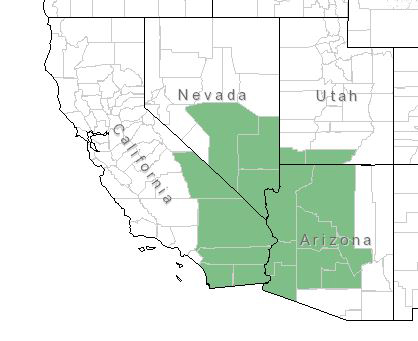 |
| Distribution of turpentinebroom in the United States. Map courtesy of USDA, NRCS. 2018. The PLANTS Database.
National Plant Data Team, Greensboro, NC. [2018, August 27] [25]. |
ECOSYSTEMS:
   FRES29  Sagebrush
   FRES30  Desert shrub
   FRES35  Pinyon - juniper


STATES:
     AZ  CA  NM  NV  UT  MEXICO


BLM PHYSIOGRAPHIC REGIONS:
    3  Southern Pacific Border
    7  Lower Basin and Range
   12  Colorado Plateau
   13  Rocky Mountain Piedmont


KUCHLER PLANT ASSOCIATIONS:
   K023  Juniper - pinyon woodland
   K024  Juniper steppe woodland
   K039  Blackbrush
   K040  Saltbush - greasewood
   K041  Creosotebush
   K042  Creosotebush - bursage
   K044  Creosotebush - tarbush


SAF COVER TYPES:
   238  Western juniper
   239  Pinyon - juniper


SRM (RANGELAND) COVER TYPES:
NO-ENTRY


HABITAT TYPES AND PLANT COMMUNITIES:
Turpentinebroom is commonly found in creosotebush (Larrea tridentata)
scrub, blackbrush (Coleogyne ramosissima) scrub, and other warm desert
shrub communities, and in Joshua tree (Yucca brevifolia) and
pinyon-juniper (Pinus spp.-Juniperus spp.) woodlands [5,6,27,18,30].  In
addition to the above mentioned species, turpentinebroom is commonly
associated with desertsenna (Cassia armata), Nevada ephedra (Ephedra
nevadensis), banana yucca (Yucca baccata), Mojave yucca (Y. schidigera),
spiny hopsage (Grayia spinosa), winterfat (Ceratoides lanata), budsage
(Artemisia spinescens), Utah agave (Agave utahensis), purple sage
(Salvia dorrii), desert almond (Prunus fasciculatus), Dalea spp.,
Atriplex spp., Tetradymia spp., Eriogonum spp., and Lycium spp.
[8,23,27].  Turpentinebroom is not listed as a dominant or indicator
species in the available literature.
MANAGEMENT CONSIDERATIONS
SPECIES: Thamnosma montana
IMPORTANCE TO LIVESTOCK AND WILDLIFE:
Turpentinebroom is occasionally browsed by desert bighorn sheep [5].


PALATABILITY:
Turpentinebroom is not palatable to livestock [26].


NUTRITIONAL VALUE:
NO-ENTRY


COVER VALUE:
NO-ENTRY


VALUE FOR REHABILITATION OF DISTURBED SITES:
NO-ENTRY


OTHER USES AND VALUES:
Turpentinebroom has been used by the Indians as a tonic and in the
treatment of gonorrhea [15].


OTHER MANAGEMENT CONSIDERATIONS:
Turpentinebroom commonly accumulates organic material and windblown
soil beneath its crown.  These shrub mounds serve as an increased source
of nutrients and water for turpentinebroom in addition to providing a
microhabitat for desert ephemerals [6].
BOTANICAL AND ECOLOGICAL CHARACTERISTICS
SPECIES: Thamnosma montana

GENERAL BOTANICAL CHARACTERISTICS:
Turpentinebroom is a native, long-lived, profusely branched, deciduous,
perennial shrub 1 to 2.5 feet (30-80 cm) tall [3,22].  It has stout,
spine-tipped, broomlike branches that are thickly covered with
blisterlike glands and are leafless most of the year [6,13].
Turpentinebroom forms new branches from the root crown, resulting in multiple
stems arising from the ground [6,9].  The leaves are 0.16 to 0.6 inch
(4-15 mm) long and 0.04 inch (1 mm) wide [3,22].  The flowers are in
small cymose or racemose clusters [15].
 |
| Turpentinebroom fruits. Image by Charles Webber, © California Academy of Sciences. Used with permission. |
RAUNKIAER LIFE FORM:
Phanerophyte


REGENERATION PROCESSES:
Turpentinebroom reproduces by seed.  The flowers are animal pollinated
and the fruit is dispersed by animals [19].  The fruit is a capsule
containing one to three seeds [22,30].  The ability of turpentinebroom
to reproduce vegetatively was not specifically described in the
literature.  However, since it branches from the root crown,
turpentinebroom may be able to sprout after top-kill.


SITE CHARACTERISTICS:
Turpentinebroom is commonly found on sunny, dry, rocky, or gravelly
slopes and mesas. [3,22,26].  It occurs at the following elevations:

Arizona - 4,500 feet (1,371 m) and lower [15]
California - 5,500 feet (1,676) and lower [18]
Utah - 2,316 to 4,265 feet (760-1,300 m) [30].


SUCCESSIONAL STATUS:
Turpentinebroom is present in most stages of succession.  Wells [32]
described it as a pioneer shrub typically found in disturbed areas such
as drainageways and actively eroded bedrock areas.  Others have reported
that turpentinebroom is a long-lived shrub, present in later stages of
desert succession [27,28].  On a sandy bajada in California,
turpentinebroom was one of the most common species found in an old, stable
creosotebush scrub community [27].


SEASONAL DEVELOPMENT:
Turpentinebroom flowers in the spring at the same time new vegetative
shoots are being initiated [9,15,18].  It flowers from February through
April in Arizona, and from March through May in California [15,18].
Turpentinebroom leaves are deciduous and are shed soon after flowering
[3], but the twigs often remain green for 3 to 5 years [9,22].
FIRE ECOLOGY
SPECIES: Thamnosma montana
FIRE ECOLOGY OR ADAPTATIONS:
Regeneration of turpentinebroom after fire in not described in research
currently available.  However, since it produces new branches from the
root crown, it probably can sprout from the root crown if top-killed by
fire.  Turpentinebroom probably also colonizes burned areas via
animal-dispersed seeds.

Fire frequency in the communities where turpentinebroom occurs depends
on productivity and continuity of fuels.  Where livestock grazing has
reduced grass cover and accelerated erosion, fire frequency has
decreased [17,31].  In creosotebush scrub communities, fires generally
occur in those occasional years when exceptionally heavy winter rains
have produced abnormally heavy stands of annuals [14].  Fires are also
rare in blackbrush communities; however, these communities have been
known to burn under conditions of high temperature, high wind velocity,
and low relative humidity [14].  Pinyon-juniper communities historically
burned every 10 to 30 years [31].


POSTFIRE REGENERATION STRATEGY:
   Small shrub, adventitious-bud root crown
   Initial-offsite colonizer (off-site, initial community)
   Secondary colonizer - off-site seed


FIRE REGIMES: Find fire regime information for the plant communities in
which this  species may occur by entering the species name in the
FEIS home page under "Find Fire Regimes".
FIRE EFFECTS
SPECIES: Thamnosma montana
IMMEDIATE FIRE EFFECT ON PLANT:
Information was not available regarding the immediate effects of fire on
turpentinebroom.  Turpentinebroom is probably top-killed or killed by
most fires.


DISCUSSION AND QUALIFICATION OF FIRE EFFECT:
NO-ENTRY


PLANT RESPONSE TO FIRE:
Turpentinebroom was present on a burn in the Sonoran Desert, Arizona,
within 4 years of a June fire [33].  The absolute cover value of
turpentinebroom following controlled fires in a blackbrush community in
southwestern Utah is as follows [7]:

                                Absolute cover value (percent)
Time elapsed since burning        mean     standard deviation
unburned                          0.9       2.3
1 year                            0.5       0.8
2 years                             0         0
6 years                             0         0
12 years                            0         0
17 years                            0         0
19.5 years                       11.7       3.8
37 years                         15.4      11.4

The 37-year-old site was dominated by shrubs and annual grasses.
Turpentinebroom had the greatest absolute cover value of any other species on
this site [7].


FIRE MANAGEMENT CONSIDERATIONS:
For several decades after burning blackbrush communities, these sites
may be dominated by nonpalatable shrubs such as turpentinebroom.
Therefore, prescribed burning is not recommended in blackbrush
communities to improve forage for livestock [33].
REFERENCES
SPECIES: Thamnosma montana
REFERENCES:

 1.  Anderson, D. J.; Perry, R. A.; Leigh, J. H. 1972. Some perspectives on
       shrub/environment interactions. In: McKell, Cyrus M.; Blaisdell, James;
       Goodin, Joe R., tech. eds. Wildland shrubs--their biology and
       utilization: An international symposium: Proceedings; 1971 July; Logan,
       UT. Gen. Tech. Rep. INT-1. Ogden, UT: U.S. Department of Agriculture,
       Forest Service, Intermountain Forest and Range Experiment Station:
       172-181.  [3794]

 2.  Bates, Patricia A. 1983. Prescribed burning blackbrush for deer habitat
       improvement. Cal-Neva Wildlife Transactions. [Volume unknown]: 174-182.
       [4458]

 3.  Benson, Lyman; Darrow, Robert A. 1981. The trees and shrubs of the
       Southwestern deserts. Tucson, AZ: The University of Arizona Press.
       [18066]

 4.  Bernard, Stephen R.; Brown, Kenneth F. 1977. Distribution of mammals,
       reptiles, and amphibians by BLM physiographic regions and A.W. Kuchler's
       associations for the eleven western states. Tech. Note 301. Denver, CO:
       U.S. Department of the Interior, Bureau of Land Management. 169 p.
       [434]

 5.  Bradley, W. G. 1965. A study of the blackbrush plant community of the
       Desert Game Range. Transactions, Desert Bighorn Council. 11: 56-61.
       [4380]

 6.  Burk, Jack H. 1977. Sonoran Desert. In: Barbour, M. G.; Major, J., eds.
       Terrestrial vegetation of California. New York: John Wiley and Sons:
       869-899.  [3731]

 7.  Callison, Jim; Brotherson, Jack D.; Bowns, James E. 1985. The effects of
       fire on the blackbrush [Coleogyne ramosissima] community of southwestern
       Utah. Journal of Range Management. 38(6): 535-538.  [593]

 8.  Cody, M. L. 1986. Spacing patterns in Mojave Desert plant communities:
       near-neighbor analyses. Journal of Arid Environments. 11: 199-217.
       [4411]

 9.  Comstock, J. P.; Cooper, T. A.; Ehleringer, J. R. 1988. Seasonal
       patterns of canopy development and carbon gain in nineteen warm desert
       shrub species. Oecologia. 75(3): 327-335.  [22222]

10.  Dittberner, Phillip L.; Olson, Michael R. 1983. The plant information
       network (PIN) data base: Colorado, Montana, North Dakota, Utah, and
       Wyoming. FWS/OBS-83/86. Washington, DC: U.S. Department of the Interior,
       Fish and Wildlife Service. 786 p.  [806]

11.  Eyre, F. H., ed. 1980. Forest cover types of the United States and
       Canada. Washington, DC: Society of American Foresters. 148 p.  [905]

12.  Garrison, George A.; Bjugstad, Ardell J.; Duncan, Don A.; [and others].
       1977. Vegetation and environmental features of forest and range
       ecosystems. Agric. Handb. 475. Washington, DC: U.S. Department of
       Agriculture, Forest Service. 68 p.  [998]

13.  Hickman, James C., ed. 1993. The Jepson manual: Higher plants of
       California. Berkeley, CA: University of California Press. 1400 p.
       [21992]

14.  Humphrey, Robert R. 1974. Fire in the deserts and desert grassland of
       North America. In: Kozlowski, T. T.; Ahlgren, C. E., eds. Fire and
       ecosystems. New York: Academic Press: 365-400.  [14064]

15.  Kearney, Thomas H.; Peebles, Robert H.; Howell, John Thomas; McClintock,
       Elizabeth. 1960. Arizona flora. 2d ed. Berkeley, CA: University of
       California Press. 1085 p.  [6563]

16.  Kuchler, A. W. 1964. Manual to accompany the map of potential vegetation
       of the conterminous United States. Special Publication No. 36. New York:
       American Geographical Society. 77 p.  [1384]

17.  Leopold, Aldo. 1924. Grass, brush, timber, and fire in southern Arizona.
       Journal of Forestry. 22(6): 1-10.  [5056]

18.  Munz, Philip A. 1974. A flora of southern California. Berkeley, CA:
       University of California Press. 1086 p.  [4924]

19.  Pendleton, Rosemary L.; Pendleton, Burton K.; Harper, Kimball T. 1989.
       Breeding systems of woody plant species in Utah. In: Wallace, Arthur;
       McArthur, E. Durant; Haferkamp, Marshall R., compilers.
       Proceedings--symposium on shrub ecophysiology and biotechnology; 1987
       June 30 - July 2; Logan, UT. Gen. Tech. Rep. INT-256. Ogden, UT: U.S.
       Department of Agriculture, Forest Service, Intermountain Research
       Station: 5-22.  [5918]

20.  Raunkiaer, C. 1934. The life forms of plants and statistical plant
       geography. Oxford: Clarendon Press. 632 p.  [2843]

21.  Rowlands, Peter G. 1980. Recovery, succession, and revegetation in the
       Mojave Desert. In: Rowlands, Peter G., ed. The effects of disturbance on
       desert soils, vegetation & community processes with emphasis on off road
       vehicles: a critical review. Special Publication, Desert Plan Staff.
       Riverside, CA: U.S. Department of the Interior, Bureau of Land
       Management: 75-119.  [20680]

22.  Shreve, F.; Wiggins, I. L. 1964. Vegetation and flora of the Sonoran
       Desert. Stanford, CA: Stanford University Press. 2 vols.  [21016]

23.  Smith, Stanley D.; Bradney, David J. M. 1990. Mojave Desert field trip.
       In: McArthur, E. Durant; Romney, Evan M.; Smith, Stanley D.; Tueller,
       Paul T., compilers. Proceedings--symposium on cheatgrass invasion, shrub
       die-off, and other aspects of shrub biology and management; 1989 April
       5-7; Las Vegas, NV. Gen. Tech. Rep. INT-276. Ogden, UT: U.S. Department
       of Agriculture, Forest Service, Intermountain Research Station: 350-351.
       [12871]

24.  Stickney, Peter F. 1989. Seral origin of species originating in northern
       Rocky Mountain forests. Unpublished draft on file at: U.S. Department of
       Agriculture, Forest Service, Intermountain Research Station, Fire
       Sciences Laboratory, Missoula, MT; RWU 4403 files. 7 p.  [20090]

25.  U.S. Department of Agriculture, Natural Resources Conservation Service. 2018.
       PLANTS Database, [Online]. U.S. Department of Agriculture, Natural Resources
       Conservation Service (Producer). Available: https://plants.usda.gov/.  [34262]

26.  Van Dersal, William R. 1938. Native woody plants of the United States,
       their erosion-control and wildlife values. Washington, DC: U.S.
       Department of Agriculture. 362 p.  [4240]

27.  Vasek, Frank C.; Barbour, Michael G. 1977. Mojave desert scrub
       vegetation. In: Barbour, M. G.; Major, J., eds. Terrestrial vegetation of
       California. New York: John Wiley and Sons: 835-867.  [3730]

28.  Vasek, F. C.; Johnson, H. B.; Eslinger, D. H. 1975. Effects of pipeline
       construction on creosote bush scrub vegetation of the Mojave Desert.
       Madrono. 23(1): 1-13.  [3429]

29.  Vasek, Frank C.; Thorne, Robert F. 1977. Transmontane coniferous
       vegetation. In: Barbour, Michael G.; Major, Jack, eds. Terrestrial
       vegetation of California. New York: John Wiley & Sons: 797-832.  [4265]

30.  Welsh, Stanley L.; Atwood, N. Duane; Goodrich, Sherel; Higgins, Larry
       C., eds. 1987. A Utah flora. Great Basin Naturalist Memoir No. 9. Provo,
       UT: Brigham Young University. 894 p.  [2944]

31.  Wright, Henry A.; Bailey, Arthur W. 1982. Fire ecology: United States
       and southern Canada. New York: John Wiley & Sons. 501 p.  [2620]

32.  Wells, Philip V. 1961. Succession in desert vegetation on streets of a
       Nevada ghost town. Science. 134: 670-671.  [4959]

33.  Rogers, Garry F.; Steele, Jeff. 1980. Sonoran Desert fire ecology. In:
       Stokes, Marvin A.; Dieterich, John H., technical coordinators.
       Proceedings of the fire history workshop; 1980 October 20-24; Tucson,
       AZ. Gen. Tech. Rep. RM-81. Fort Collins, CO: U.S. Department of
       Agriculture, Forest Service, Rocky Mountain Forest and Range Experiment
       Station: 15-19.  [16036]
FEIS Home Page

