




Planning
Columbia Gorge National Scenic Area Management Plan

Moss Covered trees and rocks at Wahkeena Creek-Columbia River Gorge.
The Management Plan establishes the primary management direction for the Scenic Area, providing a framework for what we do and where it is done. All other plans tier to the management plan.
View the Management Plan for the Columbia River Gorge National Scenic Area (Columbia River Gorge Commission website)
Disaster Recovery Plan Amendment
Following recent wildfires, the Columbia River Gorge Commission (CRGC) and the USDA Forest Service, Columbia River Gorge National Scenic Area (CRGNSA) worked to update disaster recovery requirements outlined in Management Plan in the Columbia River Gorge National Scenic Area. Those requirements have been reviewed and adopted allowing an expedited review for homes and other structures destroyed by disaster, such as the 2025 Rowena and Burdoin Fires. Further information can be found through the Columbia River Gorge Commission.
Vital Signs Monitoring Program
The Vital Sign Monitoring Program was initiated in 2007, and revised in 2023. The Program tracks 34 indictors to demonstrate the effectiveness of the Management Plan in protecting resources and supporting the economies of the Gorge, and to guide changes to the Management Plan during revisions.
Wild and Scenic River Management Plans

White Salmon River near BZ Corner.
The National Wild and Scenic Rivers System was created by Congress in 1968 to preserve rivers with outstanding natural, cultural, and recreational values in a free-flowing condition for future generations. US Forest Service at Columbia River Gorge National Scenic Area manages two Wild and Scenic Rivers in Washington the Klickitat and White Salmon Wild and Scenic Rivers.
- Lower Klickitat River Wild and Scenic Management Plan (.pdf)
- Lower White Salmon River Wild and Scenic Management Plan (.pdf)
Other Land and Resource Management Plans
- Mt Hood and Gifford Pinchot National Forest Plans also apply to Columbia River Gorge National Scenic Area.
Northwest Forest Plan & Amendment
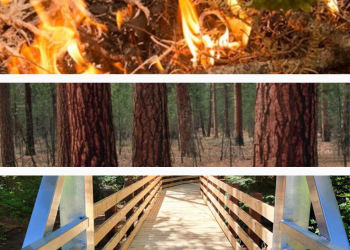
The Northwest Forest Plan covers 24.5 million acres of federally managed lands in California, Oregon, and Washington. It was established in 1994 to address threats to threatened and endangered species while also contributing to social and economic sustainability in the region. Over 30 years later, the Northwest Forest Plan needs to be updated to accommodate changed ecological and social conditions.