





Welcome to the Nebraska National Forests and Grasslands
In the Nebraska National Forests and Grasslands you can find quiet, undeveloped spaces. Here, East meets West as seen in the wildlife and plant mix. These large tracts of public land are the closest places for Midwesterners to hunt and play. Nebraska National Forests and Grasslands include the Nebraska National Forest, Samuel R. McKelvie National Forest, Buffalo Gap National Grassland, Fort Pierre National Grassland and Oglala National Grassland.
National Forests & Grasslands in the App Stores
No signal? No problem!

USDA Forest Service App is now available to download.
Download maps before you go with our new National Forests & Grasslands app.
The National Forests and Grasslands app delivers offline maps, safety alerts, and the most comprehensive set of recreation sites and trails the Forest Service has ever made available to the public.
Download it now:
Quick Links:
Popular Places
Buffalo Gap National Grassland
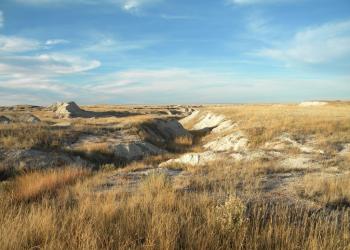
Wild and weird, this landscape is vast and unforgettable. The Buffalo Gap National Grassland has a rich history and the most genetically diverse population of endangered black-footed ferrets in the country.
Toadstool Geologic Park and Campground

Noted for its unusual geologic formations and scientifically valuable fossils, Toadstool Geologic Park is a popular destination. During your hike, look for - but don't collect! - fossils that help scientists understand animal behavior 30 million years ago.
Nebraska National Forest - Bessey / Halsey
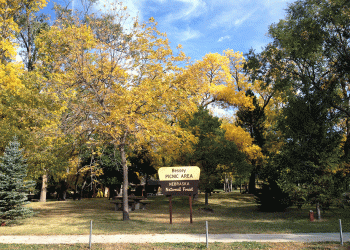
Bessey is where the largest hand-planted forest in the western hemisphere is nestled within the most intact temperate prairie on Earth. Bessey is known for its off-highway vehicle trails, hunting, camping, kayaking, and horseback riding.
Fort Pierre National Grassland

Fort Pierre National Grassland is widely known for its mixed grass prairie that provides shelter to the greater prairie chicken, the sharptail grouse, the Chinese ring-neck pheasant, and numerous migrating birds.
National Grasslands Visitor Center

The National Grasslands Visitor Center introduces and invites visitors to explore the 20 National Grasslands and Midewin National Tallgrass Prairie. These public lands are restored prairie landscapes managed by the Forest Service to conserve their natural beauty, ecological diversity, and sustainable productivity for generations to come.
Charles E. Bessey Nursery

The Nursery has a long-standing reputation for producing top-quality planting stock due to its deep sandy soils, abundant water and relatively long growing season. Production facilities and equipment are state-of-the-art. The Nursery is capable of producing 4.5 million bare root conifer and hardwood seedlings each year.