

|
|
FEIS Home Page |
 |
|
Editor’s note: In 2011, this species review was revised from the original (1993) version based on a search for new literature on the species’ regeneration patterns, successional relationships, and reponses to fire. Sections on the species’ distribution and other (nonfire) management were not addressed in the 2011 revision.
FEIS ABBREVIATION:Small-leaf pussytoes apparently hybridizes with umbrinella pussytoes (A. umbrinella) [5]. It is sometimes lumped with littleleaf pussytoes (A. microphylla), but the 2 species are probably not closely related [10].
SYNONYMS:| Small-leaf pussytoes distribution. Map courtesy of USDA, NRCS. 2011. The PLANTS Database. (14 June 2011). National Plant Data Team, Greensboro, NC. |
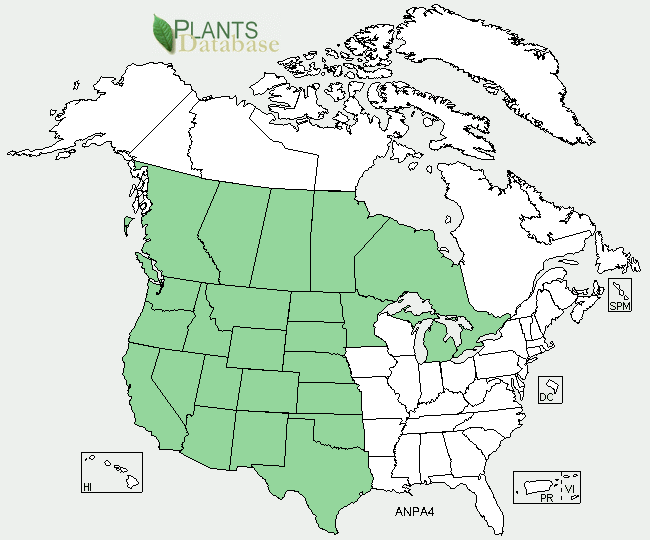 |
States and provinces (as of 2011 [32]):
United States: AZ, CA, CO, ID, KS, MI, MN, MT, ND, NE, NM, NV, OK, OR, SD, TX, UT, WA, WY
Canada: AB, BC, MB, ON, SK
Small-leaf pussytoes is rare in Ontario, Minnesota, Michigan, Washington, Oklahoma, and Texas [15]. It has not been reported in California since 1987, and it may not occur there [31].
SITE CHARACTERISTICS AND PLANT COMMUNITIES:
Site characteristics:
Small-leaf pussytoes is found on open plains and prairies, in open forests, dry meadows, and pastures, and along roadsides [8,11,13,18]. It grows well on gentle slopes but not
on steep slopes. Best grow is on loam-, clayey loam-, and clay-textured soils. Growth is poor on gravel, sand, and dense clay [7]. In west-central Montana, small-leaf pussytoes occurs in mountain grassland valleys in moist to dry soils [17]. It occurs at mid- to high elevations [7]:
| Small-leaf pussytoes elevational ranges in several western states [7] | |
| State | Elevation (feet) |
| Colorado | 5,000-12,000 |
| Montana | 3,300- 6,000 |
| Utah | 5,400-10,700 |
| Wyoming | 4,300- 8,400 |
Plant communities: In the western United States, small-leaf pussytoes occurs in sagebrush (Artemisia spp.), pinyon-juniper (Pinus-Juniperus spp.), mountain grassland, ponderosa pine (P. ponderosa), Douglas-fir (Pseudotsuga menziesii), lodgepole pine (P. contorta), fir-spruce (Abies-Picea spp.), and quaking aspen (Populus tremuloides) communities [18,28,35].
In the Great Lakes, small-leaf pussytoes occurs on dunelands and dry prairies and oak (Quercus spp.) savannas [22]. |
||
Small-leaf pussytoes is a stoloniferous, mat-forming, perennial forb [10,34,35]. Stems are 1.2 to 6.0 inches (3-15 cm) long. Leaves are simple, alternate, and mostly basal. Cauline leaves are reduced upwards. The inflorescence is a large, closely aggregated cyme with 2 to 6 heads. The fruit is a small achene with a bristly pappus [11,13,14,22,35]. One-year-old plants in Missoula, Montana, had fibrous vertical and horizontal roots diverging from stolons (see photo above). Some stolons had grown beneath the littler layer (Fryer 2001 personal observation).
Raunkiaer [24] life form:Breeding system and pollination: Small-leaf pussytoes is dioecious or gynodioecious, with most plants reproducing apomictically. Staminate plants tend to be rare in dioecious populations [22,34]. In Colorado and New Mexico, populations have a more equitable ratio of male:female plants, and these populations reproduce sexually more often than other populations [3,10,22]. Due to the mostly apomictic mating system and lack of nectar reward, insects seldom visit or pollinate small-leaf pussytoes flowers [22].
 |
 |
|
Seed production: No information is available on this topic.
Seed dispersal: Seeds of small-leaf pussytoes are light and wind-dispersed [3,14,22]. The seed's pappus aids in wind dispersal [22]. Seeds also fall beneath the parent plant (Fryer 2011 personal observation).
Seed banking: One study demonstrated that small-leaf pussytoes has a soil-stored seedbank, although longevity of soil-stored seed was unknown as of 2011. In the greenhouse, small-leaf pussytoes averaged 67 emergents/m² from soils collected beneath an interior ponderosa pine (P. ponderosa var. scopulorum) forest on the North Rim of Grand Canyon National Park, Arizona. The top 2 inches (5 cm) of soil was collected from site with a history of limited grazing and no logging [16].
Germination: Little information was available on small-leaf pussytoes' germination requirements as of 2011. Seed collected from small-leaf pussytoes in a 9,800-foot (3,000 m) alpine community in the Rocky Mountain Biological Laboratory, Colorado, did not require stratification and showed 100% germination in the laboratory [23].
Seedling establishment and plant growth: Small-leaf pussytoes can grow rapidly under favorable conditions. In the Fire Science Laboratory's native prairie graden, small-leaf pussytoes plants averaging 2 inches (5 cm) in diameter were transplanted in spring and irrigated through their 1st growing season. Precipitation was above average the next spring, and plants averaged 1.6 feet (5.3 m) in diameter in early July of their 2nd growing season (Fryer 2011 personal observation).
Vegetative regeneration: Small-leaf pussytoes spreads vegetatively through stolons, which leads to its mat-forming habit [10,22,34,35].
SUCCESSIONAL STATUS:There was no information on the effects of fire on small-leaf pussytoes seeds as of 2011.
Postfire regeneration strategy [29]:
Caudex, growing points in soil
Initial off-site colonizer (off site, initial community)
Secondary colonizer (on- or off-site seed sources)
Fire adaptations and plant response to fire:
Fire adaptations: Pussytoes (Antennaria spp.) colonize bare mineral soil from light, wind-dispersed
seed [28]. The seeds are easily dispersed, so small-leaf pussytoes may establish on burns from on- or off-site seed sources.
Plant response to fire: Several studies suggest that small-leaf pussytoes can survive low-severity fire and may regain postfire cover slowly after severe fire, although the specific mechanisms of postfire recovery (sprouting from the root crown and/or establishing from seed) had not been studied as of 2011. Top-killed small-leaf pussytoes probably sprout from the caudex. A study confirming a soil-stored seedbank for small-leaf pussytoes [16] suggests that small-leaf pussytoes may also establish from on-site, soil-stored seed after fire. It may also establish from off-site, wind-dispersed seed.
Bataineh and others [2] found that 8 years after the 1972 Rattlesnake Wildfire on the Coconino National Forest, Colorado, small-leaf pussytoes was dominant on plots where fire severity was low, but it was not reported on high-severity plots. On a site that escaped the 1972 wildfire but was burned under prescription in 1977, small-leaf pussytoes was dominant by postfire year 3. More than 30 years after fire, small-leaf pussytoes was among the 5 most dominant species on both wildfire- and prescribed-burned plots [2].
On the Lubrecht Experimental Forest in western Montana, pussytoes (Antennaria spp.), including small-leaf pussytoes, were among the most common forbs on prescribed-burned plots and on thinned plots in ponderosa pine/Douglas-fir forests [21]. Fire severity was low to moderate. Pussytoes cover on burned plots increased slowly over 3 postfire years. See the Research Project Summary of this study for details on the fire prescription, fire behavior, and responses of pussytoes and more than 100 other plant species.
In Bataineh and others' study, small-leaf pussytoes was an important forb on plots designed to test the responses of understory species to varying-interval (1, 2, 4, 6, and 10 years), low-severity prescribed fires in interior ponderosa pine forests. Forb cover did not differ significantly with fire-return interval. Although the responses of individual forbs were not described, small-leaf pussytoes was among the most common forbs on burned plots [25,26].
Small-leaf pussytoes' absence from severely burned plots after the Rattlesnake Wildfire [2] suggests that it is killed by severe fire. It may establish from on- or off-site seed after fire kill, however. Seventeen years after the mixed-severity Waterfalls Canyon Wildfire in Grand Teton National Park, Wyoming, small-leaf pussytoes was present in trace amounts on severely burned sites [9]. Its absence in earlier postfire years suggests that it established from seed; prefire vegetational composition was not reported.
After a low-severity spring prescribed fire in Jasper National Park, Alberta, small-leaf pussytoes cover was less on open-canopy sites with elk grazing than on closed-canopy sites or ungrazed, open-canopy sites. The plant community was an open lodgepole pine community [1].
| Small-leaf pussytoes cover (%) under closed and open canopies before fire (1998) and in postfire year 2 (2001) [1] | ||||
| Closed canopy | Open canopy | |||
Year |
1998 | 2001 | 1998 | 2001 |
| No exclosure | 1.2 | 1.8 | 11.0 | 3.3* |
| Exclosure | 1.0 | 0.5 | 3.0 | 1.5 |
| *Significant difference between years at P<0.05. | ||||
Taylor [30] reported that small-leaf pussytoes was present in lodgepole pine stands in Yellowstone National Park that had burned more than 100 years previously. Its cover was sparse, and it was found only in the oldest stands [30].
FUELS AND FIRE REGIMES: Fuels: Specific information about small-leaf pussytoes as a fuel was not reported in the available literature (2011).Fire regimes: Based on its occurrence in both ponderosa pine and lodgepole pine plant communities, small-leaf pussytoes appears adapted to short and moderate fire-return intervals (~3 to 80 years). See the Fire Regime Table for further information on fire regimes of vegetation communities in which small-leaf pussytoes may occur. Find further fire regime information for the plant communities in which this species may occur by entering the species name in the FEIS home page under "Find Fire Regimes".
FIRE MANAGEMENT CONSIDERATIONS:Palatability and nutritional value: The palatability of small-leaf pussytoes is poor for cattle, domestic sheep, and horses. Small-leaf pussytoes is rated poor in protein and energy value [7].
Cover value: No information is available on this topic.
VALUE FOR REHABILITATION OF DISTURBED SITES:The following table provides fire regime information that may be relevant to small-leaf pussytoes habitats. California is omitted from this table because small-leaf pussytoes occurrence there is undocumented [31]. Find further fire regime information for the plant communities in which this species may occur by entering the species name in the FEIS home page under "Find Fire Regimes".
| Fire regime information on vegetation communities in which small-leaf pussytoes may occur. This information is taken from the LANDFIRE Rapid Assessment Vegetation Models [20], which were developed by local experts using available literature, local data, and/or expert opinion. This table summarizes fire regime characteristics for each plant community listed. The PDF file linked from each plant community name describes the model and synthesizes the knowledge available on vegetation composition, structure, and dynamics in that community. Cells are blank where information is not available in the Rapid Assessment Vegetation Model. | |||||||||||||
|
|||||||||||||
| Pacific Northwest | |||||||||||||
| Vegetation Community (Potential Natural Vegetation Group) | Fire severity* | Fire regime characteristics | |||||||||||
| Percent of fires | Mean interval (years) |
Minimum interval (years) |
Maximum interval (years) |
||||||||||
| Northwest Grassland | |||||||||||||
| Bluebunch wheatgrass | Replacement | 47% | 18 | 5 | 20 | ||||||||
| Mixed | 53% | 16 | 5 | 20 | |||||||||
| Idaho fescue grasslands | Replacement | 76% | 40 | ||||||||||
| Mixed | 24% | 125 | |||||||||||
| Alpine and subalpine meadows and grasslands | Replacement | 68% | 350 | 200 | 500 | ||||||||
| Mixed | 32% | 750 | 500 | >1,000 | |||||||||
| Northwest Shrubland | |||||||||||||
| Wyoming big sagebrush semidesert | Replacement | 86% | 200 | 30 | 200 | ||||||||
| Mixed | 9% | >1,000 | 20 | ||||||||||
| Surface or low | 5% | >1,000 | 20 | ||||||||||
| Wyoming sagebrush steppe | Replacement | 89% | 92 | 30 | 120 | ||||||||
| Mixed | 11% | 714 | 120 | ||||||||||
| Low sagebrush | Replacement | 41% | 180 | ||||||||||
| Mixed | 59% | 125 | |||||||||||
| Mountain big sagebrush (cool sagebrush) | Replacement | 100% | 20 | 10 | 40 | ||||||||
| Northwest Woodland | |||||||||||||
| Western juniper (pumice) | Replacement | 33% | >1,000 | ||||||||||
| Mixed | 67% | 500 | |||||||||||
| Oregon white oak-ponderosa pine | Replacement | 16% | 125 | 100 | 300 | ||||||||
| Mixed | 2% | 900 | 50 | ||||||||||
| Surface or low | 81% | 25 | 5 | 30 | |||||||||
| Pine savannah (ultramafic) | Replacement | 7% | 200 | 100 | 300 | ||||||||
| Surface or low | 93% | 15 | 10 | 20 | |||||||||
| Ponderosa pine | Replacement | 5% | 200 | ||||||||||
| Mixed | 17% | 60 | |||||||||||
| Surface or low | 78% | 13 | |||||||||||
| Oregon white oak | Replacement | 3% | 275 | ||||||||||
| Mixed | 19% | 50 | |||||||||||
| Surface or low | 78% | 12.5 | |||||||||||
| Subalpine woodland | Replacement | 21% | 300 | 200 | 400 | ||||||||
| Mixed | 79% | 80 | 35 | 120 | |||||||||
| Northwest Forested | |||||||||||||
| Sitka spruce-western hemlock | Replacement | 100% | 700 | 300 | >1,000 | ||||||||
| Douglas-fir (Willamette Valley foothills) | Replacement | 18% | 150 | 100 | 400 | ||||||||
| Mixed | 29% | 90 | 40 | 150 | |||||||||
| Surface or low | 53% | 50 | 20 | 80 | |||||||||
| Oregon coastal tanoak | Replacement | 10% | 250 | ||||||||||
| Mixed | 90% | 28 | 15 | 40 | |||||||||
| Ponderosa pine (xeric) | Replacement | 37% | 130 | ||||||||||
| Mixed | 48% | 100 | |||||||||||
| Surface or low | 16% | 300 | |||||||||||
| Dry ponderosa pine (mesic) | Replacement | 5% | 125 | ||||||||||
| Mixed | 13% | 50 | |||||||||||
| Surface or low | 82% | 8 | |||||||||||
| Douglas-fir-western hemlock (dry mesic) | Replacement | 25% | 300 | 250 | 500 | ||||||||
| Mixed | 75% | 100 | 50 | 150 | |||||||||
| Douglas-fir-western hemlock (wet mesic) | Replacement | 71% | 400 | ||||||||||
| Mixed | 29% | >1,000 | |||||||||||
| Mixed conifer (southwestern Oregon) | Replacement | 4% | 400 | ||||||||||
| Mixed | 29% | 50 | |||||||||||
| Surface or low | 67% | 22 | |||||||||||
| California mixed evergreen (northern California and southern Oregon) | Replacement | 6% | 150 | 100 | 200 | ||||||||
| Mixed | 29% | 33 | 15 | 50 | |||||||||
| Surface or low | 64% | 15 | 5 | 30 | |||||||||
| Mountain hemlock | Replacement | 93% | 750 | 500 | >1,000 | ||||||||
| Mixed | 7% | >1,000 | |||||||||||
| Lodgepole pine (pumice soils) | Replacement | 78% | 125 | 65 | 200 | ||||||||
| Mixed | 22% | 450 | 45 | 85 | |||||||||
| Pacific silver fir (low elevation) | Replacement | 46% | 350 | 100 | 800 | ||||||||
| Mixed | 54% | 300 | 100 | 400 | |||||||||
| Pacific silver fir (high elevation) | Replacement | 69% | 500 | ||||||||||
| Mixed | 31% | >1,000 | |||||||||||
| Subalpine fir | Replacement | 81% | 185 | 150 | 300 | ||||||||
| Mixed | 19% | 800 | 500 | >1,000 | |||||||||
| Mixed conifer (eastside dry) | Replacement | 14% | 115 | 70 | 200 | ||||||||
| Mixed | 21% | 75 | 70 | 175 | |||||||||
| Surface or low | 64% | 25 | 20 | 25 | |||||||||
| Mixed conifer (eastside mesic) | Replacement | 35% | 200 | ||||||||||
| Mixed | 47% | 150 | |||||||||||
| Surface or low | 18% | 400 | |||||||||||
| Spruce-fir | Replacement | 84% | 135 | 80 | 270 | ||||||||
| Mixed | 16% | 700 | 285 | >1,000 | |||||||||
| Southwest | |||||||||||||
| Vegetation Community (Potential Natural Vegetation Group) | Fire severity* | Fire regime characteristics | |||||||||||
| Percent of fires | Mean interval (years) |
Minimum interval (years) |
Maximum interval (years) |
||||||||||
| Southwest Grassland | |||||||||||||
| Shortgrass prairie | Replacement | 87% | 12 | 2 | 35 | ||||||||
| Mixed | 13% | 80 | |||||||||||
| Shortgrass prairie with shrubs | Replacement | 80% | 15 | 2 | 35 | ||||||||
| Mixed | 20% | 60 | |||||||||||
| Shortgrass prairie with trees | Replacement | 80% | 15 | 2 | 35 | ||||||||
| Mixed | 20% | 60 | |||||||||||
| Montane and subalpine grasslands | Replacement | 55% | 18 | 10 | 100 | ||||||||
| Surface or low | 45% | 22 | |||||||||||
| Montane and subalpine grasslands with shrubs or trees | Replacement | 30% | 70 | 10 | 100 | ||||||||
| Surface or low | 70% | 30 | |||||||||||
| Southwest Shrubland | |||||||||||||
| Southwestern shrub steppe | Replacement | 72% | 14 | 8 | 15 | ||||||||
| Mixed | 13% | 75 | 70 | 80 | |||||||||
| Surface or low | 15% | 69 | 60 | 100 | |||||||||
| Southwestern shrub steppe with trees | Replacement | 52% | 17 | 10 | 25 | ||||||||
| Mixed | 22% | 40 | 25 | 50 | |||||||||
| Surface or low | 25% | 35 | 25 | 100 | |||||||||
| Low sagebrush shrubland | Replacement | 100% | 125 | 60 | 150 | ||||||||
| Mountain sagebrush (cool sage) | Replacement | 75% | 100 | ||||||||||
| Mixed | 25% | 300 | |||||||||||
| Gambel oak | Replacement | 75% | 50 | ||||||||||
| Mixed | 25% | 150 | |||||||||||
| Mountain-mahogany shrubland | Replacement | 73% | 75 | ||||||||||
| Mixed | 27% | 200 | |||||||||||
| Southwest Woodland | |||||||||||||
| Madrean oak-conifer woodland | Replacement | 16% | 65 | 25 | |||||||||
| Mixed | 8% | 140 | 5 | ||||||||||
| Surface or low | 76% | 14 | 1 | 20 | |||||||||
| Pinyon-juniper (mixed fire regime) | Replacement | 29% | 430 | ||||||||||
| Mixed | 65% | 192 | |||||||||||
| Surface or low | 6% | >1,000 | |||||||||||
| Pinyon-juniper (rare replacement fire regime) | Replacement | 76% | 526 | ||||||||||
| Mixed | 20% | >1,000 | |||||||||||
| Surface or low | 4% | >1,000 | |||||||||||
| Ponderosa pine/grassland (Southwest) | Replacement | 3% | 300 | ||||||||||
| Surface or low | 97% | 10 | |||||||||||
| Bristlecone-limber pine (Southwest) | Replacement | 67% | 500 | ||||||||||
| Surface or low | 33% | >1,000 | |||||||||||
| Southwest Forested | |||||||||||||
| Riparian forest with conifers | Replacement | 100% | 435 | 300 | 550 | ||||||||
| Riparian deciduous woodland | Replacement | 50% | 110 | 15 | 200 | ||||||||
| Mixed | 20% | 275 | 25 | ||||||||||
| Surface or low | 30% | 180 | 10 | ||||||||||
| Ponderosa pine-Gambel oak (southern Rockies and Southwest) | Replacement | 8% | 300 | ||||||||||
| Surface or low | 92% | 25 | 10 | 30 | |||||||||
| Ponderosa pine-Douglas-fir (southern Rockies) | Replacement | 15% | 460 | ||||||||||
| Mixed | 43% | 160 | |||||||||||
| Surface or low | 43% | 160 | |||||||||||
| Southwest mixed conifer (warm, dry with aspen) | Replacement | 7% | 300 | ||||||||||
| Mixed | 13% | 150 | 80 | 200 | |||||||||
| Surface or low | 80% | 25 | 2 | 70 | |||||||||
| Southwest mixed conifer (cool, moist with aspen) | Replacement | 29% | 200 | 80 | 200 | ||||||||
| Mixed | 35% | 165 | 35 | ||||||||||
| Surface or low | 36% | 160 | 10 | ||||||||||
| Aspen with spruce-fir | Replacement | 38% | 75 | 40 | 90 | ||||||||
| Mixed | 38% | 75 | 40 | ||||||||||
| Surface or low | 23% | 125 | 30 | 250 | |||||||||
| Stable aspen without conifers | Replacement | 81% | 150 | 50 | 300 | ||||||||
| Surface or low | 19% | 650 | 600 | >1,000 | |||||||||
| Lodgepole pine (Central Rocky Mountains, infrequent fire) | Replacement | 82% | 300 | 250 | 500 | ||||||||
| Surface or low | 18% | >1,000 | >1,000 | >1,000 | |||||||||
| Spruce-fir | Replacement | 96% | 210 | 150 | |||||||||
| Mixed | 4% | >1,000 | 35 | >1,000 | |||||||||
| Great Basin | |||||||||||||
| Vegetation Community (Potential Natural Vegetation Group) | Fire severity* | Fire regime characteristics | |||||||||||
| Percent of fires | Mean interval (years) |
Minimum interval (years) |
Maximum interval (years) |
||||||||||
| Great Basin Grassland | |||||||||||||
| Great Basin grassland | Replacement | 33% | 75 | 40 | 110 | ||||||||
| Mixed | 67% | 37 | 20 | 54 | |||||||||
| Mountain meadow (mesic to dry) | Replacement | 66% | 31 | 15 | 45 | ||||||||
| Mixed | 34% | 59 | 30 | 90 | |||||||||
| Great Basin Shrubland | |||||||||||||
| Basin big sagebrush | Replacement | 80% | 50 | 10 | 100 | ||||||||
| Mixed | 20% | 200 | 50 | 300 | |||||||||
| Wyoming big sagebrush semidesert | Replacement | 86% | 200 | 30 | 200 | ||||||||
| Mixed | 9% | >1,000 | 20 | >1,000 | |||||||||
| Surface or low | 5% | >1,000 | 20 | >1,000 | |||||||||
| Wyoming big sagebrush semidesert with trees | Replacement | 84% | 137 | 30 | 200 | ||||||||
| Mixed | 11% | >1,000 | 20 | >1,000 | |||||||||
| Surface or low | 5% | >1,000 | 20 | >1,000 | |||||||||
| Wyoming sagebrush steppe | Replacement | 89% | 92 | 30 | 120 | ||||||||
| Mixed | 11% | 714 | 120 | ||||||||||
| Mountain big sagebrush | Replacement | 100% | 48 | 15 | 100 | ||||||||
| Mountain big sagebrush with conifers | Replacement | 100% | 49 | 15 | 100 | ||||||||
| Mountain sagebrush (cool sage) | Replacement | 75% | 100 | ||||||||||
| Mixed | 25% | 300 | |||||||||||
| Montane chaparral | Replacement | 37% | 93 | ||||||||||
| Mixed | 63% | 54 | |||||||||||
| Gambel oak | Replacement | 75% | 50 | ||||||||||
| Mixed | 25% | 150 | |||||||||||
| Mountain shrubland with trees | Replacement | 22% | 105 | 100 | 200 | ||||||||
| Mixed | 78% | 29 | 25 | 100 | |||||||||
| Black and low sagebrushes | Replacement | 33% | 243 | 100 | |||||||||
| Mixed | 67% | 119 | 75 | 140 | |||||||||
| Black and low sagebrushes with trees | Replacement | 37% | 227 | 150 | 290 | ||||||||
| Mixed | 63% | 136 | 50 | 190 | |||||||||
| Curlleaf mountain-mahogany | Replacement | 31% | 250 | 100 | 500 | ||||||||
| Mixed | 37% | 212 | 50 | ||||||||||
| Surface or low | 31% | 250 | 50 | ||||||||||
| Great Basin Woodland | |||||||||||||
| Juniper and pinyon-juniper steppe woodland | Replacement | 20% | 333 | 100 | >1,000 | ||||||||
| Mixed | 31% | 217 | 100 | >1,000 | |||||||||
| Surface or low | 49% | 135 | 100 | ||||||||||
| Ponderosa pine | Replacement | 5% | 200 | ||||||||||
| Mixed | 17% | 60 | |||||||||||
| Surface or low | 78% | 13 | |||||||||||
| Great Basin Forested | |||||||||||||
| Interior ponderosa pine | Replacement | 5% | 161 | 800 | |||||||||
| Mixed | 10% | 80 | 50 | 80 | |||||||||
| Surface or low | 86% | 9 | 8 | 10 | |||||||||
| Ponderosa pine-Douglas-fir | Replacement | 10% | 250 | >1,000 | |||||||||
| Mixed | 51% | 50 | 50 | 130 | |||||||||
| Surface or low | 39% | 65 | 15 | ||||||||||
| Great Basin Douglas-fir (dry) | Replacement | 12% | 90 | 600 | |||||||||
| Mixed | 14% | 76 | 45 | ||||||||||
| Surface or low | 75% | 14 | 10 | 50 | |||||||||
| Aspen with conifer (low to midelevations) | Replacement | 53% | 61 | 20 | |||||||||
| Mixed | 24% | 137 | 10 | ||||||||||
| Surface or low | 23% | 143 | 10 | ||||||||||
| Douglas-fir (warm mesic interior) | Replacement | 28% | 170 | 80 | 400 | ||||||||
| Mixed | 72% | 65 | 50 | 250 | |||||||||
| Aspen with conifer (high elevations) | Replacement | 47% | 76 | 40 | |||||||||
| Mixed | 18% | 196 | 10 | ||||||||||
| Surface or low | 35% | 100 | 10 | ||||||||||
| Stable aspen-cottonwood, no conifers | Replacement | 31% | 96 | 50 | 300 | ||||||||
| Surface or low | 69% | 44 | 20 | 60 | |||||||||
| Spruce-fir-pine (subalpine) | Replacement | 98% | 217 | 75 | 300 | ||||||||
| Mixed | 2% | >1,000 | |||||||||||
| Aspen with spruce-fir | Replacement | 38% | 75 | 40 | 90 | ||||||||
| Mixed | 38% | 75 | 40 | ||||||||||
| Surface or low | 23% | 125 | 30 | 250 | |||||||||
| Stable aspen without conifers | Replacement | 81% | 150 | 50 | 300 | ||||||||
| Surface or low | 19% | 650 | 600 | >1,000 | |||||||||
| Northern and Central Rockies | |||||||||||||
| Vegetation Community (Potential Natural Vegetation Group) | Fire severity* | Fire regime characteristics | |||||||||||
| Percent of fires | Mean interval (years) |
Minimum interval (years) |
Maximum interval (years) |
||||||||||
| Northern and Central Rockies Grassland | |||||||||||||
| Northern prairie grassland | Replacement | 55% | 22 | 2 | 40 | ||||||||
| Mixed | 45% | 27 | 10 | 50 | |||||||||
| Mountain grassland | Replacement | 60% | 20 | 10 | |||||||||
| Mixed | 40% | 30 | |||||||||||
| Northern and Central Rockies Shrubland | |||||||||||||
| Riparian (Wyoming) | Mixed | 100% | 100 | 25 | 500 | ||||||||
| Wyoming big sagebrush | Replacement | 63% | 145 | 80 | 240 | ||||||||
| Mixed | 37% | 250 | |||||||||||
| Basin big sagebrush | Replacement | 60% | 100 | 10 | 150 | ||||||||
| Mixed | 40% | 150 | |||||||||||
| Low sagebrush shrubland | Replacement | 100% | 125 | 60 | 150 | ||||||||
| Mountain shrub, nonsagebrush | Replacement | 80% | 100 | 20 | 150 | ||||||||
| Mixed | 20% | 400 | |||||||||||
| Mountain big sagebrush steppe and shrubland | Replacement | 100% | 70 | 30 | 200 | ||||||||
| Northern and Central Rockies Woodland | |||||||||||||
| Ancient juniper | Replacement | 100% | 750 | 200 | >1,000 | ||||||||
| Northern and Central Rockies Forested | |||||||||||||
| Ponderosa pine (Northern Great Plains) | Replacement | 5% | 300 | ||||||||||
| Mixed | 20% | 75 | |||||||||||
| Surface or low | 75% | 20 | 10 | 40 | |||||||||
| Ponderosa pine (Northern and Central Rockies) | Replacement | 4% | 300 | 100 | >1,000 | ||||||||
| Mixed | 19% | 60 | 50 | 200 | |||||||||
| Surface or low | 77% | 15 | 3 | 30 | |||||||||
| Ponderosa pine (Black Hills, low elevation) | Replacement | 7% | 300 | 200 | 400 | ||||||||
| Mixed | 21% | 100 | 50 | 400 | |||||||||
| Surface or low | 71% | 30 | 5 | 50 | |||||||||
| Ponderosa pine (Black Hills, high elevation) | Replacement | 12% | 300 | ||||||||||
| Mixed | 18% | 200 | |||||||||||
| Surface or low | 71% | 50 | |||||||||||
| Ponderosa pine-Douglas-fir | Replacement | 10% | 250 | >1,000 | |||||||||
| Mixed | 51% | 50 | 50 | 130 | |||||||||
| Surface or low | 39% | 65 | 15 | ||||||||||
| Western redcedar | Replacement | 87% | 385 | 75 | >1,000 | ||||||||
| Mixed | 13% | >1,000 | 25 | ||||||||||
| Douglas-fir (xeric interior) | Replacement | 12% | 165 | 100 | 300 | ||||||||
| Mixed | 19% | 100 | 30 | 100 | |||||||||
| Surface or low | 69% | 28 | 15 | 40 | |||||||||
| Douglas-fir (warm mesic interior) | Replacement | 28% | 170 | 80 | 400 | ||||||||
| Mixed | 72% | 65 | 50 | 250 | |||||||||
| Douglas-fir (cold) | Replacement | 31% | 145 | 75 | 250 | ||||||||
| Mixed | 69% | 65 | 35 | 150 | |||||||||
| Grand fir-Douglas-fir-western larch mix | Replacement | 29% | 150 | 100 | 200 | ||||||||
| Mixed | 71% | 60 | 3 | 75 | |||||||||
| Mixed conifer-upland western redcedar-western hemlock | Replacement | 67% | 225 | 150 | 300 | ||||||||
| Mixed | 33% | 450 | 35 | 500 | |||||||||
| Western larch-lodgepole pine-Douglas-fir | Replacement | 33% | 200 | 50 | 250 | ||||||||
| Mixed | 67% | 100 | 20 | 140 | |||||||||
| Grand fir-lodgepole pine-larch-Douglas-fir | Replacement | 31% | 220 | 50 | 250 | ||||||||
| Mixed | 69% | 100 | 35 | 150 | |||||||||
| Persistent lodgepole pine | Replacement | 89% | 450 | 300 | 600 | ||||||||
| Mixed | 11% | >1,000 | |||||||||||
| Whitebark pine-lodgepole pine (upper subalpine, Northern and Central Rockies) | Replacement | 38% | 360 | ||||||||||
| Mixed | 62% | 225 | |||||||||||
| Lower subalpine lodgepole pine | Replacement | 73% | 170 | 50 | 200 | ||||||||
| Mixed | 27% | 450 | 40 | 500 | |||||||||
| Lower subalpine (Wyoming and Central Rockies) | Replacement | 100% | 175 | 30 | 300 | ||||||||
| Upper subalpine spruce-fir (Central Rockies) | Replacement | 100% | 300 | 100 | 600 | ||||||||
| Northern Great Plains | |||||||||||||
| Vegetation Community (Potential Natural Vegetation Group) | Fire severity* | Fire regime characteristics | |||||||||||
| Percent of fires | Mean interval (years) |
Minimum interval (years) |
Maximum interval (years) |
||||||||||
| Northern Plains Grassland | |||||||||||||
| Nebraska Sandhills prairie | Replacement | 58% | 11 | 2 | 20 | ||||||||
| Mixed | 32% | 20 | |||||||||||
| Surface or low | 10% | 67 | |||||||||||
| Northern mixed-grass prairie | Replacement | 67% | 15 | 8 | 25 | ||||||||
| Mixed | 33% | 30 | 15 | 35 | |||||||||
| Southern mixed-grass prairie | Replacement | 100% | 9 | 1 | 10 | ||||||||
| Central tallgrass prairie | Replacement | 75% | 5 | 3 | 5 | ||||||||
| Mixed | 11% | 34 | 1 | 100 | |||||||||
| Surface or low | 13% | 28 | 1 | 50 | |||||||||
| Northern tallgrass prairie | Replacement | 90% | 6.5 | 1 | 25 | ||||||||
| Mixed | 9% | 63 | |||||||||||
| Surface or low | 2% | 303 | |||||||||||
| Southern tallgrass prairie (East) | Replacement | 96% | 4 | 1 | 10 | ||||||||
| Mixed | 1% | 277 | |||||||||||
| Surface or low | 3% | 135 | |||||||||||
| Oak savanna | Replacement | 7% | 44 | ||||||||||
| Mixed | 17% | 18 | |||||||||||
| Surface or low | 76% | 4 | |||||||||||
| Northern Plains Woodland | |||||||||||||
| Oak woodland | Replacement | 2% | 450 | ||||||||||
| Surface or low | 98% | 7.5 | |||||||||||
| Northern Great Plains wooded draws and ravines | Replacement | 38% | 45 | 30 | 100 | ||||||||
| Mixed | 18% | 94 | |||||||||||
| Surface or low | 43% | 40 | 10 | ||||||||||
| Great Plains floodplain | Replacement | 100% | 500 | ||||||||||
| Great Lakes | |||||||||||||
| Vegetation Community (Potential Natural Vegetation Group) | Fire severity* | Fire regime characteristics | |||||||||||
| Percent of fires | Mean interval (years) |
Minimum interval (years) |
Maximum interval (years) |
||||||||||
| Great Lakes Grassland | |||||||||||||
| Mosaic of bluestem prairie and oak-hickory | Replacement | 79% | 5 | 1 | 8 | ||||||||
| Mixed | 2% | 260 | |||||||||||
| Surface or low | 20% | 2 | 33 | ||||||||||
| Great Lakes Woodland | |||||||||||||
| Northern oak savanna | Replacement | 4% | 110 | 50 | 500 | ||||||||
| Mixed | 9% | 50 | 15 | 150 | |||||||||
| Surface or low | 87% | 5 | 1 | 20 | |||||||||
| Great Lakes Forested | |||||||||||||
| Oak-hickory | Replacement | 13% | 66 | 1 | |||||||||
| Mixed | 11% | 77 | 5 | ||||||||||
| Surface or low | 76% | 11 | 2 | 25 | |||||||||
| Pine-oak | Replacement | 19% | 357 | ||||||||||
| Surface or low | 81% | 85 | |||||||||||
| South-central US | |||||||||||||
| Vegetation Community (Potential Natural Vegetation Group) | Fire severity* | Fire regime characteristics | |||||||||||
| Percent of fires | Mean interval (years) |
Minimum interval (years) |
Maximum interval (years) |
||||||||||
| South-central US Grassland | |||||||||||||
| Southern shortgrass or mixed-grass prairie | Replacement | 100% | 8 | 1 | 10 | ||||||||
| Southern tallgrass prairie | Replacement | 91% | 5 | ||||||||||
| Mixed | 9% | 50 | |||||||||||
| Oak savanna | Replacement | 3% | 100 | 5 | 110 | ||||||||
| Mixed | 5% | 60 | 5 | 250 | |||||||||
| Surface or low | 93% | 3 | 1 | 4 | |||||||||
| South-central US Woodland | |||||||||||||
| Oak woodland-shrubland-grassland mosaic | Replacement | 11% | 50 | ||||||||||
| Mixed | 56% | 10 | |||||||||||
| Surface or low | 33% | 17 | |||||||||||
| *Fire Severities— Replacement: Any fire that causes greater than 75% top removal of a vegetation-fuel type, resulting in general replacement of existing vegetation; may or may not cause a lethal effect on the plants. Mixed: Any fire burning more than 5% of an area that does not qualify as a replacement, surface, or low-severity fire; includes mosaic and other fires that are intermediate in effects. Surface or low: Any fire that causes less than 25% upper layer replacement and/or removal in a vegetation-fuel class but burns 5% or more of the area [12,19]. |
|||||||||||||
1. Amiro, Brian D.; de Groot, William J.; Bothwell, Peter; Westhaver, Alan L.; Achuff, Peter L. 2004. Impacts of fire and elk herbivory in the montane ecoregion of Jasper National Park, Alberta, Canada. In: Engstrom, R. Todd; Galley, Krista E. M.; de Groot, William J., eds. Fire in temperate, boreal, and montane ecosystems: Proceedings of the 22nd Tall Timbers fire ecology conference: an international symposium; 2001 October 15-18; Kananaskis Village, AB. No. 22. Tallahassee, FL: Tall Timbers Research: 258-264. [52332]
2. Bataineh, Amanda L.; Oswald, Brian P.; Bataineh, Mohammad M.; Williams, Hans M.; Coble, Dean W. 2006. Changes in understory vegetation of a ponderosa pine forest in northern Arizona 30 years after a wildfire. Forest Ecology and Management. 235(1-3): 283-294. [65009]
3. Bierzychudek, Paulette. 1987. Pollinators increase the cost of sex by avoiding female flowers. Ecology. 68(2): 444-447. [82299]
4. Brand, M. D.; Goetz, H. 1978. Secondary succession of a mixed grass community in southwestern North Dakota. Annual Proceedings of the North Dakota Academy of Science. 32(2): 67-78. [7512]
5. Chmielewski, J. G.; Chinnappa, C. C.; Semple, J. C. 1990. The genus Antennaria (Asteraceae: Inuleae) in western North America: morphometric analysis of Antennaria alborosea, A. corymbosa, A. marginata, A. microphylla, A. parvifolia, A. rosea, and A. umbrinella. Plant Systematics and Evolution. 169: 151-175. [22102]
6. Cronquist, Arthur. 1955. Vascular plants of the Pacific Northwest: Part 5: Compositae. Seattle, WA: University of Washington Press. 343 p. [716]
7. Dittberner, Phillip L.; Olson, Michael R. 1983. The Plant Information Network (PIN) data base: Colorado, Montana, North Dakota, Utah, and Wyoming. FWS/OBS-83/86. Washington, DC: U.S. Department of the Interior, Fish and Wildlife Service. 786 p. [806]
8. Dorn, Robert D. 1988. Vascular plants of Wyoming. Cheyenne, WY: Mountain West Publishing. 340 p. [6129]
9. Doyle, Kathleen M.; Knight, Dennis H.; Taylor, Dale L.; Barmore, William J., Jr.; Benedict, James M. 1998. Seventeen years of forest succession following the Waterfalls Canyon fire in Grand Teton National Park, Wyoming. International Journal of Wildland Fire. 8(1): 45-55. [29072]
10. Flora of North America Editorial Committee, eds. 2011. Flora of North America North of Mexico, [Online]. Flora of North America Association (Producer). Available: http://www.efloras.org/flora_page.aspx?flora_id=1. [36990]
11. Great Plains Flora Association. 1986. Flora of the Great Plains. Lawrence, KS: University Press of Kansas. 1392 p. [1603]
12. Hann, Wendel; Havlina, Doug; Shlisky, Ayn; [and others]. 2010. Interagency fire regime condition class (FRCC) guidebook, [Online]. Version 3.0. In: FRAMES (Fire Research and Management Exchange System). National Interagency Fuels, Fire & Vegetation Technology Transfer (NIFTT) (Producer). Available: http://www.fire.org/niftt/released/FRCC_Guidebook_2010_final.pdf. [81749]
13. Harrington, H. D. 1964. Manual of the plants of Colorado. 2nd ed. Chicago, IL: The Swallow Press. 666 p. [6851]
14. Hitchcock, C. Leo; Cronquist, Arthur. 1973. Flora of the Pacific Northwest. Seattle, WA: University of Washington Press. 730 p. [1168]
15. Kartesz, John T. 1999. A synonymized checklist and atlas with biological attributes for the vascular flora of the United States, Canada, and Greenland. 1st ed. In: Kartesz, John T.; Meacham, Christopher A. Synthesis of the North American flora (Windows Version 1.0), [CD-ROM]. Chapel Hill, NC: North Carolina Botanical Garden (Producer). In cooperation with: The Nature Conservancy; U.S. Department of Agriculture, Natural Resources Conservation Service; U.S. Department of the Interior, Fish and Wildlife Service. [36715]
16. Korb, Julie E.; Springer, Judith D.; Powers, Stephanie R.; Moore, Margaret M. 2005. Soil seed banks in Pinus ponderosa forests in Arizona: clues to site history and restoration potential. Applied Vegetation Science. 8: 103-112. [68811]
17. Lackschewitz, Klaus. 1986. Plants of west-central Montana--identification and ecology: annotated checklist. Gen. Tech. Rep. INT-217. Ogden, UT: U.S. Department of Agriculture, Forest Service, Intermountain Research Station. 128 p. [2955]
18. Lackschewitz, Klaus. 1991. Vascular plants of west-central Montana--identification guidebook. Gen. Tech. Rep. INT-227. Ogden, UT: U.S. Department of Agriculture, Forest Service, Intermountain Research Station. 648 p. [13798]
19. LANDFIRE Rapid Assessment. 2005. Reference condition modeling manual (Version 2.1), [Online]. In: LANDFIRE. Cooperative Agreement 04-CA-11132543-189. Boulder, CO: The Nature Conservancy; U.S. Department of Agriculture, Forest Service; U.S. Department of the Interior (Producers). 72 p. Available: https://www.landfire.gov /downloadfile.php?file=RA_Modeling_Manual_v2_1.pdf [2007, May 24]. [66741]
20. LANDFIRE Rapid Assessment. 2007. Rapid assessment reference condition models, [Online]. In: LANDFIRE. U.S. Department of Agriculture, Forest Service, Rocky Mountain Research Station, Fire Sciences Lab; U.S. Geological Survey; The Nature Conservancy (Producers). Available: https://www.landfire.gov /models_EW.php [2008, April 18] [66533]
21. Metlen, Kerry L.; Fiedler, Carl E. 2006. Restoration treatment effects on the understory of ponderosa pine/Douglas-fir forests in western Montana, USA. Forest Ecology and Management. 222: 355-369. [61044]
22. Minnesota Department of Natural Resources. 2011. Species profile: Antennaria parvifolia Nutt.--small-leaved pussytoes, [Online]. In: Nature--rare species guide. St. Paul, MN: Minnesota Department of Natural Resources (Producer). Available: http://www.dnr.state.mn.us/rsg/profile.html?action=elementDetail&selectedElement=PDAST0H0H0 [2010, August 2]. [83166]
23. Pelton, John. 1956. A study of seed dormancy in eighteen species of high altitude Colorado plants. Butler University Botanical Studies. 13(1): 74-84. [82323]
24. Raunkiaer, C. 1934. The life forms of plants and statistical plant geography. Oxford: Clarendon Press. 632 p. [2843]
25. Scudieri, Catherine A.; Sieg, Carolyn Hull; Haase, Sally M.; Thode, Andrea E.; Sackett, Stephen S. 2010. Understory vegetation response after 30 years of interval prescribed burning in two ponderosa pine sites in northern Arizona, USA. Forest Ecology and Management. 260(12): 2134-2142. [81435]
26. Scudieri, Catherine; Fowler, James F.; Sieg, Carolyn Hull; Williams, Laura; Haase, Sally M. 2008. Vascular plant checklist of the Chimney Spring and Limestone Flats prescribed burning study areas within ponderosa pine experimental forests in northern Arizona. In: Olberding, Susan D.; Moore, Margaret M., tech coords. Fort Valley Experimental Forest--A century of research 1908-2008: Conference proceedings; 2008 August 7-9; Flagstaff, AZ. RMRS-P-55. Fort Collins, CO: U.S Department of Agriculture, Forest Service, Rocky Mountain Research Station: 242-249. [79183]
27. Smith, Dwight R. 1967. Effects of cattle grazing on a ponderosa pine-bunchgrass range in Colorado. Technical Bulletin No. 1371. Washington, DC: U.S. Department of Agriculture, Forest Service. 60 p. [4763]
28. Steele, Robert; Geier-Hayes, Kathleen. 1993. The Douglas-fir/pinegrass habitat type in central Idaho: succession and management. Gen. Tech. Rep. INT-298. Ogden, UT: U.S. Department of Agriculture, Forest Service, Intermountain Research Station. 83 p. [21512]
29. Stickney, Peter F. 1989. Seral origin of species comprising secondary plant succession in Northern Rocky Mountain forests. FEIS workshop: Postfire regeneration. Unpublished draft on file at: U.S. Department of Agriculture, Forest Service, Rocky Mountain Research Station, Fire Sciences Laboratory, Missoula, MT. 10 p. [20090]
30. Taylor, Dale L. 1969. Biotic succession of lodgepole pine forests of fire origin in Yellowstone National Park. Laramie, WY: University of Wyoming. 320 p. Thesis. [9481]
31. The Jepson Herbarium. 2011. Jepson online interchange for California floristics, [Online]. In: Jepson Flora Project. Berkeley, CA: University of California, The University and Jepson Herbaria (Producers). Available: http://ucjeps.berkeley.edu/interchange.html [70435]
32. U.S. Department of Agriculture, Natural Resources Conservation Service. 2011. PLANTS Database, [Online]. Available: https://plants.usda.gov /. [34262]
33. Wambolt, Carl. 1981. Montana range plants: Common and scientific names. Bulletin 355. Bozeman, MT: Montana State University, Cooperative Extension Service. 27 p. [2450]
34. Weber, William A.; Wittmann, Ronald C. 1996. Colorado flora: eastern slope. 2nd ed. Niwot, CO: University Press of Colorado. 524 p. [27572]
35. Welsh, Stanley L.; Atwood, N. Duane; Goodrich, Sherel; Higgins, Larry C., eds. 1987. A Utah flora. The Great Basin Naturalist Memoir No. 9. Provo, UT: Brigham Young University. 894 p. [2944]