Due to a lapse in federal funding, this USDA website will not be actively updated. Once funding has been reestablished, online operations will continue
Prescribed fires planned for Stanislaus National Forest
Fire managers plan prescribed fires on all ranger districts
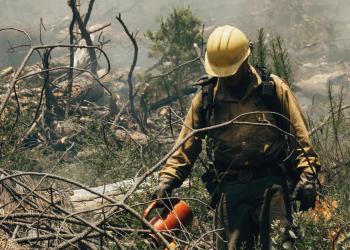
Prescribed burning is an effective, cost efficient method of reducing flammable forest fuels, improving firefighting capabilities and reducing impacts of large, uncontrolled and damaging wildland fires. This may include lighting a fire in an area for various purposes after careful planning and under controlled conditions.
A prescribed fire enhances public and firefighter safety by reducing the build-up of dead and down fuels and reduces the threat of high-intensity wildfire while protecting watershed values and wildlife habitat by creating a mosaic pattern of vegetation, rather than a dense covering.
Before a prescribed fire begins, fire personnel confirm that a specific set of conditions exist, including relative humidity, temperature, moisture content and favorable air conditions. The forest supervisor or district ranger reviews approves each planned burn. On the Stanislaus National Forest these burns generally occur in fall and spring, when conditions are favorable.
Over-Snow Use Designation Project Draft Environmental Impact Statement
The Stanislaus National Forest is preparing an Environmental Impact Statement on a proposal to designate oversnow vehicle use on National Forest System roads, trails and areas within the forest, and to identify snow trails for grooming within the Stanislaus National Forest. In addition, the Forest Service is proposing to establish snow depths for OSV use and snow grooming. View OSV use designation draft EIS project information.
A report describing how the Stanislaus National Forest demonstrated compliance with the Travel Management Rule’s Subpart B Minimization Criteria in connection with the 2009 Record of Decision (ROD) for motorized travel management on the Stanislaus National Forest.
A document describing management of the 2014 Stipulated Settlement Agreement’s Interim Period trail closures including, the initial closure methods, those closure method’s effectiveness, any additional actions that were taken to maintain the closure, whether any subsequent NEPA decisions and implementation have occurred affecting the trails included in the Interim Period trail closures, and whether each trail would be eligible to be added to the motor vehicle use map upon issuance of the Notice of Compliance.
Students from Tioga High School spent four hours at the site of the July 2015 Big Creek fire on Stanislaus National Forest in Groveland, Calif., March 3, 2017, planting trees.
A Secure Rural Schools Resource Advisory Committee (RAC) provides advice and recommendations to the Secretary of Agriculture through the Forest Service.