





Animals and Plants
Animals
| Amphibians and Reptiles | 26 species |
| Birds | 235 species |
| Fishes | Over 200 species |
| Mammals | 69 species |
Western Snowy Plover
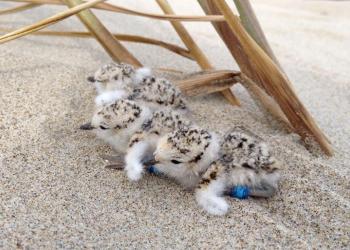
The western snowy plover is a small shorebird that is federally listed as threatened. Western snowy plovers rely on Oregon beaches for survival, and on these beaches certain activities are limited from March 15-Sept. 15 to prevent disrupting plover during their sensitive nesting season.
Plants
Abundant rainfall and mild winters provide growing conditions for a variety of vegetation species. The Siuslaw’s temperate rain forest, coastal influence, ocean-forest interface, relatively young Douglas-fir forest, and cultural history make it unique among all other national forests.
The Siuslaw has two distinct vegetation zones, Sitka spruce and western hemlock. The hardy Sitka spruce zone grows where the coast influence of mild temperatures, winds, and dense fog discourage other types of vegetation. Western hemlock grows well in shade beneath the dense Douglas-fire canopy. As Douglas fir matures, western hemlock takes over. Both zones contain freshwater, upland, offshore, and estuarine habitats that support a wide variety of vegetation, fish, and wildlife.
Common Invasive Species

See five of most common invasive species on the Siuslaw National Forest.