Parents & Teachers
The Sawtooth National Recreation Area offers Education Programs for school groups and summer camps for all ages. Programs are curriculum-based, and we can come to your classroom or you can bring your students to the Sawtooth National Recreation Area for a field trip.
In the winter we offer snowshoe programs at both the Sawtooth National Recreation Area Visitor Center and at Galena Lodge. If you’re just looking for additional educational resources, try renting one of our Education Trunks, which are full of activities, resources, and materials for classrooms.
NEW: Distance Learning Programs
Just for Parents
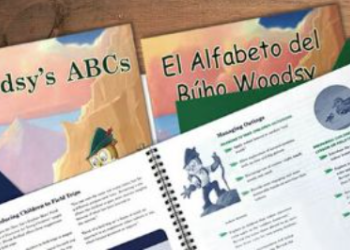
Looking for something to do with your kids? Check out our Junior Ranger books below. Learn about what makes the Sawtooth National Recreation Area so great! Explore with your kids outside while your at the Sawtooth NRA or in your backyard! Complete the summer or winter version and earn a patch! Become a Junior Ranger and help take care of the Sawtooth National Forest!
Just for Teachers

Distance Learning Programs

This year we are launching a Distance Learning Program. We can livestream with you and your classroom or we can livestream with students while they are at home. Looking for Teacher Resources, we have those too! We are creating a full swing of videos that you can use in the classroom, or use them as a pre or post trip extension from your field trip.
Livestreams
Stump the Ranger
Do some research ahead of time and come up with a hard question that you think will stump the ranger. This program will give some general information and history of the Sawtooth NRA and then will give students the opportunity to ask their questions and see if they can stump the ranger!
Mountain Habitats
What is a habitat? Who lives in which habitat? What habitat do you live in? Explore the many different habitats and what plants, animals, and non-living conditions make each habitat different. Then, go outside at your own school or home to find out which habitat you live in!
Watersheds
There is a whole world under the water! We will explore what is crawling down there and what fish live in the rivers. Find out what headwaters start in the Sawtooth NRA and follow a salmon along its 900 mile migration to the ocean and back. See how you can check the water quality in you backyard and how water can become polluted. Learn ways that you can help keep our rivers clean and what recreation is possible on these rivers!
Skins, Skulls, and Scat
Look at different furs, skulls, and scat to learn more about animal adaptations, predator and prey relationships, and how animals interact in a food web.
Special Request: You can request to meet a specific animal and we can give more in-depth information on that animal.
Geology
Find out how rocks are the great recyclers as we investigate how rocks change in their cycle. Look at the landscape to find out what geologic forces have created what we see today on the Sawtooth National Recreation Area and what is still shaking things up even now. Complete with extension activities.
Careers in Natural Resources or Public Lands
Ever wondered what it would be like to be a Fish Biologist, Fire Fighter, or work in a Visitor Center? Come with us to meet the faces behind the scenes of the Sawtooth National Recreation Area. Find out what it means to work for the Forest Service and how you can pursue these careers.
Teacher Resources
We did the work so you don't have to! The Sawtooth Education Team has created a list of lesson plans, virtual learning links, and pre-recorded lessons taught by us to help support you and your students. Just let us know what resources you need and we will share our videos and resources with you. E-mail us at sarin.lomascolo@usda.gov and susan.kranz@usda.gov to request resources. We have videos on the Rock Cycle, How to do a Stream Survey, Leave No Trace Principles, 10 Essentials and Wilderness. More to come!
Field Programs
Field programs are typically for local Blaine County and Custer County (mainly Stanley area) schools. If your able to come to the Sawtooth NRA for a field trip we can schedule a program with you. If not, we offer Distance Learning Programs and Teacher Resources to support you.

Animal Habitats
Grades: 2nd -3rd
Objective: Name all the habitats in the Sawtooth NRA. Classify animals by their habitat and determine their adaptation. Create their own art in nature.
Description: What habitats are in the Sawtooth NRA? Who lives in these different habitats and how are they adapted to live in them? Find out what it would be like to be a beaver, flippers and all! Figure out which animal has which adaptation and explore the Sawtooth NRA on a hike through different habitats and create nature art along the way.
Predator and Prey
Grade: 3rd
Objective: To compare the differences between predators and prey. To understand that all plants and animals are interconnected. To identify animals by their track, scat and skull.
Description: Be a detective and try to figure out what animal is at each station by looking at their fur, scat and tracks. Learn the differences between predators, omnivores and prey. Hike around the SNRA to look for animal signs and identify different trees and plants. Become an animal and find out how everything is interconnected in a food web.
Macro-Invertebrates
Grades: 5th-HS
Objectives: To discuss the importance of water and the causes of water pollution. To classify macro-invertebrates to determine water quality. To analyze chemical and biotic date to determine the water quality.
Description: Think globally about where all the water is located and how much is freshwater. Then think local, looking at watersheds and how water can become polluted. Become a citizen scientist and complete a stream survey to find out if the creeks in the Sawtooth NRA are clean by looking at whether the macro-invertebrates can tolerate pollution. Use chemical testing to find out what specific pollution, if any, is found in the creek. Consider how we can conserve water for future use and look at what animals live in and near water.
Swimming Upstream
Grades: MS-HS
Objectives: Follow the Salmon’s migration and identify the barriers along the way. Explain how Salmon can change from aerobic to anaerobic during their life cycle. Use your senses to try to migrate and see if you can tackle the barriers.
Description: Ever feel like you’re swimming upstream? Well, salmon do, at least for their 900 mile migration returning from the Pacific Ocean back to spawn in Redfish Lake later in life. Learn about the life cycle of salmon, how they change from freshwater to salt water fish, and all the barriers to their migration. Become a salmon and test out your skills by trying to smell your way home and complete an obstacle course to see if you could make the migration.
Wilderness Survival
Grades: MS – HS
Objectives: Identify the essentials and how to prepare for a day in the backcountry. Construct a solar oven or purify water using available resources. Learn plant and mushroom ID. Role play different leave no trace scenarios and skits.
Standards: ESS3-HS-2. Evaluate competing design solutions for developing, managing, and utilizing energy and mineral resources based on cost-benefit ratios.
Description: What essentials do you need if you hike into the backcountry? How can you survive in the wilderness? Find out how to build a shelter, start a fire, filter water and even make a solar oven. Learn some basic plant and mushroom identification, figure out what is edible and inedible and do a skit about the ‘leave no trace’ principles to help take care of the wilderness areas.
Classroom Programs
If you're in Blaine or Custer County (mainly the Stanley Area) we can come to your classroom for a program. If not, you can schedule one of our Distance Learning programs and we can livestream into your classroom.
Also available as a Livestream

Skin, Skulls & Scat
Grades: Pre-K–1st
Objectives: Compare the differences between animals using their skin, skulls and scat. Find similarities between animals of the same family. Identify animals by their fur, skull or scat. Make your own plaster mold.
Description: What animal is it? Explore the many different animals that live in the Sawtooth NRA through their skin, skull, and scat. Animals share different traits if they are predators, omnivores, or prey or similar ones if they are in the same family. Whether you are out on the trail looking for animal signs, in the SNRA, or in your classroom you can learn how to identify animals by their tracks, fur and scat. Make a plaster mold of tracks and take one home!
Life in the Dark
Also available as a livestream and check out our puppet shows.
Grades: K-1st
Objectives: Explore what it would be like to be nocturnal. Identify traits of nocturnal animals and how they live in the dark.
Description: Explore what it would be like to live in the dark. Nocturnal animals like owls and bats must adapt to find food, escape from predators, protect their young, and adjust their bodies to hot or cold temperatures. This lesson explores how these animals use each adaptation to help them live in the night. This program can be done as a puppet show for younger ages or using senses, activities and games for older students.
Wonderful World of Wolves
Grades: 3rd-5th
Objectives: Understand how wolves impact an ecosystem. Examine the behavior of wolves to communicate and work together in packs. Discuss different viewpoints on wolves throughout their history and reintroduction.
Description: Learn about the history of wolves and their reintroduction into this area. Reintroducing a large predator such as the wolf back into the wilderness has created an abundance of biodiversity in this ecosystem. Explore how wolves work together in packs, hunt, and how they affect wetlands.
Rock-Cycling!
Grade: 2nd
Objective: Classify rocks by their features and find out their uses. Explore how rocks go through the rock cycle and change form. Understand that rocks can change form quickly or slowly.
Description: Use your observational skills to look at the differences in rock types, watch a crayon demonstration to see how rocks change form, and go through the rock cycle yourself in this interactive program that focuses on the rock cycle.
Landforms and Glaciers
Grade: 4th Grade
Objectives: To list different events in geologic history. To discuss different ways mountains are formed. To test out a model of how glaciers creates landforms that are different than other types of erosion.
Description: Whether you're exploring how rocks go through the rock cycle, plate tectonics, minerals, types of erosion, or glaciers – we’ve got it all! Go through geologic time to find out how this area has changed over time and then use ice cubes to find out how glaciers carve out u-shaped valleys.
Ranger Careers:
Grade: HS
Objectives: To hear about different types of careers in natural resources management. Be able to ask questions about different careers and determine which one’s students might be interested in pursuing. To find out what opportunities are available in these fields.
Description: Ever wonder about a career in natural resources? Check out all the different Ranger Careers at the Sawtooth National Recreation Area and other public lands. Find out what the different careers involve, talk with a ranger about their experiences, and maybe even set up a volunteer opportunity.
Winter Programs:
SNRA or Galena Snowshoe Programs
If you're in Blaine or Custer County (mainly the Stanley Area) we can take you and your students snowshoeing at the Sawtooth NRA Visitor Center or at Galena. We provide the snowshoes and the activities! If your able to come to the Sawtooth NRA we can schedule a program. If not, you can schedule one of our Distance Learning programs and we can livestream into your classroom focusing on winter specific topics.

Hibernate, Migrate or Tolerate
Grades: Pre-K-3rd
Standards:
Objective: Compare the differences between hibernating, migrating and tolerating the winter. Classify which animals hibernate, migrate or tolerate the winter.
Description: Ever wonder where animals go in the winter? Do they fly south, hibernate or put on their jacket to tolerate the cold winter months? Using a fun dress-up activity, students will find out what animals do in the winter. This is also a great pre-site program before coming up to the SNRA or Galena for a winter snowshoe program.
Winter Adaptations
Check out our puppet shows!
Grades: K-1st
Standards:
Objectives: Determine which animals tolerate the winter. Compare animal adaptations and find out how those help them to survive in the winter. Conduct an experiment to figure out which animals have the best insulation. Identify animal tracks along the snowshoe trail.
Description: How do animals tolerate the cold winter months? Some change the color of their fur, others make a home nestled below the snow, while others have big feet like snowshoes so they can walk on top. Look for signs of animals that have adapted to stay here all winter long and find out what changes they make. Enjoy a fun puppet show to find out how animals live in the winter, compare different animals and their adaptations, complete an experiment to test out insulations and look for animal tracks on the trail.
Winter Wildlife Tracking
Grades: 3rd – 5th
Standards:
Objectives: Name the characteristics of winter and find out why winter happens. Identify adaptations that animals have who tolerate the winter. Look for animal tracks in the snow and determine what animal left them. Explore the winter environment.
Description: What is different about winter? Why does winter happen? What traits do animals have that help them to survive in the winter. Figure out what adaptation each animal has for winter. Look for signs of animals outside and identify their tracks on the snow. Why do some animals float while others sink? Where do mice live in the winter? How do animals hide from predators in the winter? Go snowshoeing to track animals, play games and look for signs of animals in the snow.
Idaho Mining History & Winter Ecology
Grade: 4th
Objectives: Construct a food web to understand how animals interact in the winter. Discuss the events in history at Galena along the snowshoe trail. Observe Galena and find out the different uses for it. Learn about the conservation of the Sawtooth NRA and explore along the trail to find out about trees and diseases and look for animal tracks.
Description: While snowshoeing up at Galena, go back in time to learn about the history of mining and conservation up at Galena. Learn about how mining impacted this area and influenced the creation of the Sawtooth NRA. Find out how animals and plants are interconnected and survive in the winter. Enjoy a fun day up at Galena!
Winter Survival
Grades: MS & HS
Standards:
Objectives: Know how to be prepared for winter survival. Name the 10 essentials to take with you in the winter. Analyze weather and avalanche reports to determine the conditions. Discuss the dangers of avalanches and how to be prepared for one. Construct a winter shelter in case you are out overnight.
Description: Find out how to survive in the winter. Everything from how to be prepared to what to do if you're out overnight and have to build a snow cave, what to do in an avalanche and how to read your surroundings.
Ed-Venture Trunks
Check out our Teacher Resources
If you’re for educational materials and lesson plans for your unit, we have just what you’re looking for. Check out the trunk's material lists below to see which one might fit your unit. Trunks can be reserved just like programs for one-two weeks or more depending on need and availability. We can bring the trunks to you and even coordinate the trunk with a program like the Birds of Prey and Bat Trunk along with a classroom program on Nocturnal Animals.
If you’re interested in one of our Ed-Venture Trunks give us a call at 208-727-5000 or e-mail sarin.lomascolo@usda.gov and susan.kranz@usda.gov.

-
Aqua Trunk
-
Bats and Birds of Prey
-
Life Cycle of Insects
-
Stream of Life Salmon
-
The Tree Trunk
-
Track Molds
-
Wilderness & Land Ethics
-
Wolf Trunk