





Hunting in the Grasslands
The vast prairies of the Dakota Prairie Grasslands are open to public recreational hunting, including firearms and archery, under state rules and regulations. Please refer to each specific state's regulating agency website below.
Hunting in the Grasslands

Figure 1. An example of damage to the landscape caused by visitors driving off established roads or paths when the ground is moist and soft.
- Always monitor for restrictions on the Alerts and Fire Danger bar at the top of this page.
36 CFR 261.10(d)
Discharging a firearm or any other implement capable of taking human life, causing injury, or damaging property as follows:(1) In or within 150 yards of a residence, building, campsite, developed recreation site, or occupied area, or
(2) Across or on a National Forest System road or a body of water adjacent thereto, or in any manner or place whereby any person or property is exposed to injury or damage as a result of such discharge.
(3) Into or within any cave.
- Refer to the Fire or Safety and Outdoor Ethics pages for helpful guidance and resources.
- Always stay on existing roads and trails. Do not stray off the trail and create new trails.
- All cross-country off-road travel is prohibited, except for dispersed camping. To access dispersed camping, one may drive off an established road up to 300 feet. For more details, refer to the Dispersed Camping in the Grasslands page.
- Restrict motorized travel to the major, improved-surface gravel roads during wet conditions. Vehicles cause ruts in soft ground, damaging the ecosystem (see Figure 1).
- Leave No Trace - Pack in, Pack Out. Take all spent firearms shells or casings and anything else you bring to the grasslands. Keep America beautiful.
Tree Stands and Portable Blinds
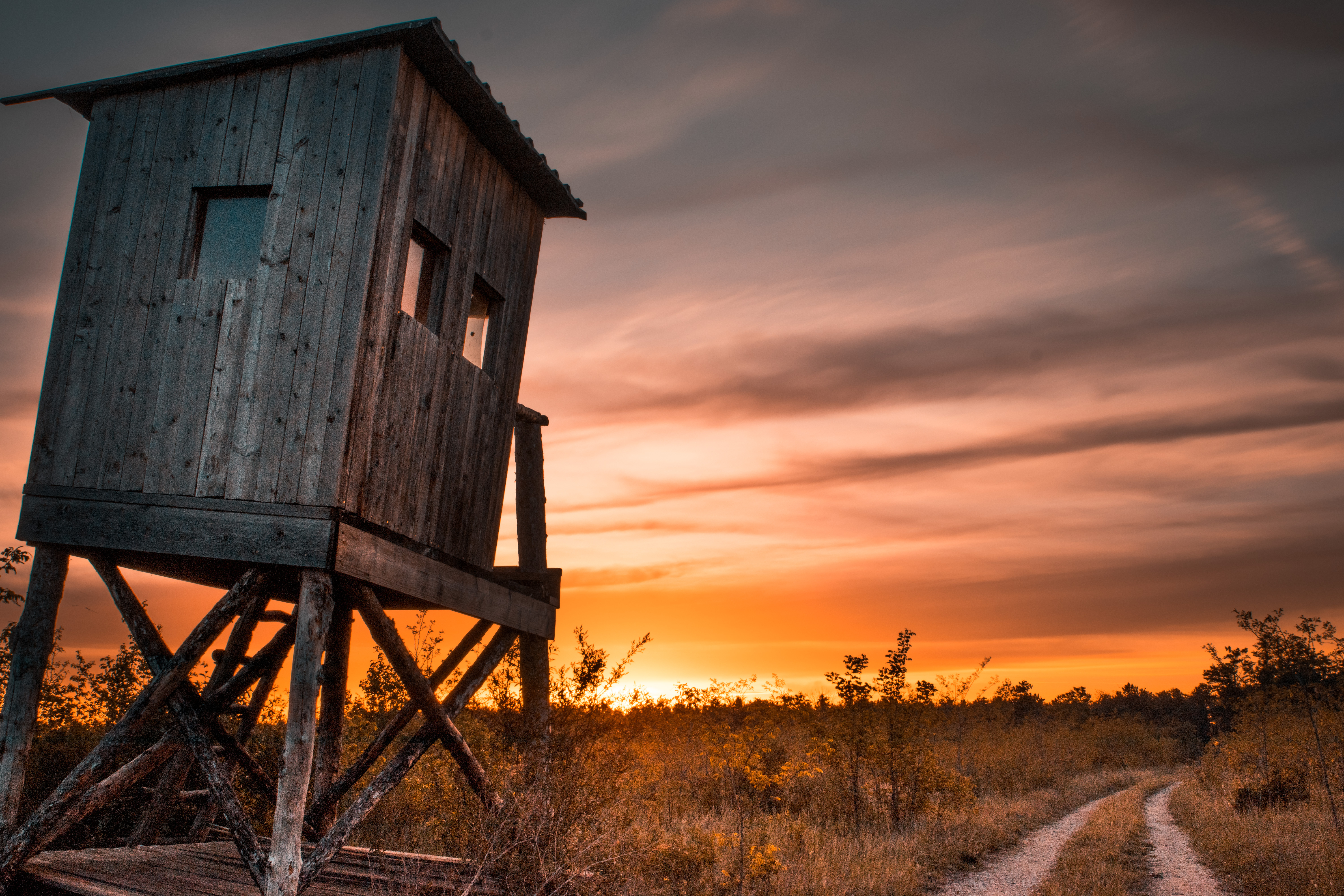
Figure 2. An example of a deer stand beside a field at sunset.
Tree stands and portable blinds (see Figure 2) are permitted and may be used for durations consistent with the periods specified by state regulations.
North Dakota Game and Fish Deer Hunting Guide
Trees must not be damaged by nailing, cutting of limbs, or the use of screws in steps or spikes. Tree stands, steps, and ground blinds not removed by January 31 are considered abandoned property and are subject to removal and confiscation by the USDA Forest Service. Tree stands and ground blinds left unattended on National Forest System Lands must be identified with a tag displaying the owner's name, address, and telephone number. address, and telephone number.
South Dakota Game, Fish, and Parks Regulations
Portable tree stands, portable blinds, and climbing devices that do not use nails, wire, or bolts for attachment are permitted from August 1 to March 31. The name and address, or Customer Identification Number, of the owner or user must be on the exterior of an unoccupied portable blind and legible from the ground on a tree stand. Stands, steps, and ground blinds not removed by March 31 are considered abandoned property and are subject to removal and confiscation by the USDA Forest Service.
Hunting Over Bait

Figure 3. A deer feeder in a clearing down range from a deer blind.
Hunting big game over bait on National Forest System lands is prohibited.
Hunting over bait is defined as the placement and/or use of bait(s) for attracting big game and other wildlife to a specific location for hunting (Figure 3).
Baits include but are not limited to grains, minerals, salts, fruits, vegetables, hay, or other natural or manufactured foods.
Prairie Dog Hunting

Figure 4. Pictured here are residents of a black-tailed prairie dog colony.
Prairie dogs are small, social rodents native to grasslands. Their extensive burrowing creates large underground “towns” that dramatically shape the environment. Their burrows provide shelter for many other animals, such as burrowing owls and black-footed ferrets (see Figure 4).
South Dakota:
Prairie dog hunting is open year-round. The Grand River Prairie Dog Handout - 2025 maps the black-tailed prairie dog colonies in the Grand River National Grassland in Perkins and Corson Counties.
While hunting prairie dogs, be aware that western burrowing owls also inhabit prairie dog towns. These owls are a species of conservation concern and are protected by law—it is illegal to shoot them. For more information about burrowing owls, the Animals page.
To hunt prairie dogs in South Dakota, you need a predator/varmint license or any valid South Dakota hunting license for the current year. Licenses can be purchased online or at the Lemmon Pit Stop on Main Street in Lemmon, South Dakota. For more details or to buy a license, visit the South Dakota Game, Fish, & Parks website.
North Dakota:
In North Dakota, prairie dog hunting is allowed year-round with no daily bag limits or seasonal restrictions. Residents do not need a license to hunt unprotected species, such as prairie dogs, on land they own or lease, while nonresidents require only a non-game license. For more information or to purchase a license, visit the North Dakota Game and Fish website.
Note: Not every prairie dog colony has motorized access. Please refer to the Prairie Dog Locations on the Little Missouri National Grasslands Map for details.
For additional questions, contact the local Ranger District Office.
Visitor Maps and Guides

Our Visitor Maps and Guides page provides information about area maps, guides, resources, and publications to help you plan your travel and recreational routes. MVUM and Prairie Dog colony maps are also available.
North Dakota Game and Fish Department

The North Dakota Game and Fish Department (NDGFD) serves as the primary regulator for the state's fish and wildlife. The agency's regulatory role centers on managing, conserving, and enforcing laws related to these natural resources.
South Dakota Game, Fish & Parks

The South Dakota Game, Fish & Parks (GFP) manages natural resources, conducts research, enhances public lands, provides access, enforces regulations, and educates the public on conservation and responsible outdoor use.