
Dense, dangerously crowded stands of trees are giving way to healthy, spacious forests across Alabama. Individual trees are gaining the room they need to grow, birds and other wildlife are finding better habitat, and communities near the forest are breathing easier as the risk of catastrophic wildfire shrinks.
This transformation is because active forest management on Alabama’s national forests is moving faster than it has in years, and the efforts are improving forest health and supporting local jobs.
Forest Service priorities are refocusing efforts on the fundamental work that delivers the greatest good to the American people. One of those priorities is focusing on thinning crowded forests, removing dead trees and using prescribed fire to reduce dangerous fuels. These actions help keep forests open, healthy and productive.
And in Alabama, they are moving full steam ahead.
“Active forest management represents healthier stands, safer communities and stronger rural economies,” said Forest Supervisor Linwood Butler.
Planning for success
The National Forests in Alabama increased their efforts, taking timber sale plans developed years earlier and bringing as many sales to fruition as possible. Because of the solid foundation laid by earlier work from timber specialists, Alabama is a forest in motion.
In fiscal year 2026, Alabama’s timber program includes 16 timber sales, including two Good Neighbor Authority sales, five stewardship sales and one designation by prescription sale. These efforts recently placed Alabama among the top 20 national forests in timber production.
“Our success has truly been a team effort. To have a pipeline of timber sales ready to be advertised and awarded speaks volumes to the planning and coordination that has been happening all along here in the National Forests in Alabama,” said Butler.

Strike teams and new tools speed delivery
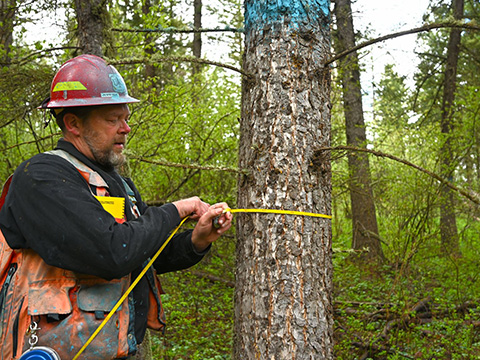
Because of the unusually large number of timber sales and limited capacity at the forest level, national and regional timber strike teams were implemented in FY 26 to accelerate the preparation of timber sales across the nation. Strike teams are timber markers that provide additional capacity to timber sale preparation.
“The strike teams really helped shorten the time between planning and sale, allowing projects to move from paper to the woods more quickly,” said Brian Waldrep, timber contract officer with the National Forests in Alabama.
Authorities such as those granted through stewardship, Good Neighbor and the Healthy Forest Restoration Act, along with virtual boundaries, have made it easier to restore the forest.

Economic impact and community benefits
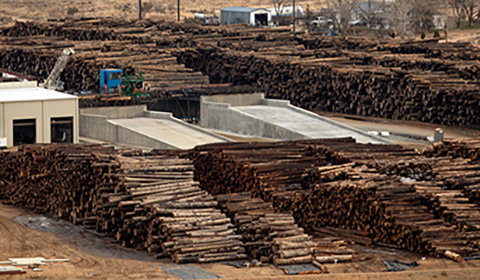
The surge in timber activity is already helping local communities. More timber means more jobs for loggers, truckers and mills, and it stabilizes supply chains that rural businesses depend on.
“The diversity of sale types is intentional and something we are proud of,” said Waldrep. “Planning, executing and then reinvesting the proceeds from sales allows us to fund additional forest management outside of timber sale areas.”
That reinvestment, combined with stewardship improvements, helps maintain roads, water systems and other infrastructure that benefit both industry and the public.

Allowing the forest to breathe
Timber production also supports ecological restoration. Prescribed fire helps restore fire patterns, while thinning and midstory removal create healthier stands. A less crowded forest paired with new longleaf pine planting helps improve habitat for keystone species such as the red-cockaded woodpecker.
“When we thin a stand, we’re not just removing trees, we’re making room for the forest to breathe and bringing sunlight to the forest floor,” said Dagmar Thurmond, natural resources and planning staff officer with the National Forests in Alabama. “It is our mission to restore and maintain beautiful, resilient and productive landscapes, and to connect people to these landscapes through recreational, educational and economic opportunities.”